

Central Portugal is one of the country’s most rewarding regions to explore, but also one of the easiest to overlook. Many travellers pass through on the journey between Lisbon and Porto, stopping briefly in Coimbra or Óbidos before continuing north or south. Slow down, however, and you’ll discover a region of remarkable variety: Atlantic beaches and fishing towns, medieval villages, mountain landscapes, UNESCO monasteries, wine country and historic cities shaped by centuries of Portuguese history.
It is a region where geography really matters. Coimbra, Aveiro and the main coastal towns are relatively easy to reach by train, while places such as Serra da Estrela, the Schist Villages and the historic villages of the interior are much better explored by car.
Rather than trying to see everything from a single base, we recommend thinking of Central Portugal as a collection of distinct areas and planning your route around the places that interest you most.
This guide brings together the places we think are most worth visiting, from Coimbra, Tomar and the UNESCO monasteries to Nazaré, Óbidos, the Schist Villages and Serra da Estrela. We’ve also included practical advice on when to visit, getting around and how to plan your time, because Central Portugal is a region where choosing the right route makes a big difference.
Where Is Central Portugal?
Central Portugal, officially the Região do Centro, occupies a large section of the country between Lisbon and Porto. It stretches from the Atlantic coast inland towards the Spanish border, covering a surprisingly large area with very different landscapes and towns. It is officially Portugal’s second largest region by land area, and third most populous. Its biggest city is the historic Coimbra (140,000), followed by Leiria (128,000), and then Aveiro (80,000).
It’s traditionally been a powerhouse, growing through wealthy coastal towns, and fertile arable land fed by its inland rivers. Its historic wealth is easily seen in towns like Alcobaça, Batalha, and Tomar, where that wealth was often poured into grand building projects. Today, many of those projects are UNESCO heritage sites, but even the places that are not, are seriously impressive.
How to Explore Central Portugal
For travellers, it helps to think of the region in a few broad areas. Coimbra and Aveiro sit along the main north–south transport corridor, while Óbidos, Nazaré, Batalha and Alcobaça are closer to the coast and easier to combine with Lisbon. Tomar lies farther south and inland, while Serra da Estrela, Viseu and the historic villages of the interior require more time on the road.
This geography matters when planning a trip. Central Portugal isn’t a compact region where you can stay in one town and easily visit everything as day trips. A car gives you much more freedom once you leave the main cities and railway routes, particularly if you want to explore the mountains or smaller villages.

Best Places to Visit in Central Portugal
Central Portugal covers a surprisingly large and varied area, so choosing where to go can be difficult. From historic cities and UNESCO monuments to Atlantic beaches, mountain landscapes and small inland villages, these are the places we’d prioritise when planning a trip through the region.
Coimbra & the Mondego Valley
Coimbra is the natural starting point for exploring Central Portugal and one of the few places in the region where you can easily and comfortably travel without a car. The historic city rises above the Mondego River, with the University of Coimbra occupying the highest part of the old town.
The university, Biblioteca Joanina, Sé Velha and the steep streets of the old city can easily fill a day, while nearby Conímbriga makes a worthwhile addition for anyone interested in Roman history. Coimbra is also a useful base for exploring the surrounding region, with rail connections towards Lisbon, Porto and Aveiro.
If you’re travelling through Central Portugal without a car, Coimbra is the place we’d consider basing yourself for a few nights before hiring one for the more remote parts of the region.
Nearby are the ruins of Conimbriga, giving evidence to the wealth of this fertile region that developed all the way back to the Roman age!

Aveiro & the Central Coast
Aveiro is very different from Coimbra, shaped by its position beside the Ria de Aveiro rather than by a hilltop historic centre. The canals and colourful moliceiro boats are the obvious introduction, but there is more to the city than a short canal ride. Look for the area’s traditional salt production, explore the Art Nouveau buildings and head towards the coast to see how quickly the landscape changes.
Nearby Costa Nova is known for its striped fishermen’s houses, while Ílhavo has a strong connection to Portugal’s ceramics and fishing traditions. Further south, the Atlantic coast opens up into long beaches and fishing towns, making this part of Central Portugal a good choice if you want to combine a city break with time beside the sea.

Óbidos & the Silver Coast
Óbidos is one of Central Portugal’s most recognisable historic towns, enclosed within medieval walls and filled with whitewashed houses, narrow lanes and small squares. It is also one of the places where timing makes a noticeable difference: the centre can become very busy with day-trippers during the middle of the day, while early morning and evening are considerably calmer.
From Óbidos, the Silver Coast stretches north and south along a rugged section of Atlantic coastline, with fishing towns, broad beaches and surf beaches. Peniche, the Berlengas and the lagoons around Foz do Arelho are all within reach, making the area particularly good for a road trip rather than a single sightseeing day.
That said, at just over an hour from Lisbon, it’s one of the most popular day trips. Which can make it feel a bit over touristy and hectic. If you can try to visit outside of peak hours, arriving before the day trippers, or after will help you discover the magic in this beautiful village.

Nazaré and the Atlantic Coast
Nazaré combines a traditional fishing town with one of Europe’s most dramatic stretches of coastline. The lower town sits beside a long sandy beach, while the upper neighbourhood of Sítio stands on the headland above it, reached by the historic funicular or road. From here, the views towards Praia do Norte explain why Nazaré has become internationally famous for big-wave surfing.
The largest swells occur during the autumn and winter months, but they are dependent on Atlantic conditions and cannot be guaranteed on a particular day. Even without enormous waves, Nazaré is worth visiting for its fishing traditions, seafood restaurants and clifftop views, and it makes a natural stop when travelling between the Silver Coast and the historic towns further inland.

Fátima, Alcobaça, Batalha & Tomar
This part of Central Portugal brings together three remarkable historic monuments: the monasteries of Alcobaça and Batalha and the Convent of Christ in Tomar. Alongside the much more modern pilgrimage site of Fátima. Together, they make a rewarding route through the region, particularly by car, although each place offers a very different experience.
Alcobaça is home to the enormous Cistercian monastery and the tombs of Pedro and Inês, while Batalha’s monastery commemorates the Portuguese victory at the Battle of Aljubarrota and is one of the country’s finest examples of Gothic and Manueline architecture. Further east, Tomar centres on the Convent of Christ, whose history is closely connected to the Knights Templar and the later Order of Christ.
Fátima is the most visited, drawing pilgrims from Portugal and around the world to the Sanctuary of Fátima, where the apparitions of Our Lady of Fátima are said to have taken place in 1917.
Even if you’re not travelling for religious reasons, the scale of the sanctuary and the atmosphere of the town make it a very different experience from the historic towns elsewhere in the region. If you visit during a major pilgrimage period, expect the area around the sanctuary to be considerably busier.
Alcobaça
Alcobaça is home to one of Portugal’s great medieval monasteries, founded by the Cistercian order in the 12th century. The enormous church is striking for its scale and relatively austere interior, while the elaborate tombs of Pedro and Inês de Castro are among its most memorable features. The town itself is also worth exploring, with a pleasant central square and plenty of places to stop for lunch or coffee.

Batalha
At Batalha, the Monastery of Santa Maria da Vitória was built to commemorate the Portuguese victory over Castile at the Battle of Aljubarrota in 1385. Its Gothic architecture and later Manueline additions make it one of the country’s most impressive monuments, particularly the unfinished chapels at the rear of the complex. Batalha is a relatively small town, so the monastery is the main reason to visit, making it an easy stop when travelling between the coast and the interior.
Although the town is dominated by the monastery, the small streets surrounding it have that typical small town Portuguese charm. You’ll even find a few other historical curiosities.

Tomar & the Templars
Further east, Tomar is dominated by the Convent of Christ, whose origins lie in the Knights Templar and the Order of Christ that followed them. The complex sits above the town and is considerably larger than its famous Manueline window might suggest, so allow several hours if you want to explore it properly. Down in Tomar itself, the old streets, Nabão River and former Jewish quarter give you plenty of reason to stay longer rather than simply visiting the convent and moving on.

Fátima
Then there is Fátima, which offers a completely different experience. Unlike the medieval monuments, its importance dates to the 20th century, when three children reported seeing apparitions of the Virgin Mary in 1917.
The Sanctuary of Fátima has since become one of the world’s major Catholic pilgrimage destinations. Even if you aren’t visiting for religious reasons, the enormous open esplanade, basilicas and steady flow of pilgrims make it a striking place to see. If you’re visiting during one of the major pilgrimage dates, particularly around 13 May or 13 October, expect substantially larger crowds.
If you have limited time, don’t try to rush all four into a single day. Fátima can be relatively quick if you’re primarily interested in seeing the sanctuary, while Batalha and Alcobaça work well as shorter architectural stops. Tomar deserves the most time, particularly if you want to explore the town as well as the Convent of Christ. With two days, this becomes a much more enjoyable route rather than a checklist of monuments.

Serra da Estrela & the Mountain Towns
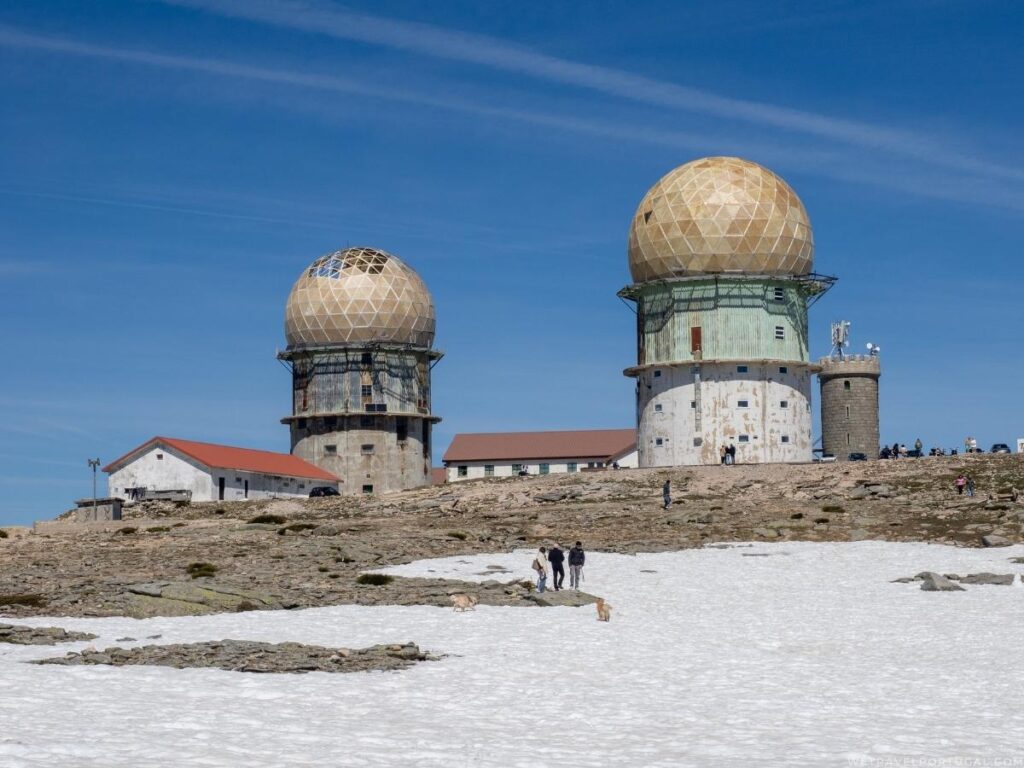
Serra da Estrela is where Central Portugal changes character completely. The mountains rise towards Portugal’s highest point on the mainland, with granite landscapes, glacial valleys, mountain lakes and villages scattered across the slopes. Manteigas is particularly well placed for exploring the mountains, while Covilhã and Seia make useful bases on different sides of the range.
The landscape changes dramatically with the seasons: summer is good for hiking without the heat found further south, while winter can bring snow to the highest areas. Give yourself more than a few hours if you want to explore properly, as the mountain roads and viewpoints are part of the experience rather than simply a way of getting between attractions.
Schist Villages
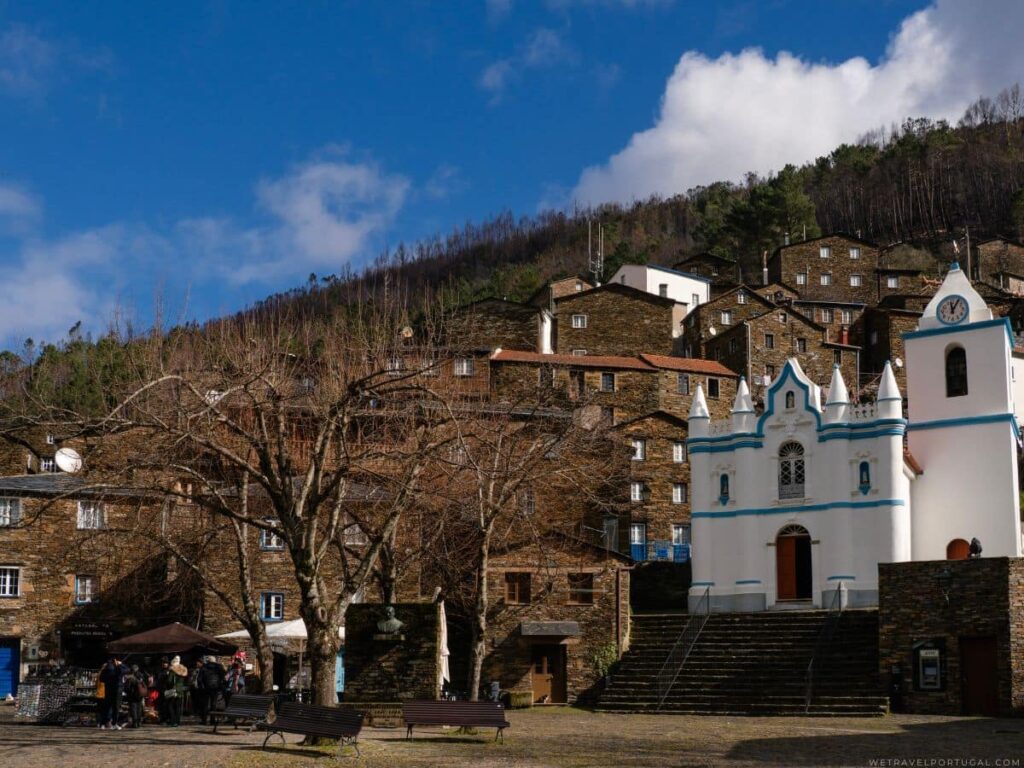
The Aldeias do Xisto are a collection of small mountain villages built from the dark schist stone found throughout the interior of Central Portugal. Their narrow lanes, stone houses and wooded valleys make them very different from the whitewashed villages found closer to the coast.
Piódão is the most famous, but it is worth looking beyond the postcard views and exploring some of the smaller villages and walking trails that connect them. This is an area where having a car makes a significant difference, as the villages are spread across mountainous terrain rather than forming a convenient public-transport route. If hiking, rural landscapes and slower travel appeal to you, allow at least a couple of days rather than trying to squeeze the Schist Villages into a single afternoon.
Viseu & Dão Wine Country
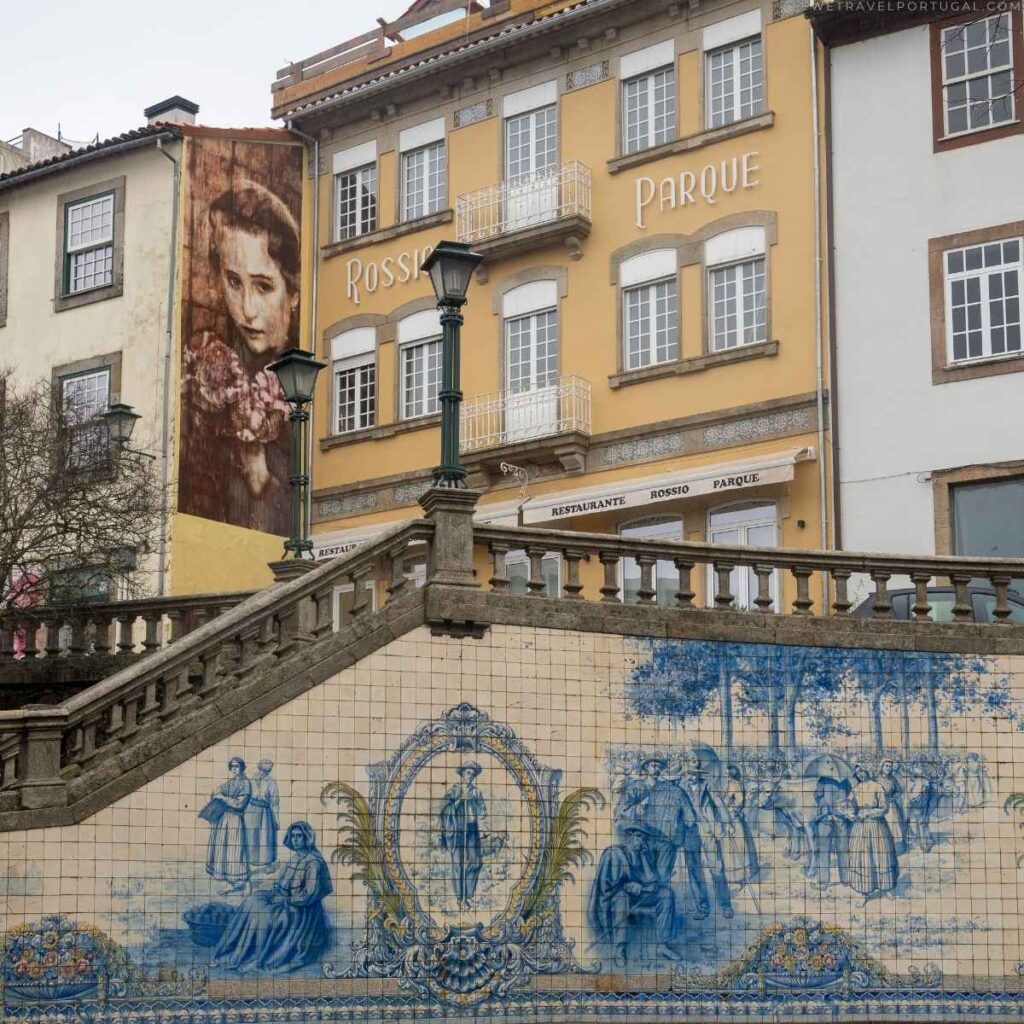
Viseu is one of Central Portugal’s quieter cities and a useful base for exploring the Dão wine region. Its historic centre is compact enough to explore on foot, with the cathedral, old streets and granite buildings giving the city a very different appearance from the coastal towns.
Outside the city, the Dão is one of Portugal’s established wine regions, surrounded by mountains that help shape its climate and vineyards. This is a good part of Central Portugal to explore by car, particularly if you want to visit wineries and combine wine tasting with villages and countryside. For travellers interested in Portuguese food and wine, Viseu and the Dão are worth adding to an itinerary rather than simply passing through on the way to Serra da Estrela.
Historic Villages & Eastern Central Portugal
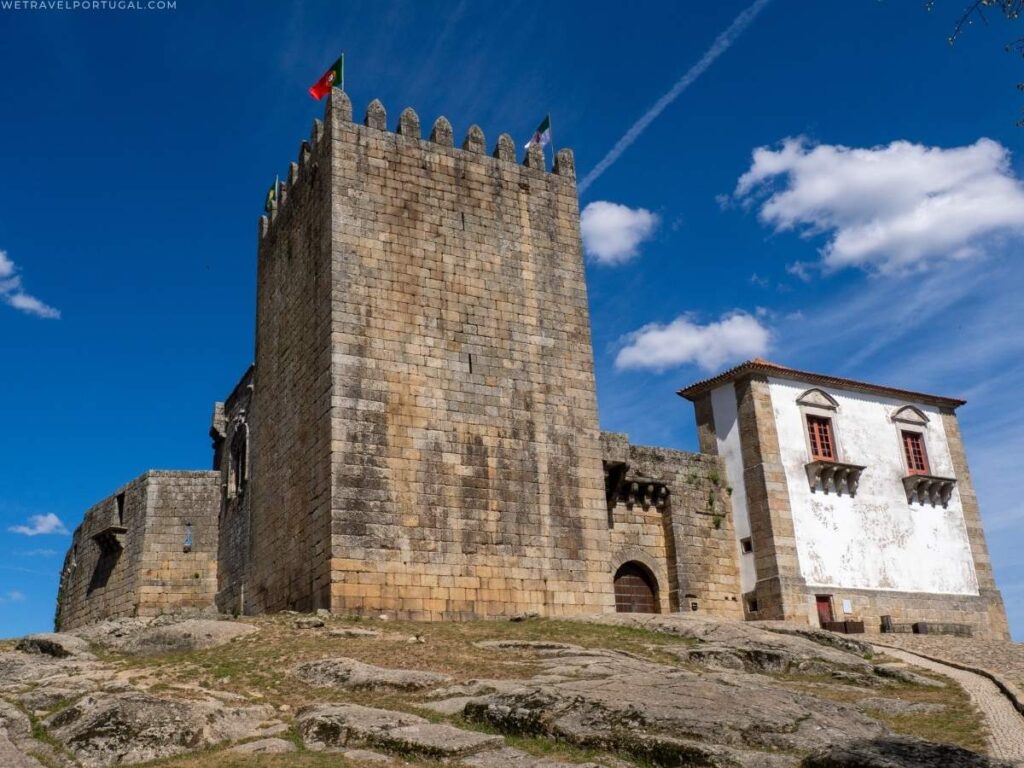
Towards the Spanish border, Central Portugal becomes more sparsely populated and the landscape is dominated by granite, dry hills and medieval settlements built around former frontier fortifications. The Historic Villages include places such as Monsanto, Belmonte, Sortelha and Castelo Novo, each with a different character despite their shared defensive history. Monsanto is perhaps the most visually striking, with houses built around enormous granite boulders beneath the remains of its hilltop castle, while Belmonte has particularly strong Jewish and maritime connections.
These villages are not particularly convenient as day trips from the coast, so they work best as part of a longer road trip through the interior. The extra driving is worthwhile if you want to see a quieter side of Portugal that feels very different from Lisbon, Porto and the Atlantic resorts.
Mira de Aire Caves
If you’re looking for something well off the usual tourist track, look no further than the Mira de Aire Caves or Grutas as they are officially called. The extensive caves were only discovered in 1947 and during a guided visit you can access a 600m section that’s around 200m below ground. A truly unique attraction in the centre of Portugal. In 2010 the Mira de Aire caves were voted by the public as one of the 7 Natural Wonders of Portugal.
When to Visit Central Portugal
The amazing thing about Central Portugal is its diversity, which means at any time of the year, in any season you will find something great to see or do. In the height of the summer, it’s coastal towns are buzzing with a hectic seaside atmosphere. Head inland, and you’ll find serene rivers and river beaches, many in small villages. Great for cooling off after a morning’s hike!
In the winter, the seaside towns settle down, except in Nazaré. Where winter is the big wave season, where surfers attempt to scale record breaking waves. In land, in Serra da Estrela, you’ll find Portugal’s only snow resort.
For most travellers, we’d choose late spring or early autumn. May, June, September and early October usually give you the best balance for exploring Central Portugal: comfortable temperatures for walking around historic towns, good conditions for driving through the countryside and enough daylight to make the most of the region. Summer is hotter and busier, particularly on the Atlantic coast, while winter is quieter but brings more changeable weather and shorter days.
Which Places Deserve an Overnight Stay?
For a short trip, Coimbra, Tomar and the Serra da Estrela are the places we’d most consider staying overnight. Coimbra has enough to keep you occupied for a full day and is particularly convenient without a car. Coimbra works exceptionally well if your travelling between Lisbon and Porto by train, you can easily break the journey with an overnight stay.
Tomar is much more enjoyable when you have time to explore beyond the Convent of Christ. In the mountains, staying in or around Seia gives you time to explore the valleys, viewpoints and walking trails without spending most of the day driving. If you’re travelling by car, Óbidos or the Silver Coast can also make good overnight bases, particularly if you want to explore the coast rather than simply visit Óbidos as a day trip.
Do You Need a Car to Explore Central Portugal?
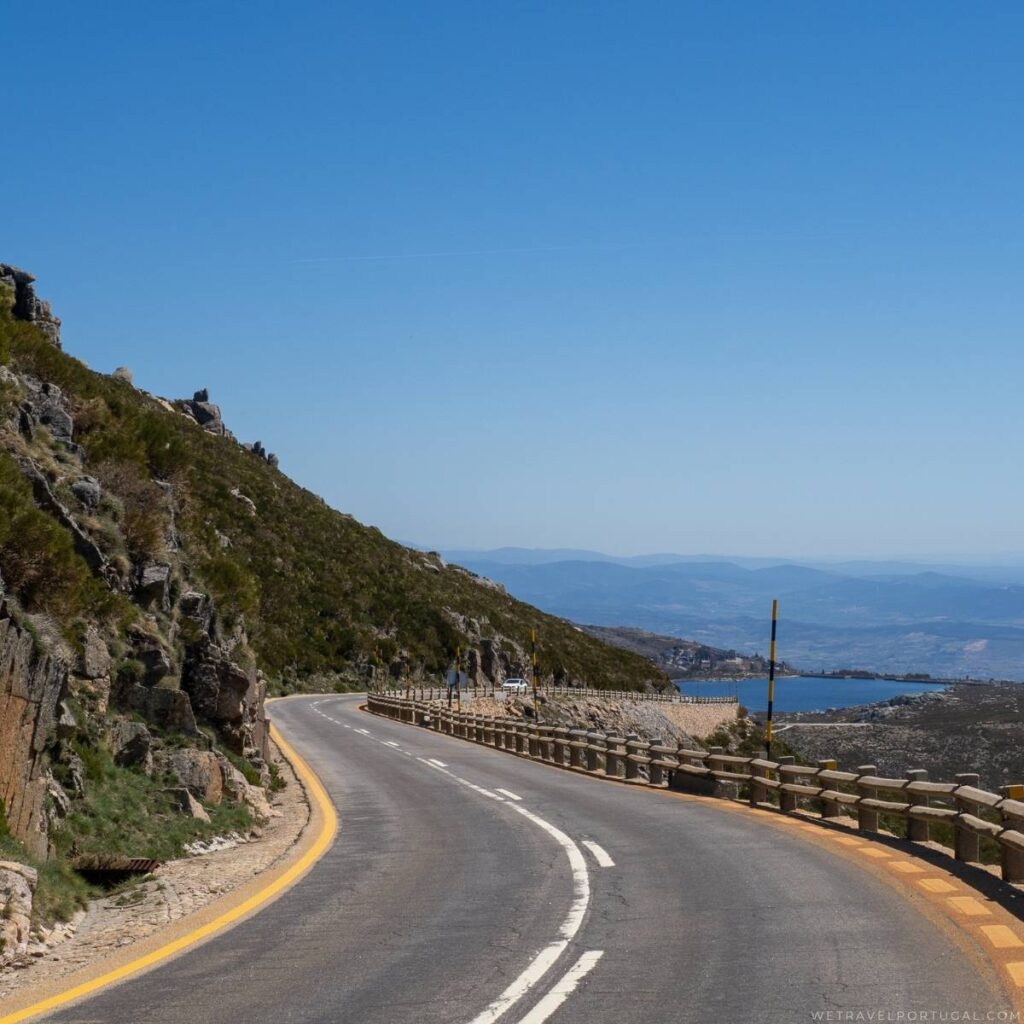
Yes, if you want to explore Central Portugal fully, we recommend hiring a car. You can easily visit Coimbra, Aveiro and some of the major historic towns by train, but the region’s mountains, interior small villages are spread across a large area.
Once you leave the main railway routes, public transport becomes much less convenient, and having a car gives you the freedom to stop where you want rather than building your trip around bus timetables.
A car is particularly useful for Serra da Estrela, the Schist Villages, the Dão wine region and the historic villages of eastern Central Portugal. These are areas where we find ourselves stopping regularly for a viewpoint, a village we hadn’t originally planned to visit, a local restaurant or a short walk. That flexibility is a big part of the appeal of travelling through the interior, and you simply don’t get the same freedom without your own transport.
If you’re mainly visiting Coimbra, Aveiro and the larger historic towns, you can manage without one. Coimbra is well connected by train and is easy to explore on foot, while Tomar is also straightforward to reach by rail. In these places, we’d actually prefer not to have a car: parking can be awkward around historic centres, and there’s little point paying for a rental while you’re exploring somewhere on foot.
