
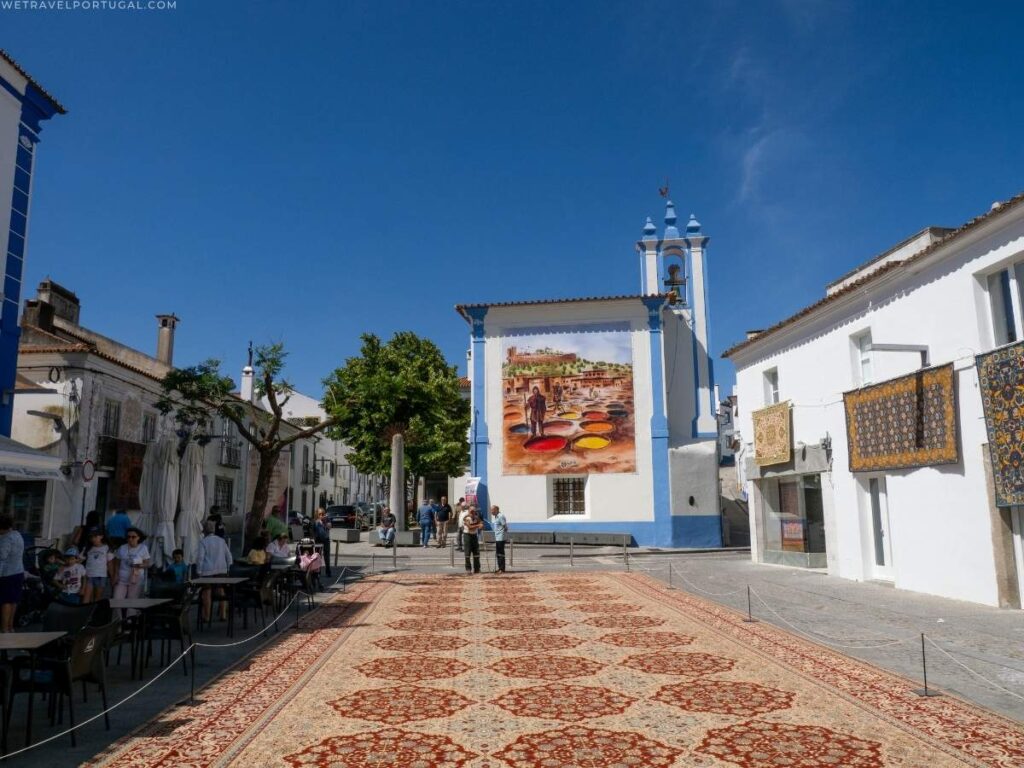
Arraiolos is a small Alentejo town best known for two things: its distinctive hilltop castle and the embroidered woollen rugs that have carried its name around the world. Arraiolos makes an easy day trip but absolutely rewards visitors willing to look beyond its most famous craft.
What we like about Arraiolos is that it does not need a huge itinerary. You can explore the castle, learn about the town’s traditions, browse local workshops, and enjoy a traditional Alentejo meal all without feeling rushed. Arraiolos is only 120km from Lisbon (just 1 hour and 20 minutes) and just 20 kilometres from Évora (20 minutes). It is an easy day trip but has enough character to justify a slower overnight stay. Or even using the town as a base for a short stay in the Évora region.
Why Visit Arraiolos ?
Arraiolos is well worth visiting if you are interested in Portuguese crafts, textiles, and the smaller historic towns that the Alentejo is famous for. It does not have the concentration of monumental sights found in Évora, but that is part of its small-town appeal. The town feels calm, manageable and connected to the countryside surrounding it. Unlike Évora, busloads of tourists aren’t arriving each morning either.
How long do you need in Arraiolos?
We recommend allowing at least half a day. Although with a full day you have time to visit the museum, speak to people in the tapestry shops and enjoy lunch without rushing. Additionally, you can take things a step further with some wine tasting nearby at Monte da Ravasqueira. Due to Arraiolos’ location, you can also combine the town with Évora, Evoramonte, Estremoz or Montemor-o-Novo, to make a fuller, busier itinerary.
The Best Things to See and Do in Arraiolos
Arraiolos is compact enough to explore on foot, with most of its sights concentrated between the castle and Praça do Município. We think it’s best to start at the top of the hill and gradually work your way down through the historic centre.
Explore the Castle of Arraiolos – Castelo de Arraiolos
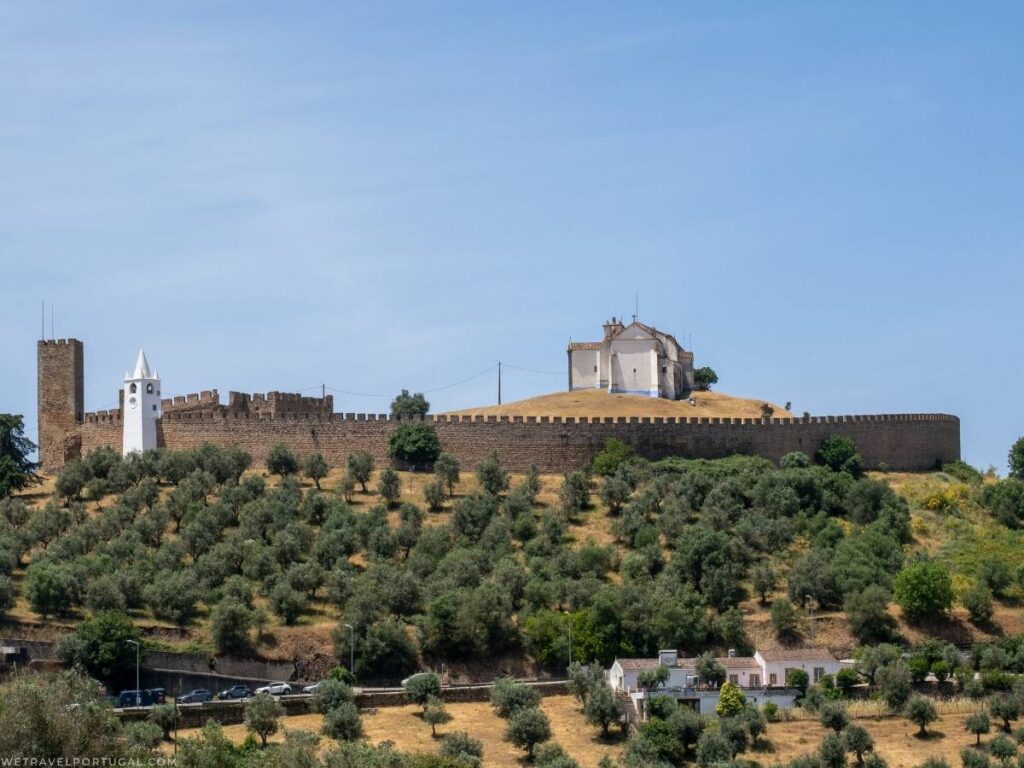
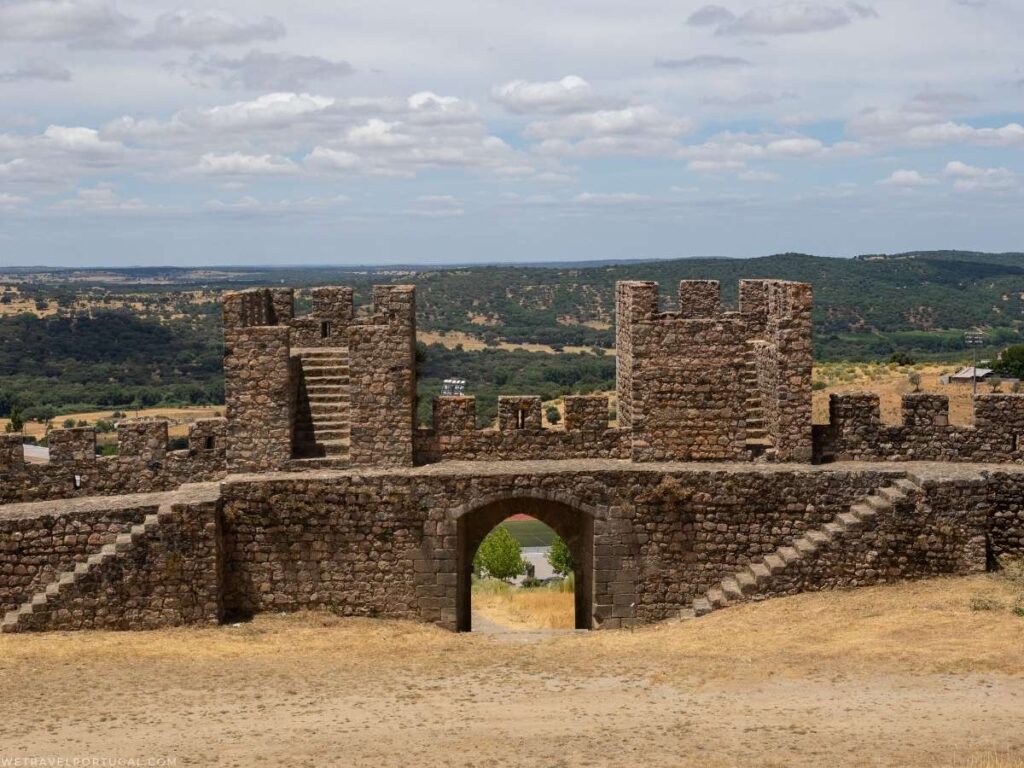
High above the town is the beautiful Castelo de Arraiolos. The castle is immediately recognisable by its unusually round enclosure that looks like it is straight out of a fantasy book. Construction on the castle began in 1306 following an agreement between King Dinis and the local authorities.
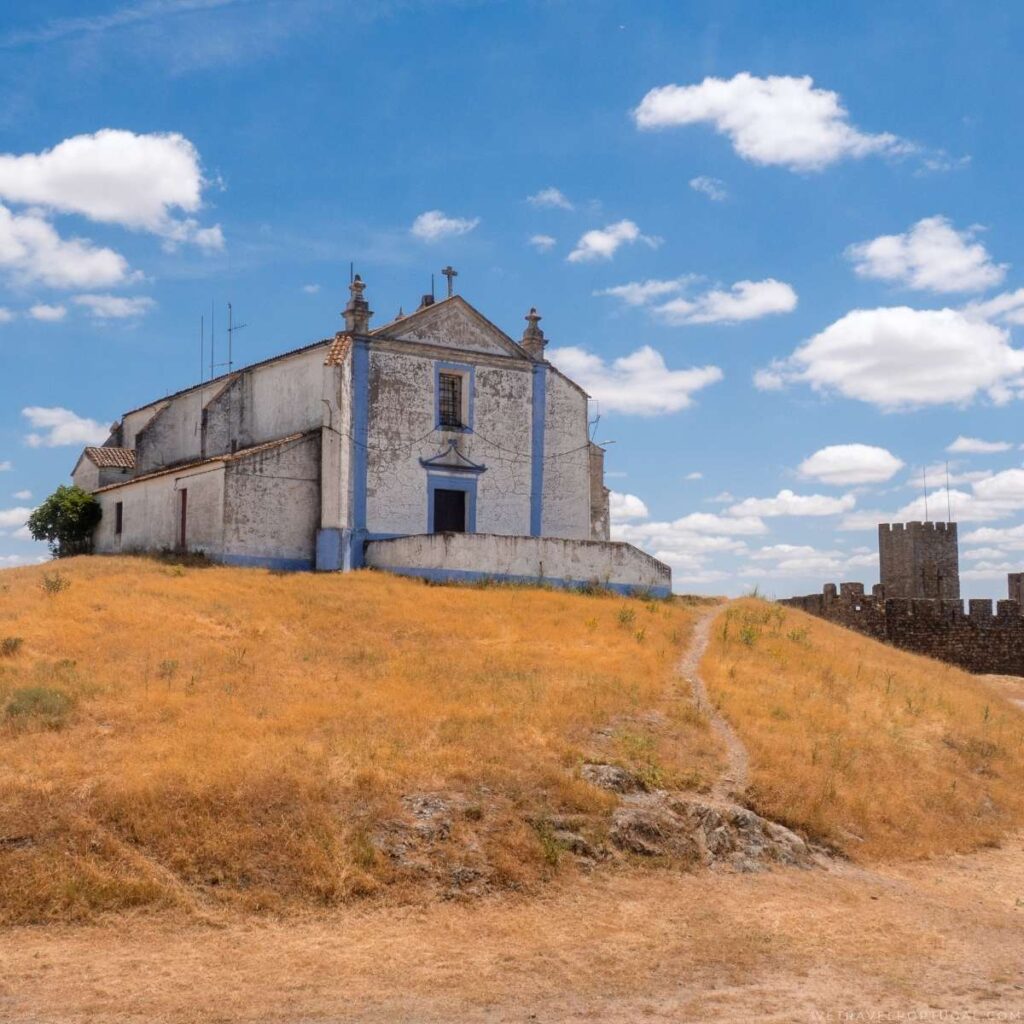
Within the walls stands the Igreja do Salvador, a sixteenth-century church that replaced an earlier medieval building. Relatively little remains inside the enclosure, so the castle is more rewarding for its unusual form, atmosphere and setting than for its historical features. The views are the real highlight. From the walls, you can look across the whitewashed town and the open Alentejo countryside beyond it.
The climb is short but steep and exposed. In summer, visit early in the morning or later in the afternoon and bring water.
Visit the Arraiolos Tapestry Interpretation Centre
The Centro Interpretativo do Tapete de Arraiolos is the best place to understand the craft that made the town famous. Its exhibitions explain the history, materials, patterns and production of the rugs, including the distinctive stitch used to embroider wool onto the supporting fabric.
The exact origins of the tradition remain uncertain. The earliest known written reference dates to 1598, although rug production in Arraiolos may have began considerably earlier. Over time, its designs absorbed different decorative influences while the knowledge required to produce them was passed between generations of local embroiderers.

It is best to visit the interpretation centre before browsing the tapestry shops. This way you’ll be able to understand the history and the work involved, the materials and the patterns you’ll come across later. The interpretation centre is in Praça do Município and currently opens from Tuesday to Sunday, with a lunchtime closure. As always, check the official website before visiting because local opening hours can change.
Browse the Artisanal Shops
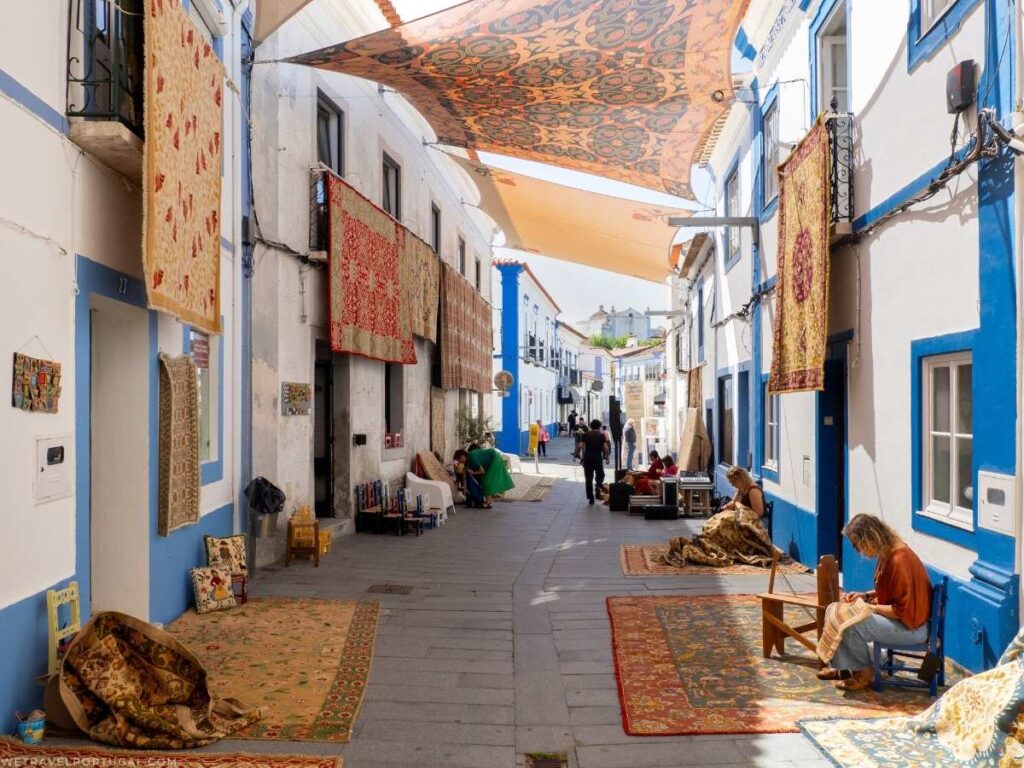
Several shops and workshops in the historic centre sell Arraiolos rugs, wall hangings, cushions, and smaller embroidered pieces. Some use traditional patterns, while others adapt the technique to more contemporary designs. Take your time and ask where each item was produced, whether it was embroidered by hand and which materials were used. The amount of work involved in a large rug can be considerable, and prices vary accordingly.
Some of our favourites to browse are: Casa dos Tapetes de Arraiolos, Fábrica de Tapetes Hortense, and Tapetes Arte em Casa. However, there’s lots of shops to browse along Rua Alexandre Herculano and the small streets surrounding them. For more general stores, with a wider range of artisanal products Casa das Artes de Arraiolos and Casa Rocha are amazing.
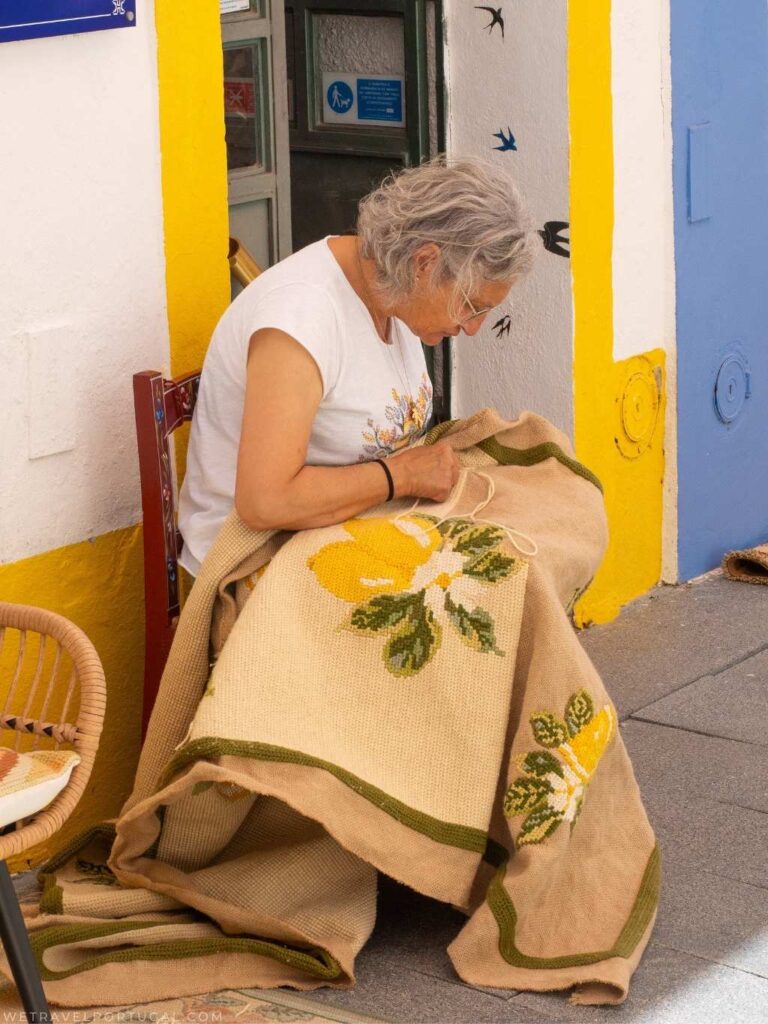
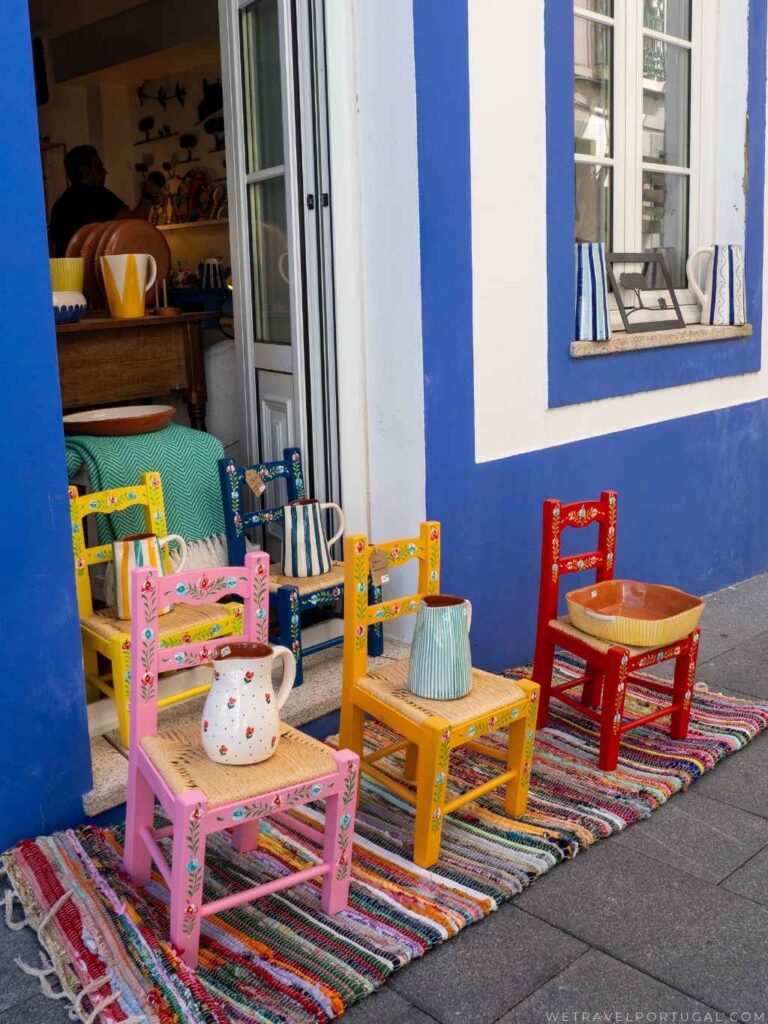
Even if you are not planning to buy anything, theses shops are an important part of experiencing and feeling Arraiolos. In many of them you’ll get to meet the people that make the rugs, or are related to them and they’ll proudly tell you the stories behind them.
Explore the Historic Centre and Praça do Município
Arraiolos has a compact historic centre of whitewashed buildings, coloured borders, small squares and gently sloping streets. It is easy to explore without a fixed route, although most visits naturally revolve around Praça do Município, the main town square.
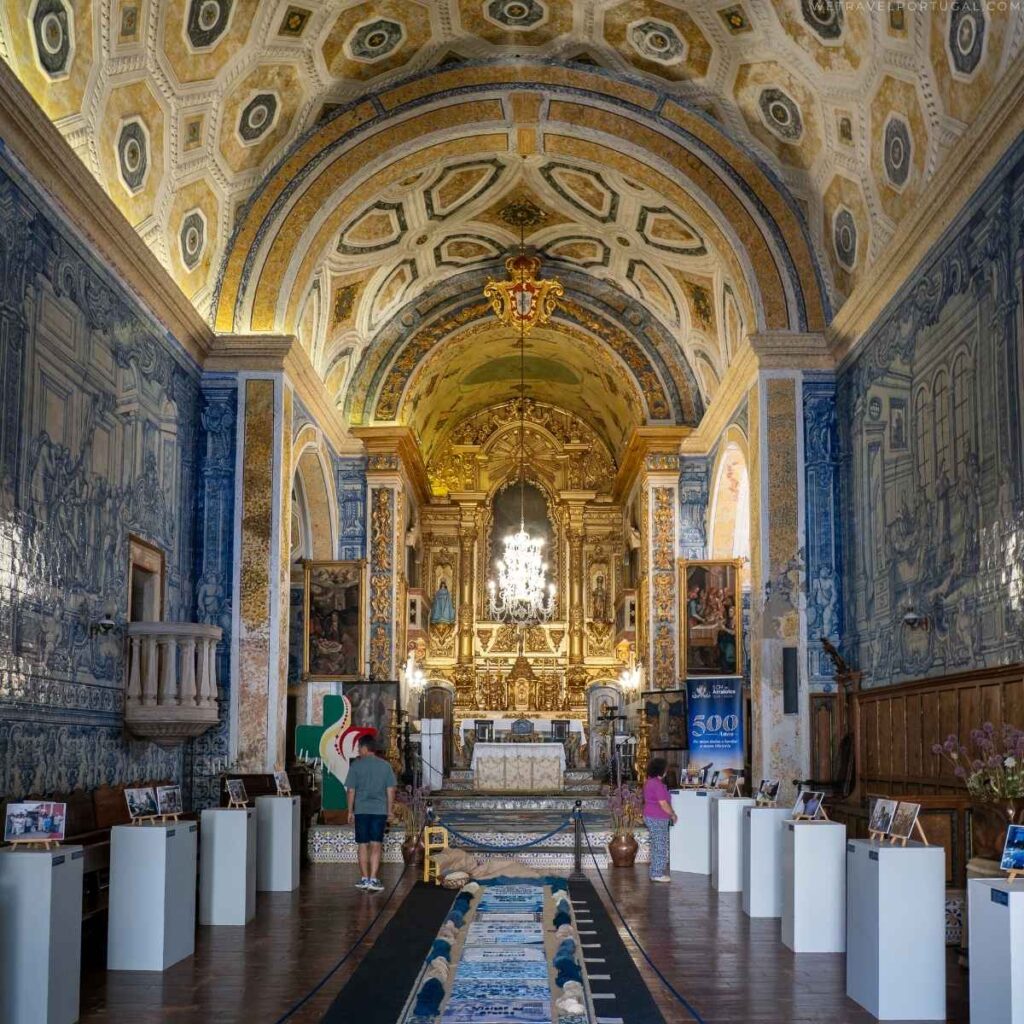
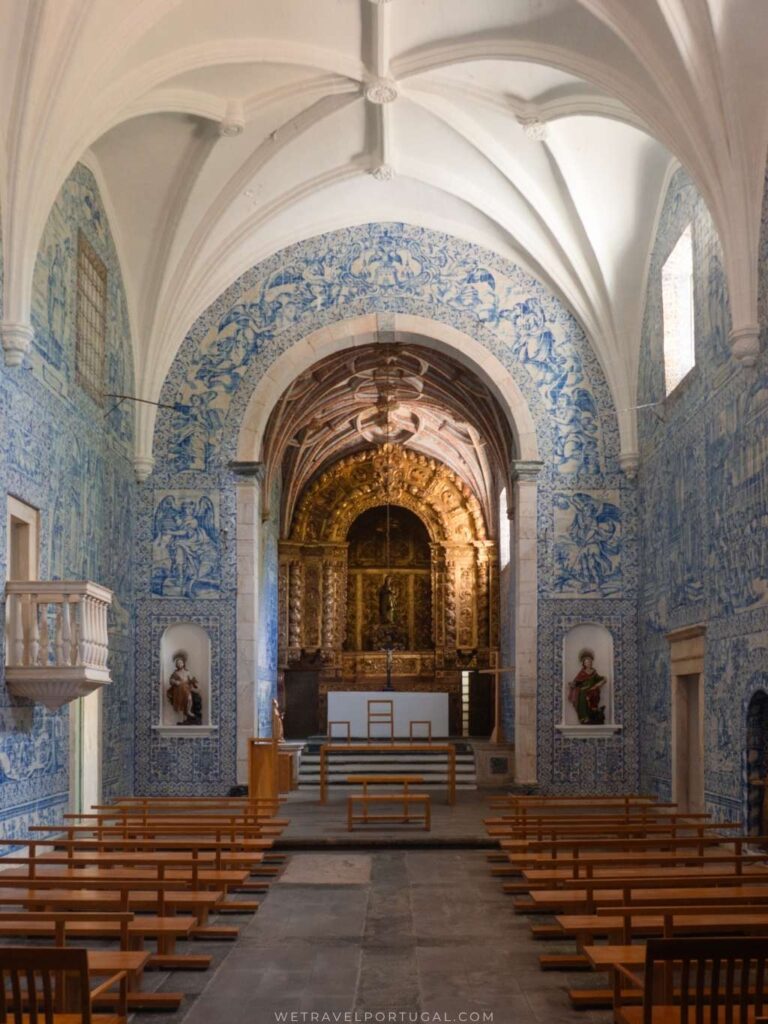
If you’re a tile lover, then make sure to stop by the church – Igreja da Misericórdia. The inside is almost completely tiled with a collection of eighteenth-century azulejo panels.
The Municipal building – Câmara Municipal de Arraiolos is the administrative building for the town, and also operates as a small exhibition centre with revolving exhibits. When we visited there was a small curated exhibition of Bonecos de Santo Aleixo, traditional Alentejo puppets believed to have originated in the town they derived their name from.
Visit (or stay in) Convento dos Lóios Arraiolos
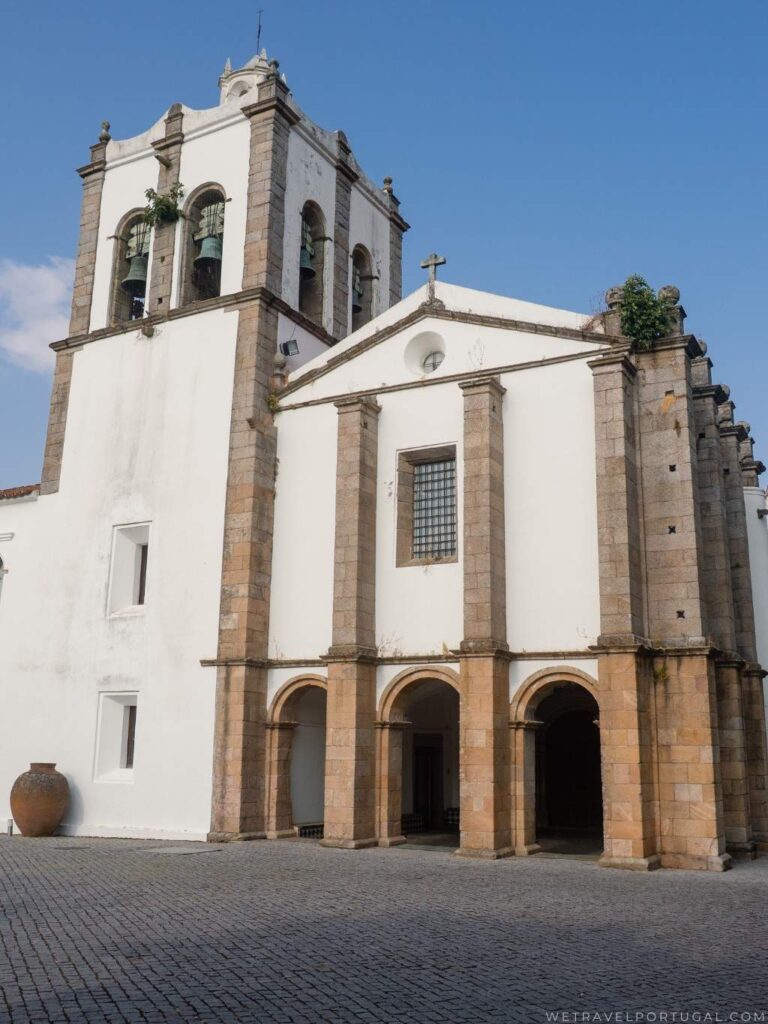
The former Convento de Nossa Senhora da Assunção stands in a valley outside the historic centre and now houses the Pousada Convento de Arraiolos. Founded in the sixteenth century, the complex combines historic architecture with its conversion into a modern hotel.
The church retains Manueline and Mudéjar elements, while the former convent includes cloisters and later decorative additions. It is also Arraiolos’s most distinctive place to stay. If you are not a hotel guest you can access the courtyards, cloisters, and the incredible church. Another great spot if you’re interested in azulejo tiles.
Go Wine Tasting and Visit Monte da Ravasqueira
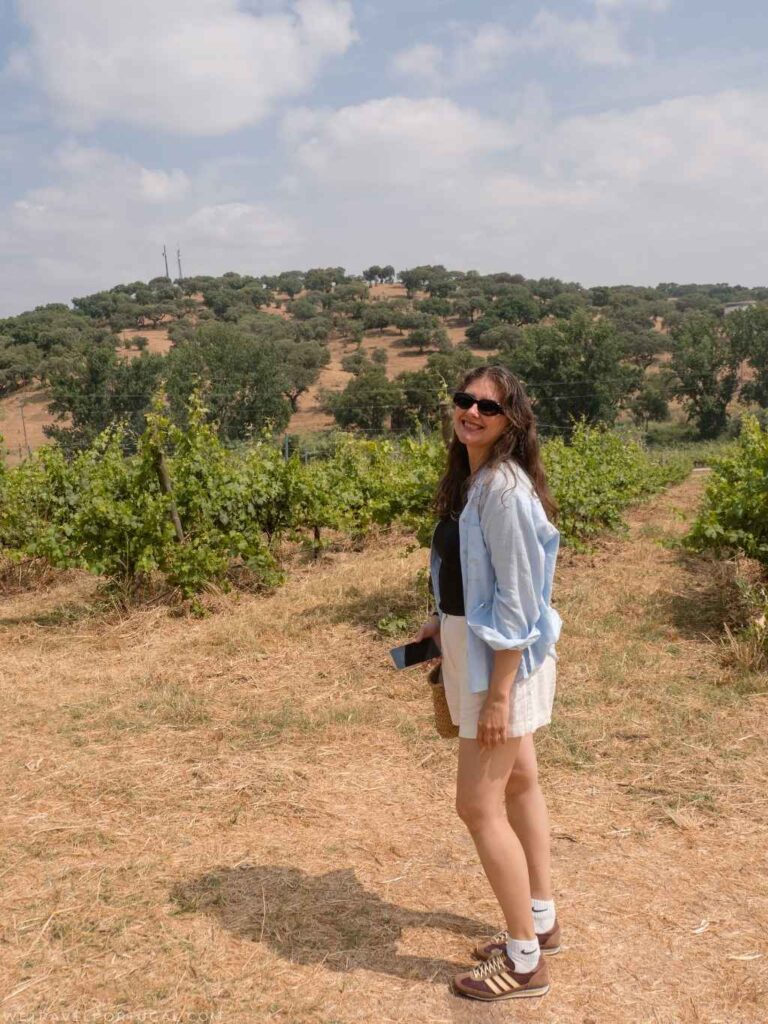
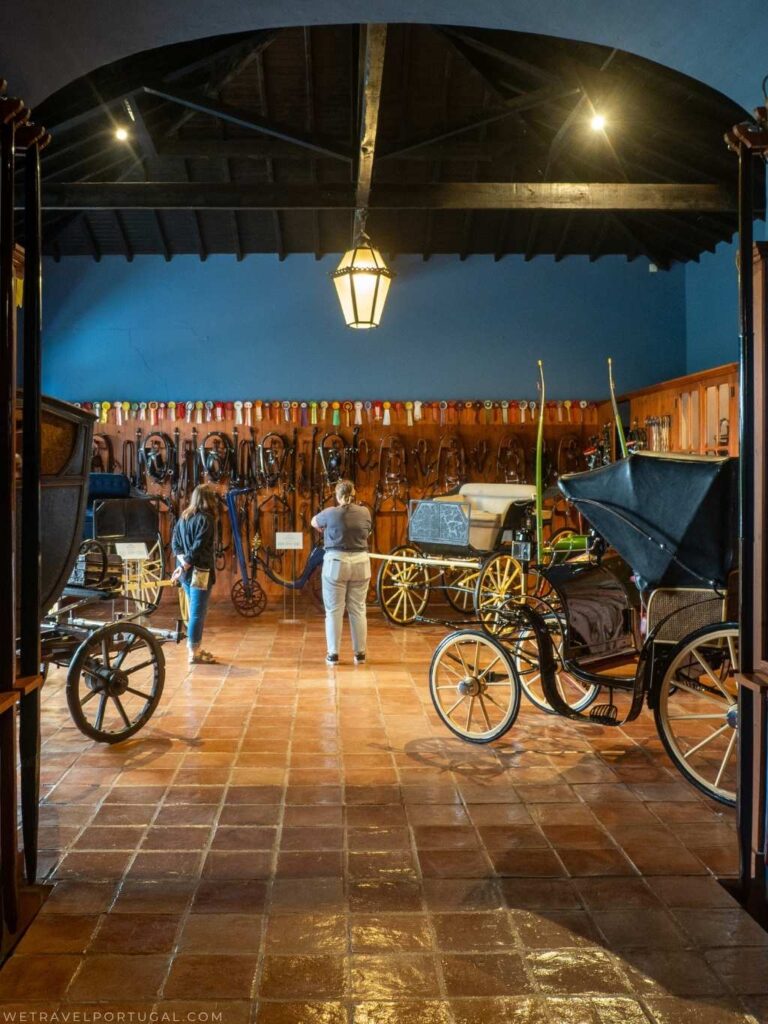
Just outside Arraiolos, Monte da Ravasqueira is one of the best places to combine a visit to the town with an introduction to Alentejo wine. Experiences include a guided walk through the vineyards and winery, a tasting of the estate’s wines and a visit to its unusual but fascinating carriage museum, which houses a private collection of historic carriages and harnesses.
Full visits take around two hours and makes a great afternoon stop after you’ve seen the town, although you will need a car or taxi to reach the estate. Tours and tastings should be reserved in advance through the vineyard directly and start at €16.50 per person for a basic tasting of two wines and a tour.
Experience the Alentejo Countryside
The countryside around Arraiolos is ideal for gentle walking and cycling, with open Alentejo landscapes, cork-oak groves and several marked routes close to town.
For an easy route, the Passadiço de Arraiolos is a flat wooden walkway suitable for walking and cycling which takes you alongside the castle, with awesome views of the both castle and countryside. It really is only 500m long, but does lead you to one interesting focal point – . Rotunda da Cadeira. A roundabout with a huge example of Moveis Alentejanos, furniture painted in a colouful and distinctive local style.
If you want something longer than the local municipality maintains four marked trail routes. With the standout trail being the PR4 – Rota da Sobreira Grande. It is a circular trail of around 10 kilometres that leads to the Sobreira Grande, a monumental cork oak that was voted Portugal’s Tree of the Year in 2022.
What to Eat in Arraiolos
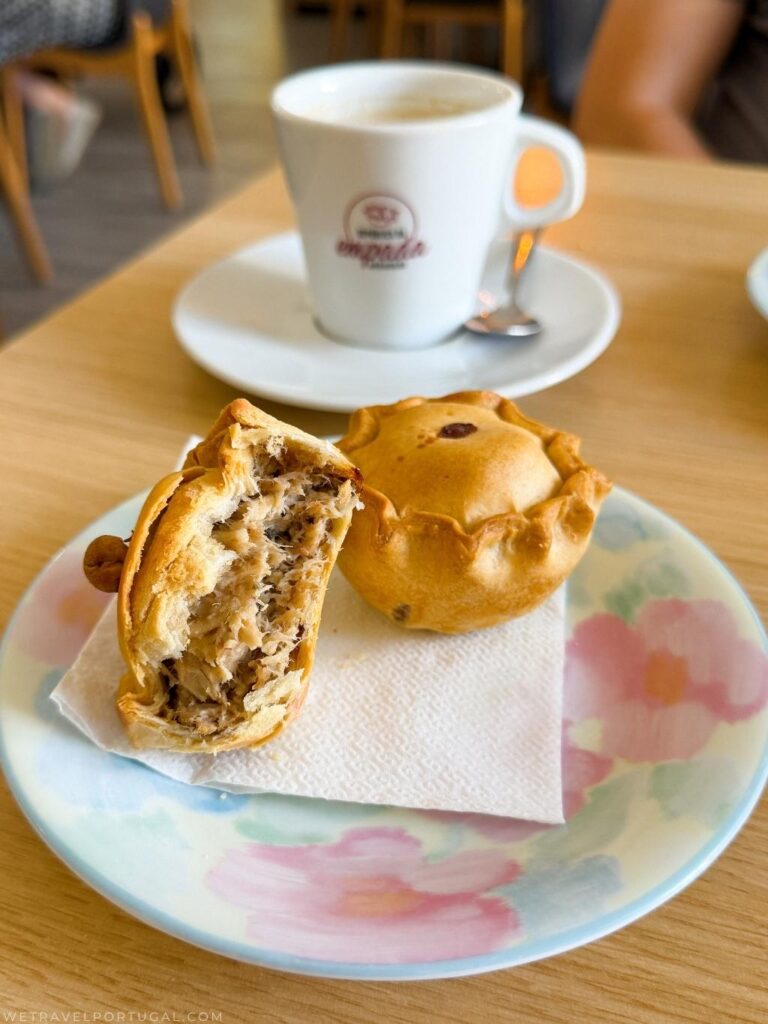
Arraiolos has some fantastic Alentejo food on offer. The local speciality is the Empada de Arraiolos, a small savoury pie traditionally filled with seasoned meat. It makes an excellent snack, before exploring the town. The place to get one is República da Empada, although there’s a few other shops too. Supposedly it’s a medieval recipe, but it’s been documented and sold in the town since at least 1934.
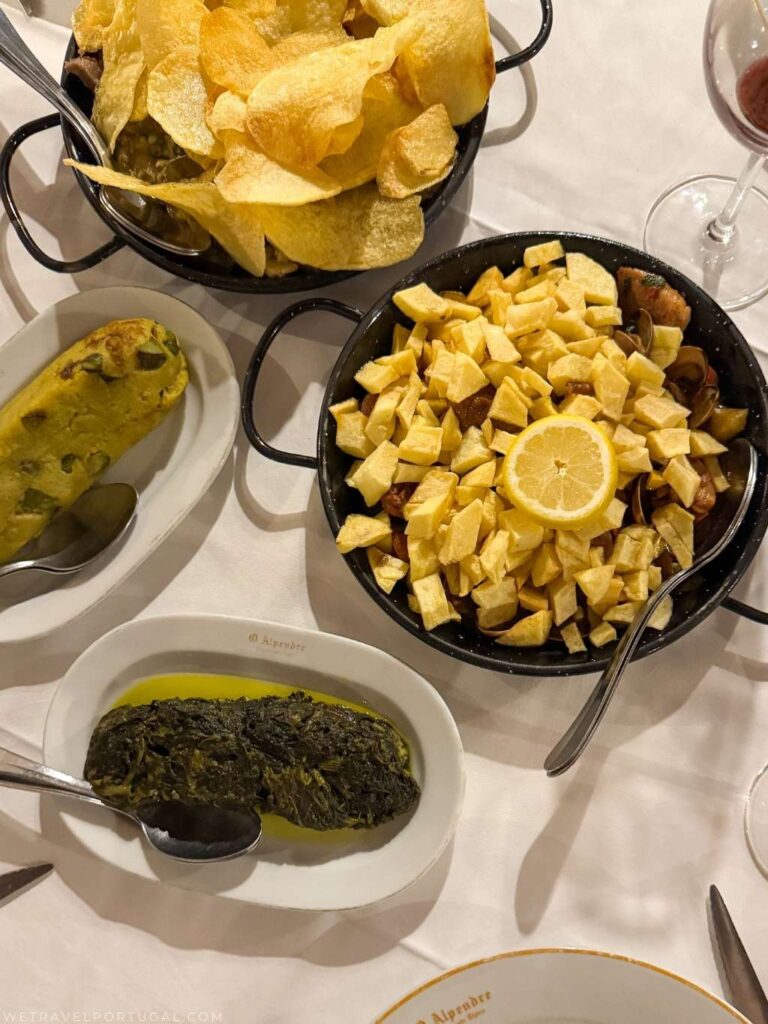
For a full meal, then you can head to one of several true Alentejo restaurants. Where you’ll find typical dishes including açorda (bread soup), migas (a dish traditionally made from stale bread), lamb, pork and game, as well as regional cheeses, olive oil and wine. For something sweet, look for pastéis de toucinho, a traditional pastry associated with the town.
O Alpendre is our favourite, you’ll first enter through its incredible ‘wine hall’ where you’ll be encouraged to browse and perhaps pick a bottle. Its menu has a wide range of traditional dishes including multiple types of migas and local specialties.
Where to Stay in Arraiolos
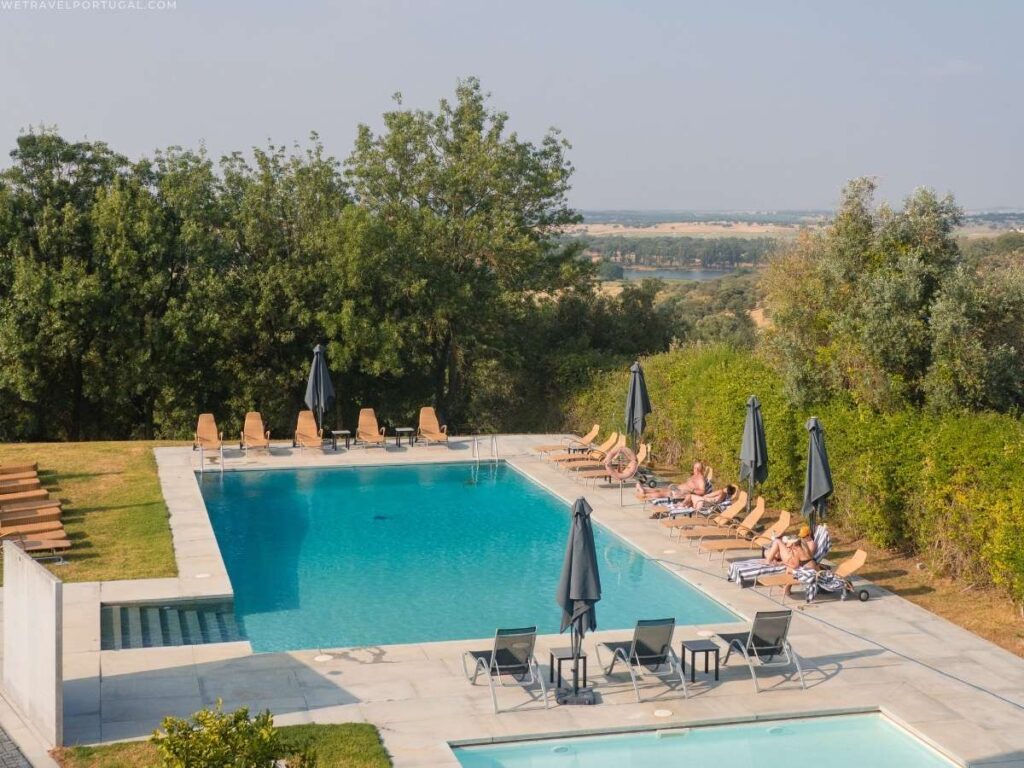
Most visitors come to Arraiolos on a day trip from Évora, but staying overnight allows you to experience the town after the daytime visitors have left, and take your pick from the best restaurants. The Pousada Convento de Arraiolos is the most historic and atmospheric option, and gives you a great spot to explore. With its pool and countryside setting it gives you somewhere to cool off during the heat of the summer.
There’s a few smaller guesthouses and rural properties around the town that provide alternatives, often with gardens or swimming pool, and direct access into the town.
How to Get to Arraiolos
Arraiolos is approximately 20 kilometres northwest of Évora and is easiest to reach by car. The journey from Évora takes around 25 minutes, while the journey from Lisbon is approximately an hour and a half away.
Arraiolos does not have a railway station, so if you’re planning on using public transport you can take a train to Évora, and continue by local bus or taxi. Coaches from Lisbon are also infrequent – there’s one service operated by Renex that departs daily at 5pm. Unless you’re planning an overnight stay for most visitors this won’t be a practical option.
The easiest public transport route is to go by train or coach to Évora, and connect to a local service. Local services are operated by Rodoviária do Alentejo but they can be limited, particularly at weekends, so check the current timetables carefully before planning a car-free visit.
A car is also useful if you want to continue to the surrounding countryside, Evoramonte, Estremoz, Montemor-o-Novo or other smaller Alentejo destinations.

When to Visit Arraiolos
Spring and autumn provide the best balance of comfortable temperatures and attractive countryside. Summer can be extremely hot, especially on the exposed castle hill, while winter is quieter and may bring cool or wet weather.
The annual O Tapete Está na Rua event brings exhibitions, cultural activities and tapestry displays into the historic centre. Dates vary each year, so check the municipality’s current events programme when planning your visit.
How to Spend One Day in Arraiolos
Our preferred itinerary starts at the castle before the day becomes too warm. After enjoying the views, walk downhill into the historic centre and visit the Tapestry Interpretation Centre.
Spend some time browsing the workshops before stopping for an Empada de Arraiolos or a longer Alentejo lunch. In the afternoon, explore the Igreja da Misericórdia and the quieter streets around Praça do Município.
Finish at the former convent or take a short drive through the surrounding countryside before returning to Évora.
Is Arraiolos Worth Visiting?
Arraiolos does not need a long checklist of attractions. Its appeal lies in the connection between the historic town, the landscape, and its traditional craft that remains central to its identity. Give it half a day and you can see the highlights, give it longer and the town begins to reveal why its tapestry tradition has endured for centuries.
