
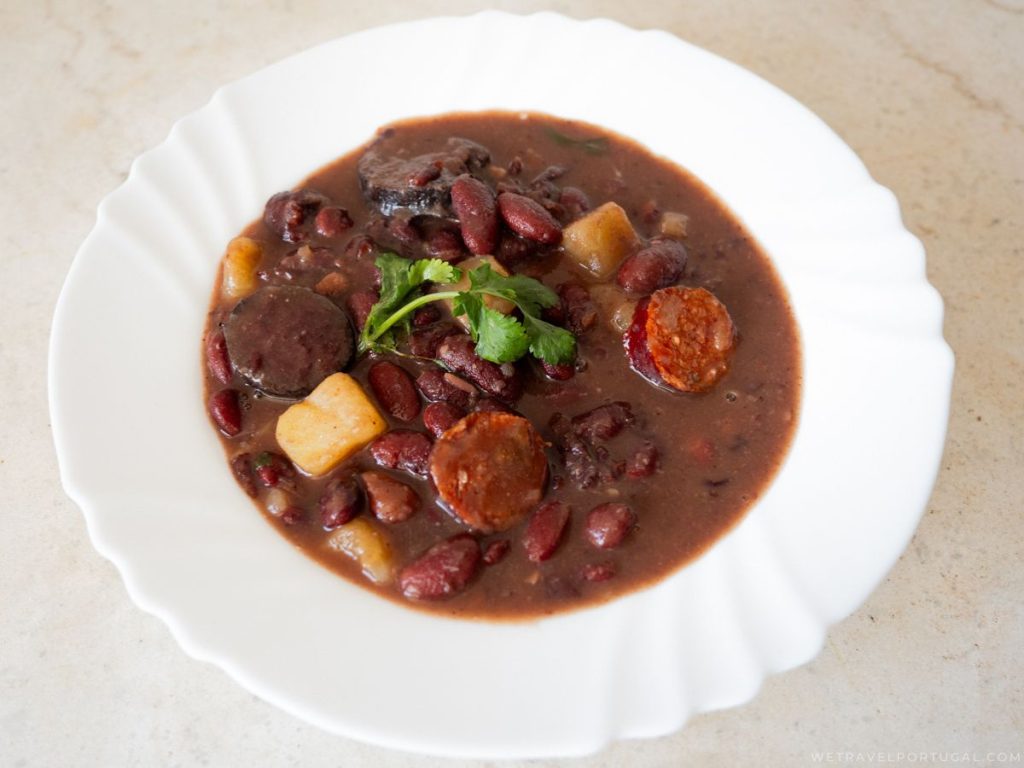
Stone Soup or Sopa da Pedra is a hearty Portuguese soup that combines beans, potatoes, and various cured meats and sausages. This dish, that’s typical from the city of Almeirim, is deliciously comforting and perfect for the winter months. Continue to read to learn more about the story behind it and how to make it!
Soup Culture in Portugal
One of the best ways to start a meal in Portugal is with a bowl of warm soup, no matter the season! They are widely available across the country and so popular, that even some big fast-food chains will have a selection of soups included on their menus. They can be a simple vegetable soup or more elaborate concoctions like Caldo Verde.
Sopa da Pedra
One of our favourites and less well known to visitors is Sopa da Pedra. If you know your Portuguese, you might have spotted the word stone in its name. Portuguese Stone Soup is a traditional dish from Almeirim in Santarém. It was originally a peasant dish intended to provide sustenance to farmers on a long day of labour. Over time it became Almeirim’s signature dish, and one of the few Portuguese foods protected under the EU as a TSG (Traditional Specialty Guaranteed). Its connection to a European folk tale is one of the reasons it became such a popular and successful dish!

Sopa da Pedra’s Historic Tale
The story has many variations of a similar theme, hungry travelers arrive in a new place and begin begging for food. Unfortunately for the travelers, no one has food to offer. So the travelers begin to make a soup with non-edible objects like metal or wood. The making of a strange soup attracts the curious locals, which the travelers then trick into contributing to the soup with vegetables and meat in order to improve the flavour.
They story is told in many different ways across Europe, sometimes being called axe Soup or wood Soup. In Portugal the traveler of the story was a monk, and a stone was the base of his soup. The story is believed to have a moral connotation to reinforce the importance of sharing in times of need.
Sopa da Pedra Ingredients
The main ingredients of this traditional recipe are cranberry beans, potatoes, onions, garlic, bacon, and three types of sausages (chouriço, morcela, and farinheira). These traditional sausages differ in texture and flavour and are usually available in most supermarkets in Portugal. Sopa da Pedra also includes bacon, and sometimes the pig’s trotter and ears.

We wanted to simplify the recipe, so we stuck to chouriço, morcela (Portuguese blood sausage), and bacon. We also swapped the cranberry beans for red kidney beans. We recommend using dried beans instead of canned, they not only have a better taste, but will lead to a creamier soup.
Sopa da Pedra Recipe
Sopa da Pedra is really simple to prepare, you start by frying the sausages with the bacon until golden. You then add in the onions, garlic, and bay leaves and sauté for a couple of minutes until they soften a little. The beans are added and covered with water to cook for about 1 hour. Then it’s time to take out the sausages and add in the potatoes that should cook for about 20 minutes or until fork-tender. In the end the sausages are sliced and returned to the pan. Everything is seasoned with salt, and pepper and garnish with plenty of fresh coriander before serving.

Several traditional recipes still include the stone that is removed before serving, but we leave that bit out of our recipe. It is a delicious, hearty soup that is actually really simple to prepare. It is filling enough that it should easily convince those that believe the soup cannot be considered a meal.
If you’re still not convinced to give it a try, how about this. It was selected as one of the seven wonders of Portuguese gastronomy in 2011.
How to Make Authentic Portuguese Sopa da Pedra

Sopa da Pedra – Portuguese Stone Soup
6
servings20
minutes1
minute400
kcalSopa da Pedra is a hearty Portuguese soup that combines beans, potatoes, and various cured meats and sausages.
Ingredients
200 g Morcela (blood sausage)
200 g Chouriço
100 g Bacon
500 g Dried kidney beans
400 g Potatoes – cut into medium size cubes
2 Medium onions – diced
3 Garlic cloves – roughly chopped
2 Bay leaves
Fresh cilantro
Salt
Black pepper
Directions
- Place the beans in a bowl, cover it with water. Let it soak for at least two hours but preferably overnight.
- Place a tall saucepan over medium to high heat. Once hot, add the olive oil, the cured sausages and bacon. Fry them on both sides until golden brown.
- Reduce the heat to medium low, add the onions, garlic and bay leaves in. Cook for about 5 minutes before adding the beans that should be rinsed and drained. Cover it with water.
- Bring it to a boil then reduce the heat to medium, let it simmer for around one hour or until the beans cook through. The time that takes to cook the beans can vary according with how long you soak it for, and the quality of your beans.
- Take out the bacon and the sausages and cut it into thin slices.
- Peel and dice the potatoes, add them to the soup base. Add a little more water if necessary, then simmer for about 20 minutes or until the potatoes are fork-tender.
- Combine the cured meat with the beans and potato soup base. Season it with salt, pepper and roughly chopped fresh cilantro. Serve it with a side of fresh crusty bread.
Notes
- If using dried beans, make sure to soak them for at least 2 hours prior to cooking. Although it’s better to soak it overnight so it’s easier to digest and takes less time to cook.
Have you tried this recipe? Let us know in the comments below!
More Portuguese Soup and Stews You’ll Love!
- Authentic Caldo Verde – Portuguese Green Soup
- Canja de Galinha – Portuguese Chicken and Mint Soup
- Cozido à Portuguesa – Homemade Portuguese Stew
- Portuguese Fish Stew – Caldeirada de Peixe
- Portuguese Feijoada à Transmontana – Portuguese Bean Stew
Follow Us!

