
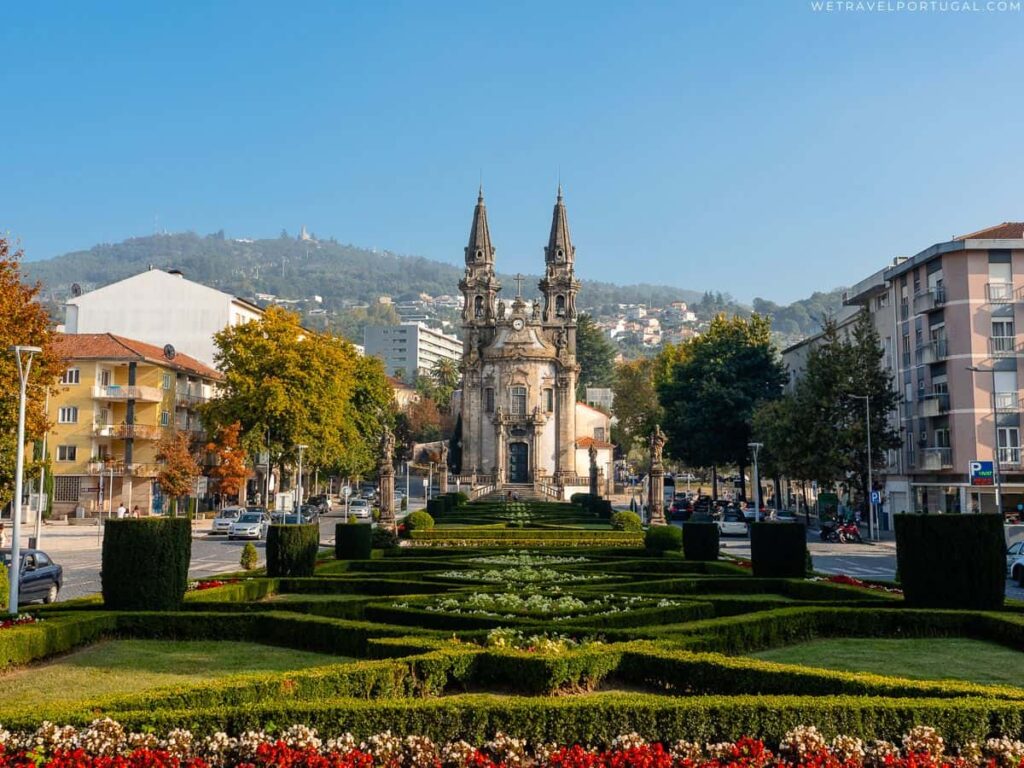
Guimarães is a historic city in Northern Portugal that is romantically referred to as the ‘birthplace of Portugal’. Guimarães is a beautifully well-preserved city that oozes historic charm. You’ll find medieval plazas, a castle, palaces, monasteries, and even a cathedral waiting to be discovered. All in a city deeply connected to the origins of Portugal.
It’s a brilliant city, that’s well worth visiting and definitely more than just a day trip from Porto – which is often what it’s recommended as.
The Birthplace of Portugal – Guimarães
Why is Guimarães called the birthplace of Portugal? Well, it’s here that Portugal’s first king, Afonso Henrique was born, and baptised. In fact, you can visit his first castle residence Castelo de Guimarães and the chapel he was reportedly baptised in nearby.
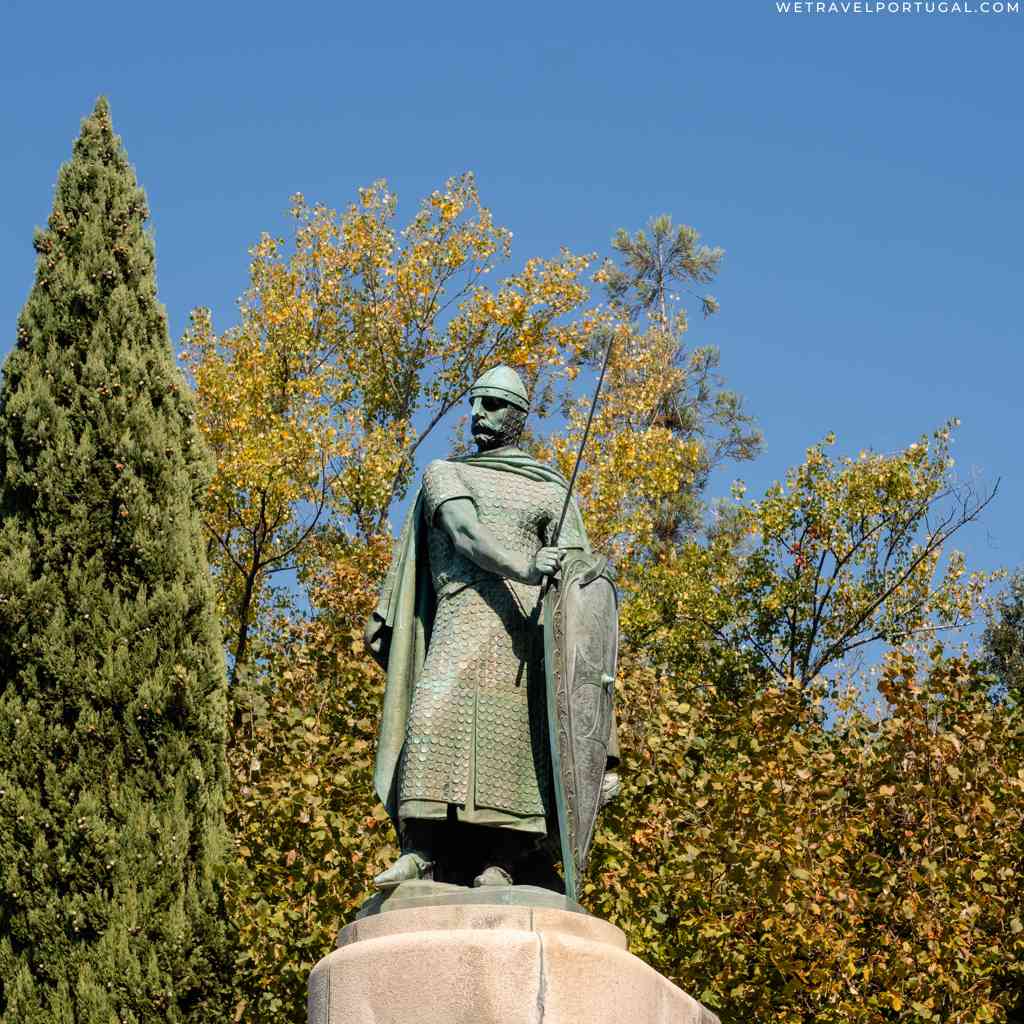
Before becoming Portugal’s first King, Afonso Henrique was the Count, of a region called Portucalense, a region that bordered historic Galicia in the north, and to the east León. Portucalense is also where the name Portugal is derived from! In 1125, the fifteen-year-old Afonso Henrique knighted himself, and began an uprising against his mother and her sponsors from Galicia.
This uprising culminated in the 1128 Battle of São Mamede near Guimarães, in which Henrique and his supporters defeated his mother and the Galician counts. Rid of the influence of Galicia, Afonso Henrique had taken his first steps towards an independent Portugal. It would be another 13 years and multiple battles with both Spain and Moorish kingdoms, before Afonso Henrique could officially crown himself king of the Portuguese with the signing of the treaty of Zamora in 1143.
What to See and Do in Guimarães?
Guimarães is a compact city that oozes historic charm at nearly every corner. Its links to Portugal and the Portuguese identity are proudly displayed in many places. As are architectural developments from 12th all the way to the 19th century. It’s a town that really is best to wonder around and walk in any direction, historic squares, and plazas. While you are exploring you should leave ample time to explore Guimarães culinary delights.
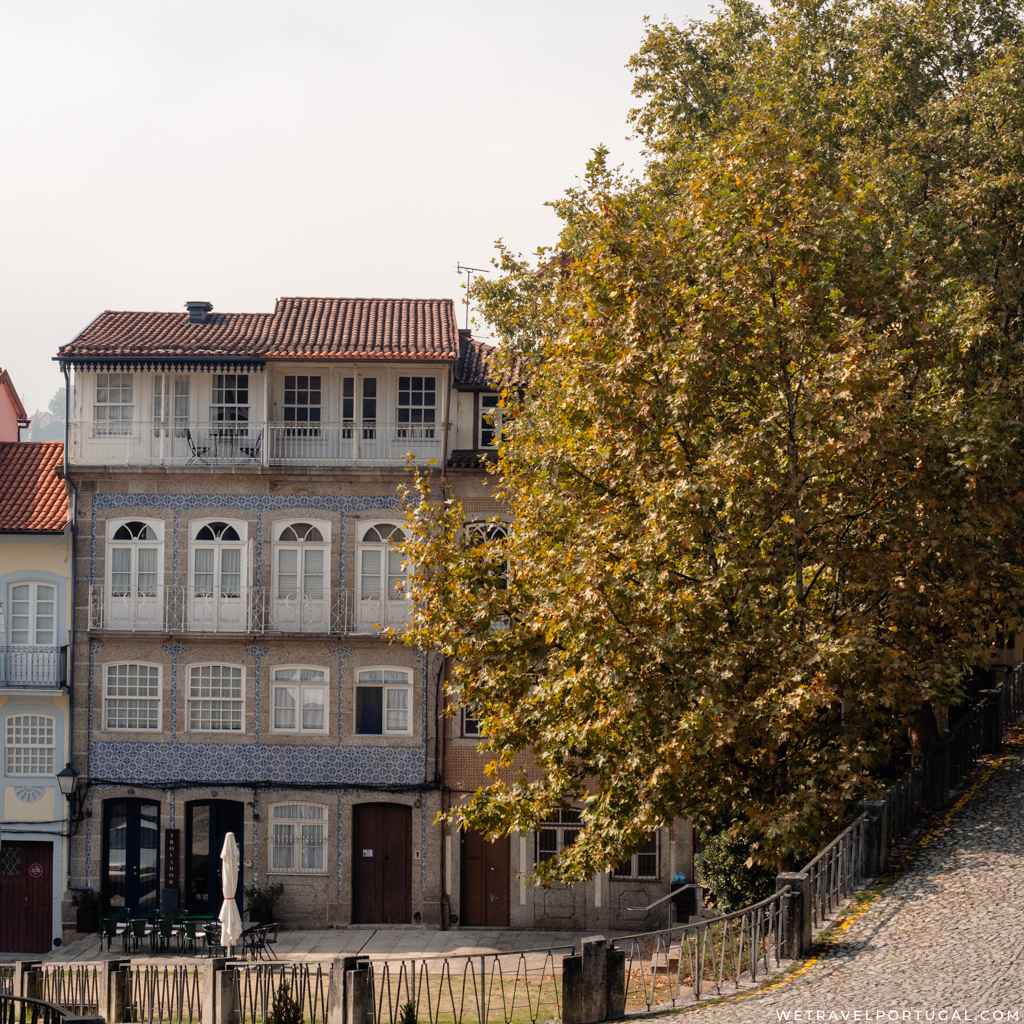
The Historic Centre of Guimarães
The historic city centre is UNESCO world heritage listed and described as a “an extremely well-preserved and authentic example of the evolution of a medieval settlement into a modern town”.
Largo da Oliveira and Praça de São Tiago
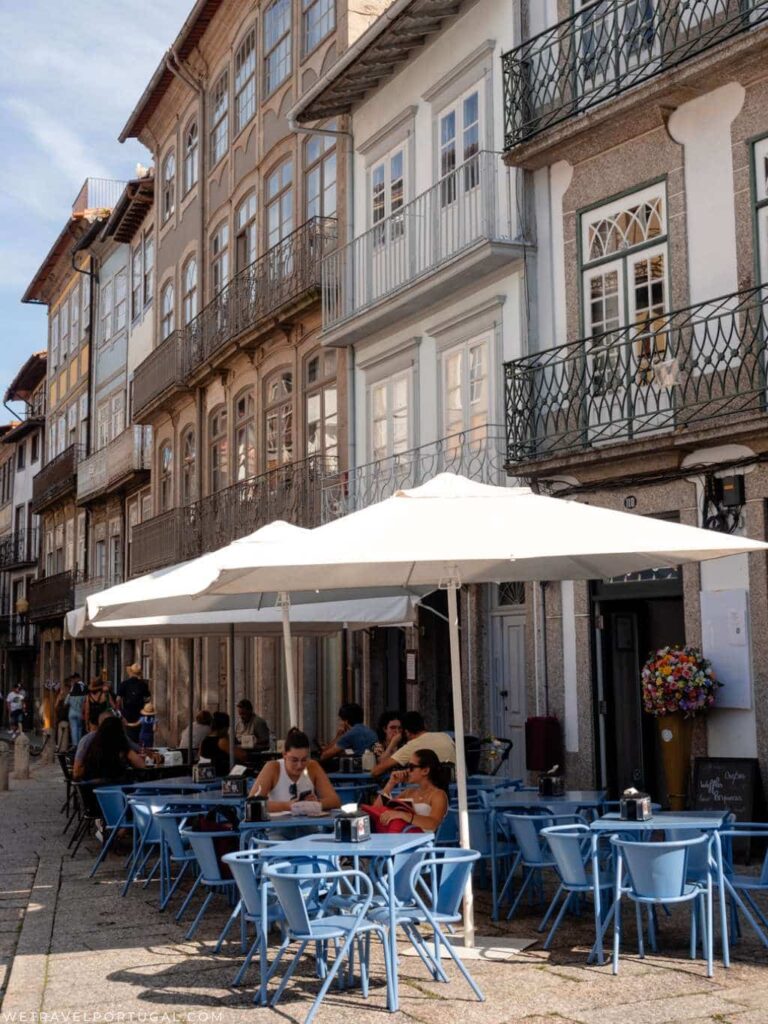
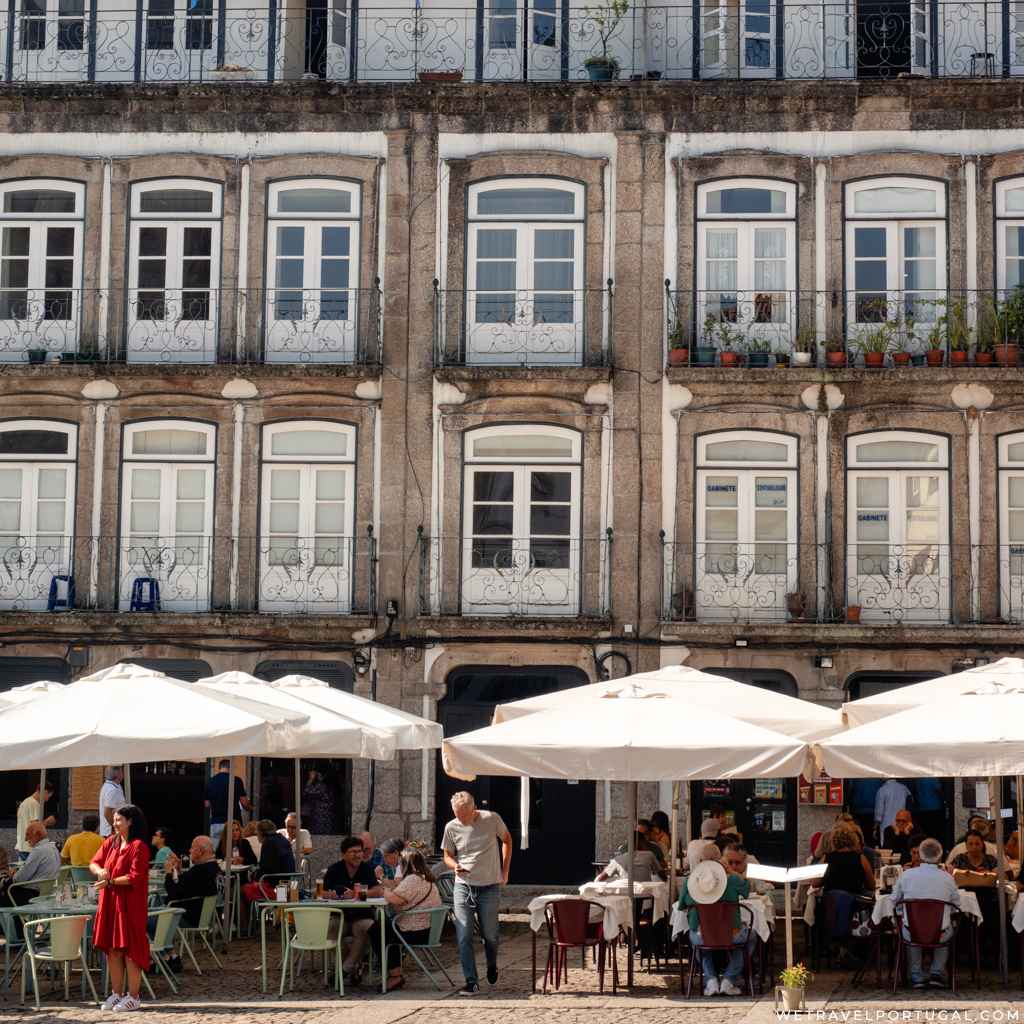
The historical heart of Guimarães is two large squares; Largo da Oliveira and Praça de São Tiago. They’re both very busy squares, lined with bars, cafes and restaurants covering your typical tourist fare to upscale restaurants with rather expensive menus.
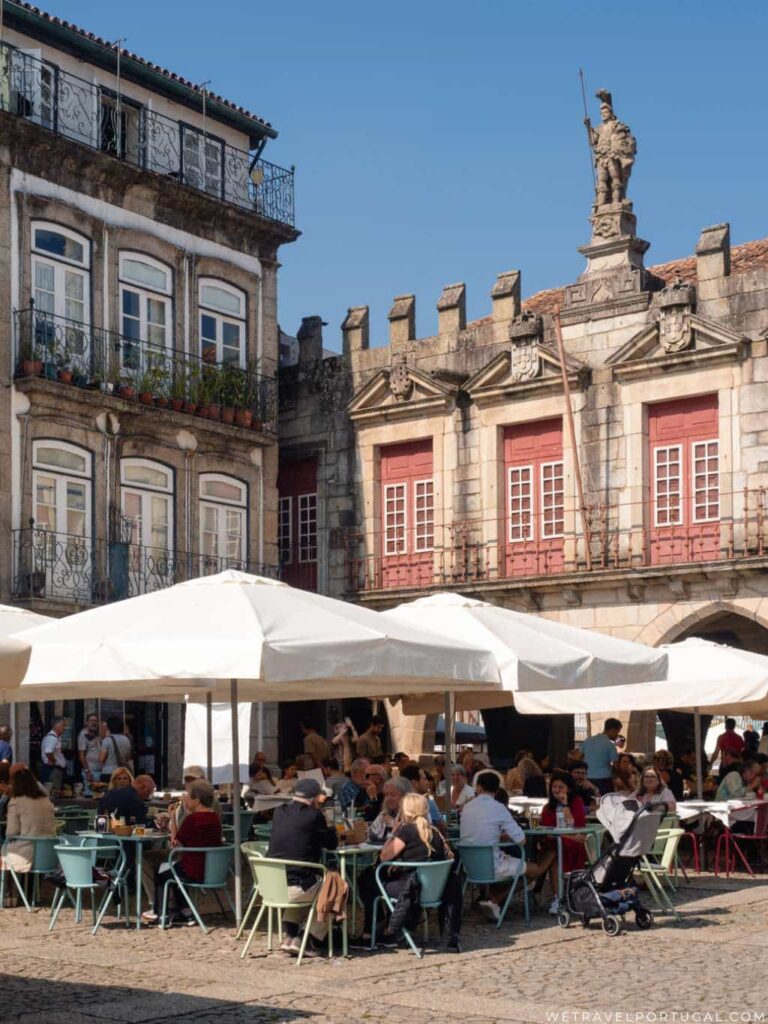
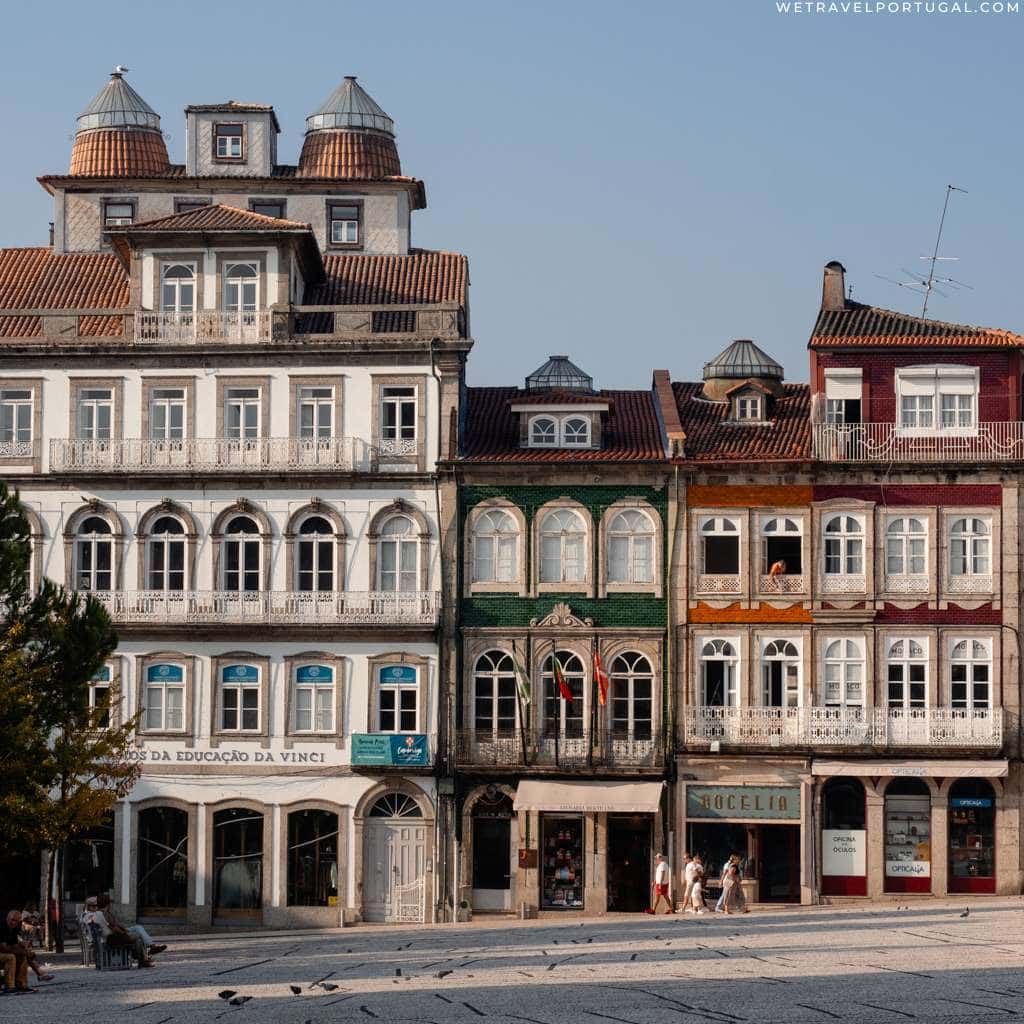
The scenery is stunning however, Largo da Oliveira is surrounded on all fronts by an array of historical buildings. On its eastern side, the 15th Century Igreja de Nossa Senhora da Oliveira and its belltower. The northern side is split between the gothic archways of the old town hall, and the restored boutique hotel, Hotel da Oliveira. The western side of the square is traditional housing stock, although most of the ground floors are occupied by cafes and bars. It’s a busy square but offers an unrivalled atmosphere.
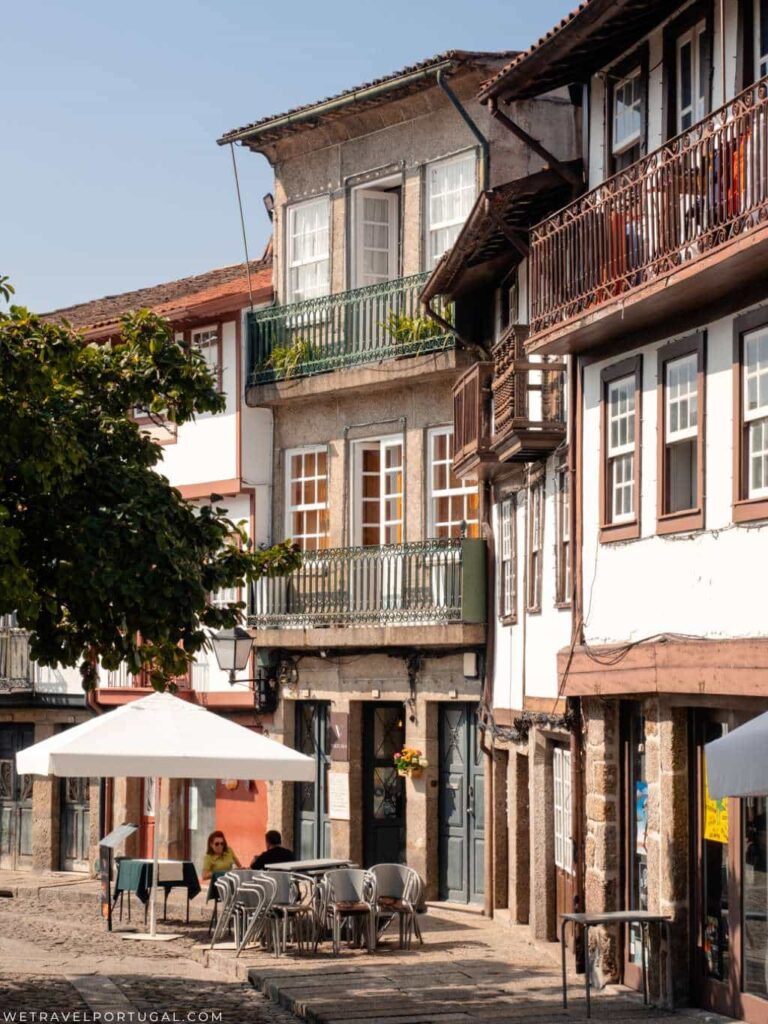
Heading through the archways of the camara municipal takes you to the little less commercialised Praça de São Tiago. This square is lined with traditional housing from the 15th and 16th centuries. We absolutely recommend trying to find a table and at the very least enjoying a Portuguese coffee while people watching!
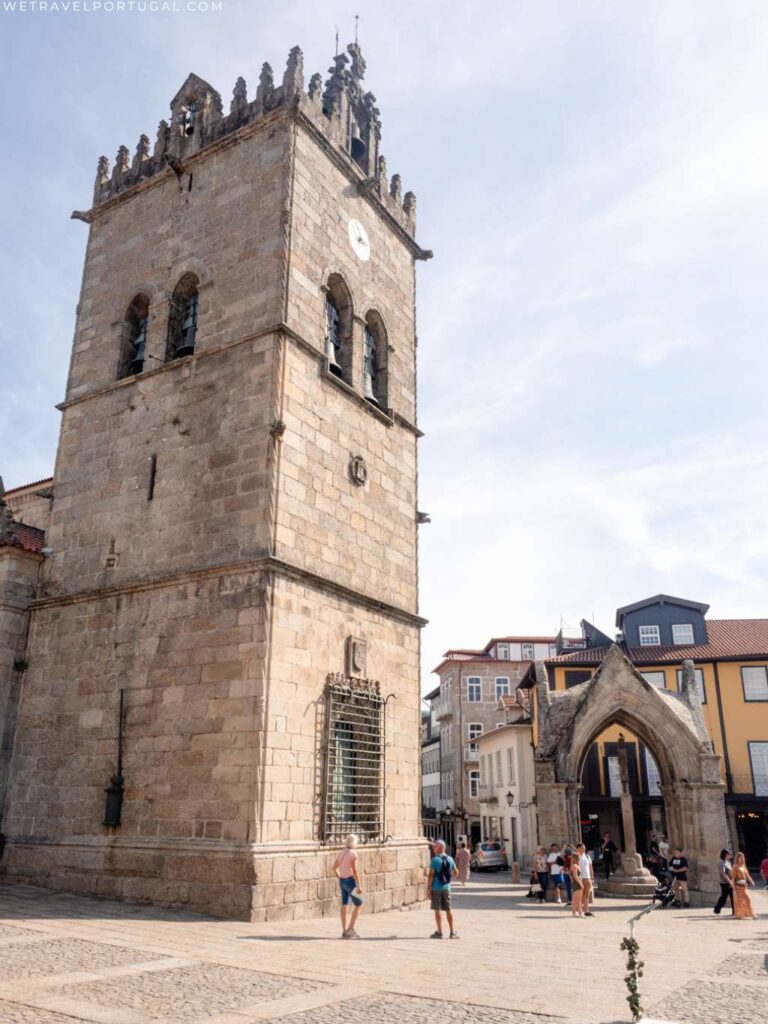
Igreja de Nossa Senhora da Oliveira
On Largo da Oliveira’s eastern side is the church – Igreja de Nossa Senhora da Oliveira. The Church of Our Lady of Oliveira or Olive Tree, named after an olive tree, that was originally in the square in front of the church. The local legend states that an olive tree was delivered to the nearby village of São Torcato from the Garden of Olives in Jerusalem. However, the olive tree did not survive and dried out. It remained this way until 1342 when a cross was placed next to it. That same cross can be seen at the centre of the Padrão do Salado in the square.
Supposedly, within three days the olive tree began growing again and the miracle was attributed to Nossa Senhora da Oliveira, of which the church and square takes their names and dedications. The miracle olive tree? Well for some reason, it was cut down in 1801 by the town council, and in 1985 a new one would be planted. You can still see the original cross at the centre of Padrão do Salado and visit the church.
Rua de Santa Maria
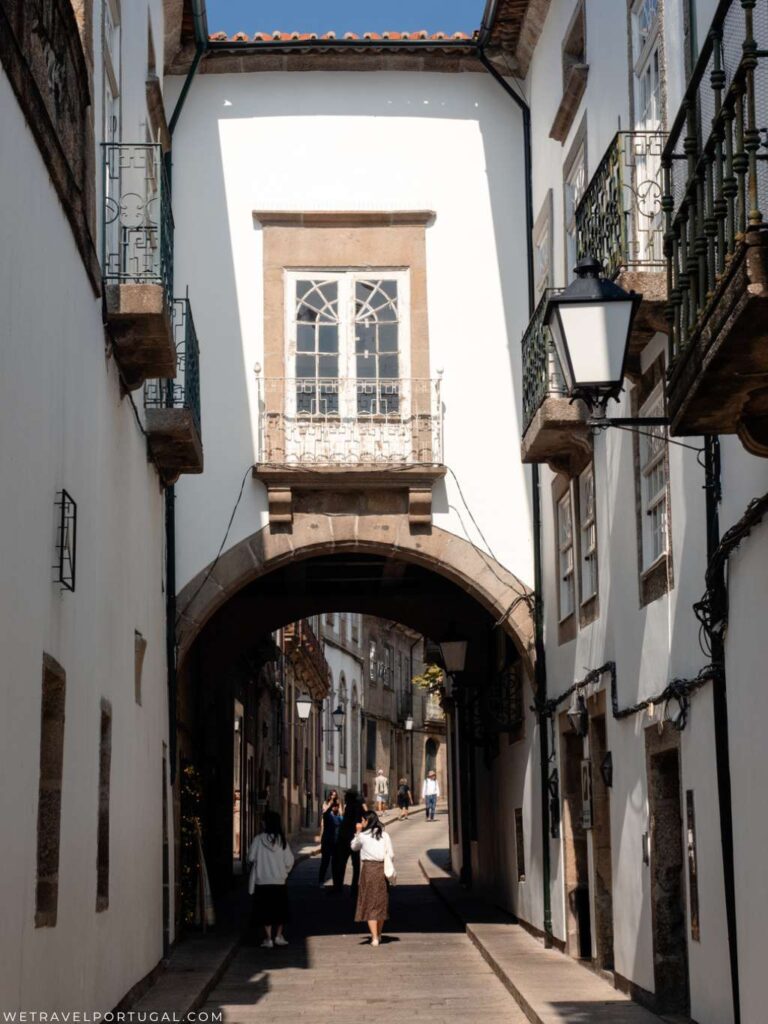
Heading north from either square will lead you along Rua de Santa Maria, an exceptionally narrow street lined with 14th century houses. You’ll pass through the romantically named Arco do Amor, a historic gateway. Once again, many of the bottom floors of the buildings here are commercial establishments, and you’ll find some local restaurants and bakeries.
Jardim do Carmo
Continuing north, the street opens up and you’ll be led directly to Jardim do Carmo. This green city park is surrounded by 17th century housing and on the eastern side of the park you’ll find the Igreja Nossa Senhora do Carmo. Construction began in 1685 and its an excellent example of Portuguese Baroque architecture.

Palace Duques de Bragança – Ducal Palace of Bragança
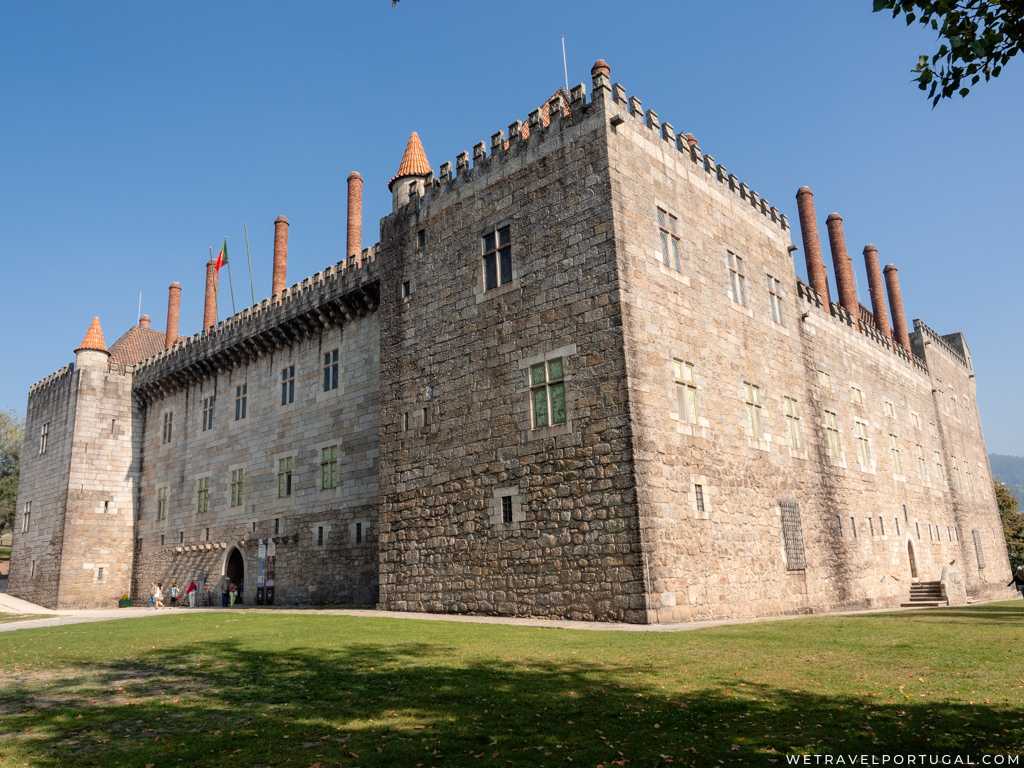
If you continue uphill in a north-eastern direction along Largo Martins Sarmento, you’ll shortly be greeted with a large statue of Dom Afonso Henriques in the grounds of a large park. It’s here you’ll find several of Guimarães grand monuments. The first, the impressively imposing Palace Duques de Bragança.
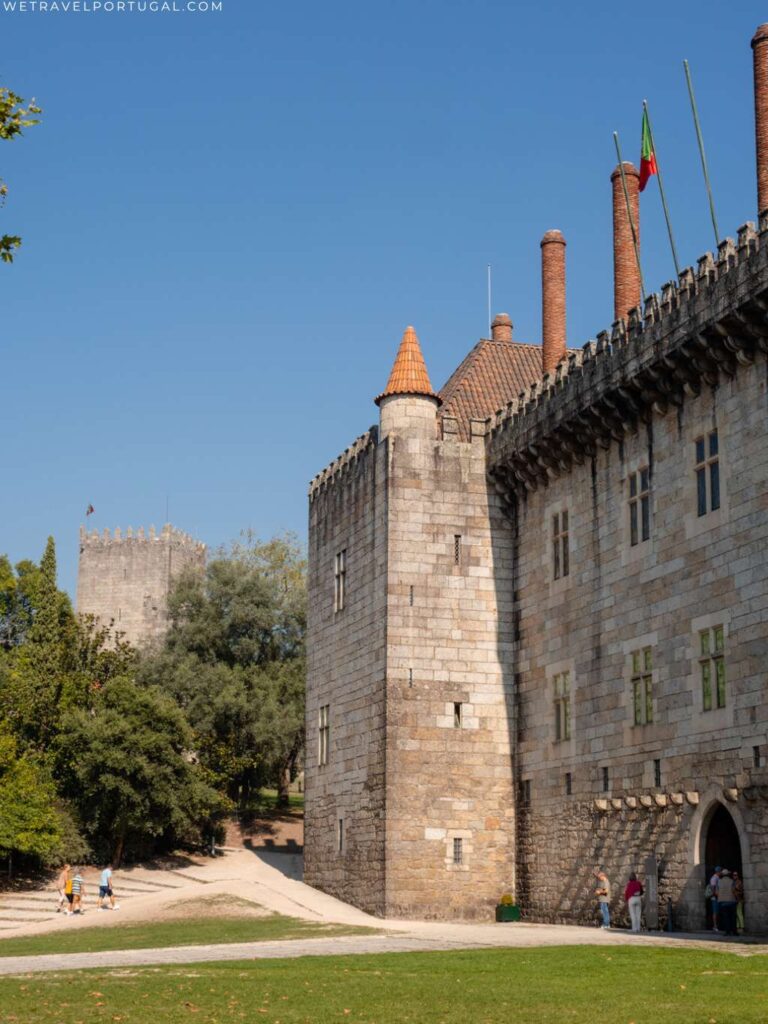
The Ducal Palace of Braganza was built in the 15th century by D. Afonso. It’s an elaborate palace that is built in a Burgundian style, supposedly inspired by the duke’s travels across Europe. It’s notable for its sheer walls and multiple terracotta chimneys which give it a factory like appearance. A small section of the palace interior, as well as the interior courtyard, and chapel is now open as a museum.
The cost of a ticket is €5 for adults, but children under the age of 12 are free. Additionally, students and people over the age of 65 can purchase half-price tickets. The museum is open from 10:00 to 18:00, every day except for major public holiday. You can check the latest opening times and ticket costs on the official website.
Castelo de Guimarães
The second major monument located in this area of Guimarães is the castle – Castelo de Guimarães. Guimarães’ castle is one of the most iconic monuments in Portugal, and also regarded as one of its Seven National Wonders. The castle was originally constructed here in the 10th century, but much of its current form date from expansions and strengthening that occurred during reconstruction in the 11th and 12th centuries.

Unfortunately, it’s a castle that is far more impressive from the outside and the park, than from the inside. As of 2023, there’s little to be seen from inside the walls with much of it closed off for refurbishment. However, it is free to enter until that refurbishment is finished. However, visits will be brief as there’s not much to see at all!
Nossa Senhora da Consolação Church and Largo República do Brasil
After visiting the castle and palace, perhaps it’s time to enjoy another of Guimarães world famous viewpoints and gardens. Jardim do Largo República do Brasil is nearly 300m of landscaped gardens, leading from the historic part of the city, through a more modern area, that ends at the stunning Nossa Senhora da Consolação Church. It’s a feast for the eyes, and shows yet another side to Guimarães, open spaces, trees, and of course religious architecture.
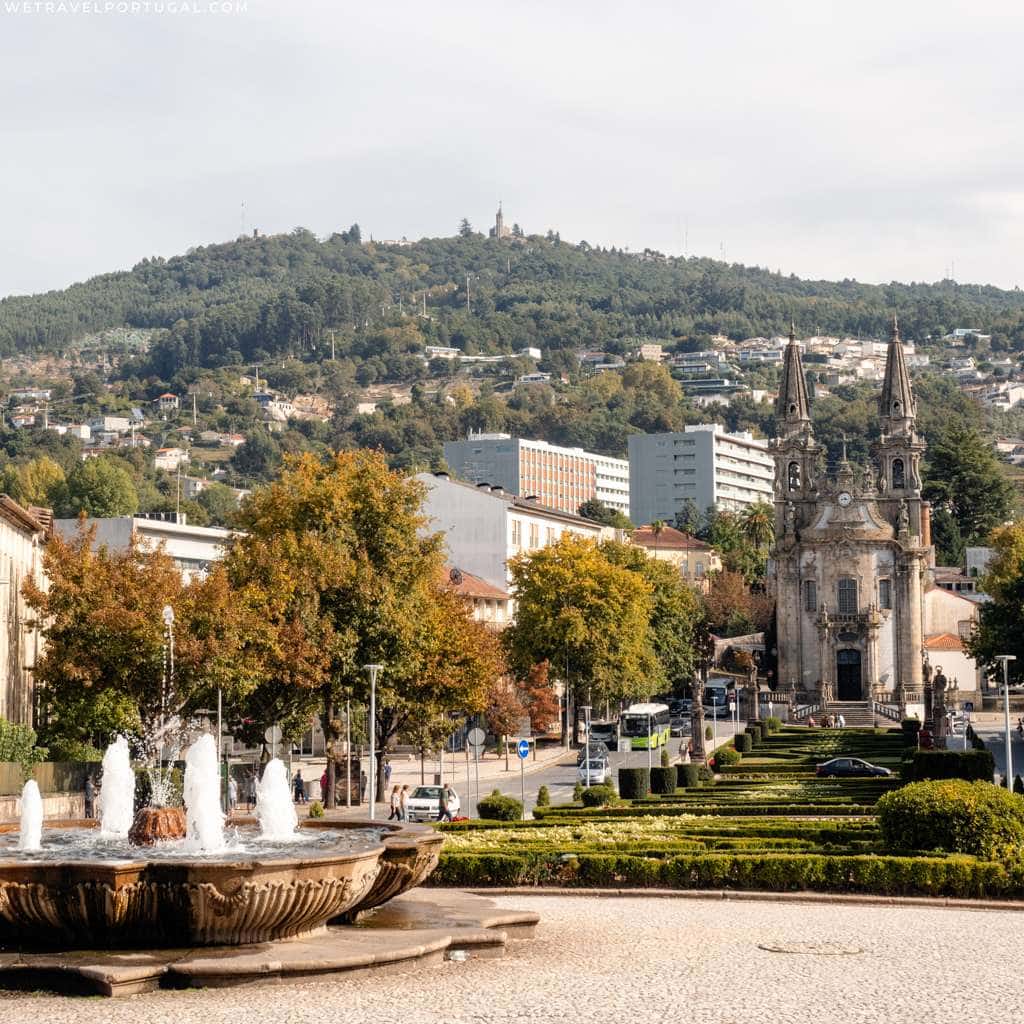
Looking at the church from the historic town, you’ll also be able to view the large hill that looms over the city – Monte da Penha. If you look carefully, you’ll also be able to notice the gradually ascending and descending cable cars that lead to the top of the hill.
Monte da Penha
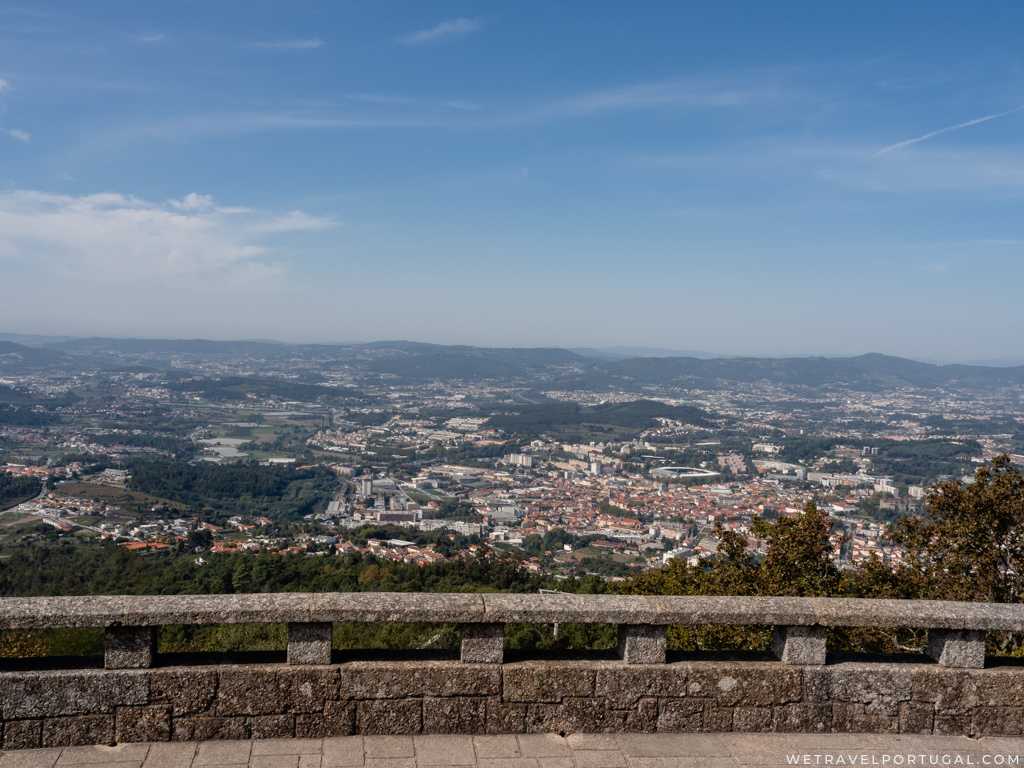
If you thought Guimarães was only about its historic city centre, then you are in a for a pleasant surprise. Monte da Penha is 586m hill that rises above the city. It offers an incredible view of Guimarães and its surrounding landscape but that’s not all. It’s a beautifully forested area with walking trails, ancient boulders, a religious sanctuary (Santuário da Penha), a hotel, several restaurants, and bars. Monte da Penha has been Guimarães’ hilltop resort since the 1920s and is a popular destination for visitors. You can easily spend several hours to half a day just exploring the many trails and secrets hidden on this hilltop!
Monte da Penha Cable Car (Teleférico de Guimarães)
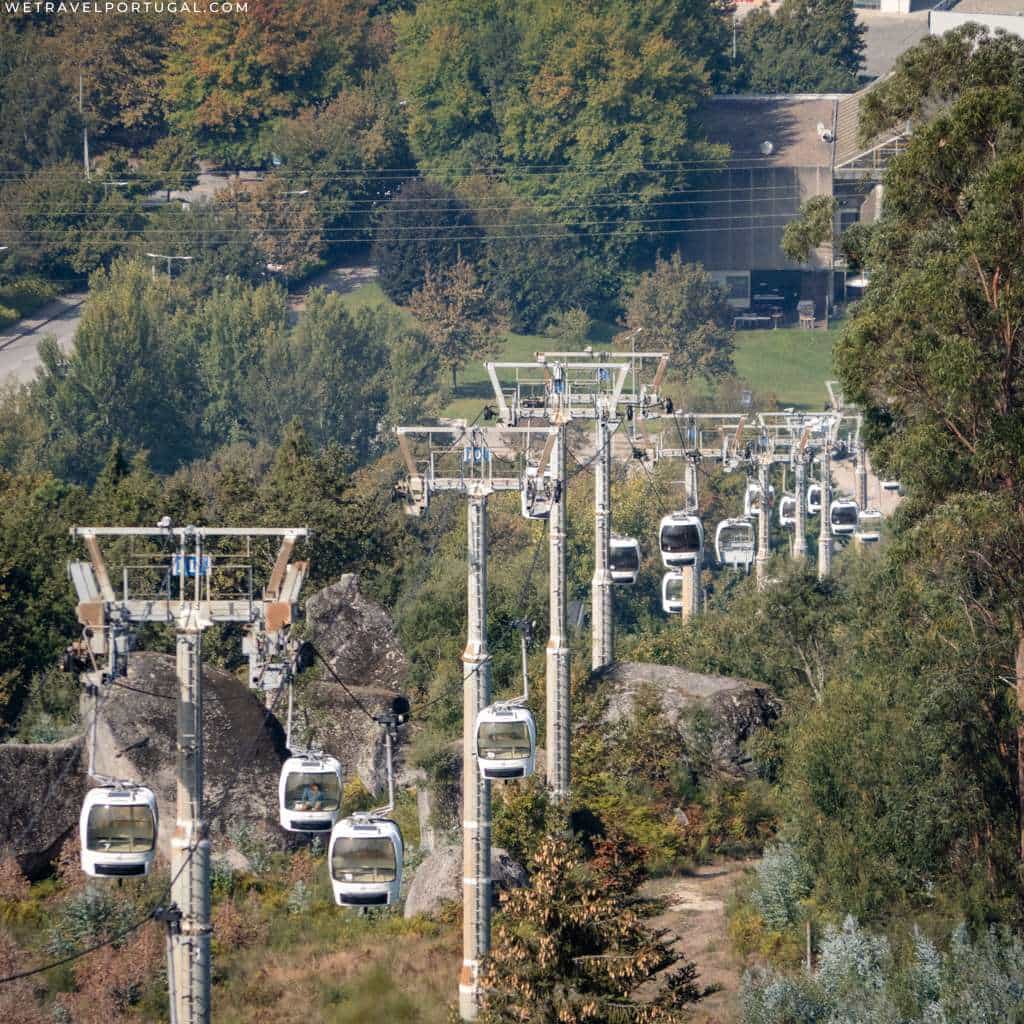
The hilltop is around 7km from the city centre, which you can drive or get a taxi to (around €10). However, there is also a fantastic cable car available, from an area around 600m from downtown Guimarães. The trip takes around 8-10 minutes each way and is a unique way to get to know the area as you approach the hill.
The Cable Car is open every day from 10:00 am to 18:15. Return tickets cost €7.50 (adult) or €3.50 (children from 4 to 11 years old), children under 4 are free. The latest times and prices are available on the official website.
Local Food in Guimarães
In Northern Portugal, the local food is often described as heavier, heartier and, meat centric. But there’s dishes for everyone to try, from regional variants of Bacalhau, Bacalhau à Minhota. To one of Portugal’s favourite soups, Caldo Verde. On the sweeter side of things, Guimarães has its very own pastries, the first one you need to try are Torta de Guimarães.
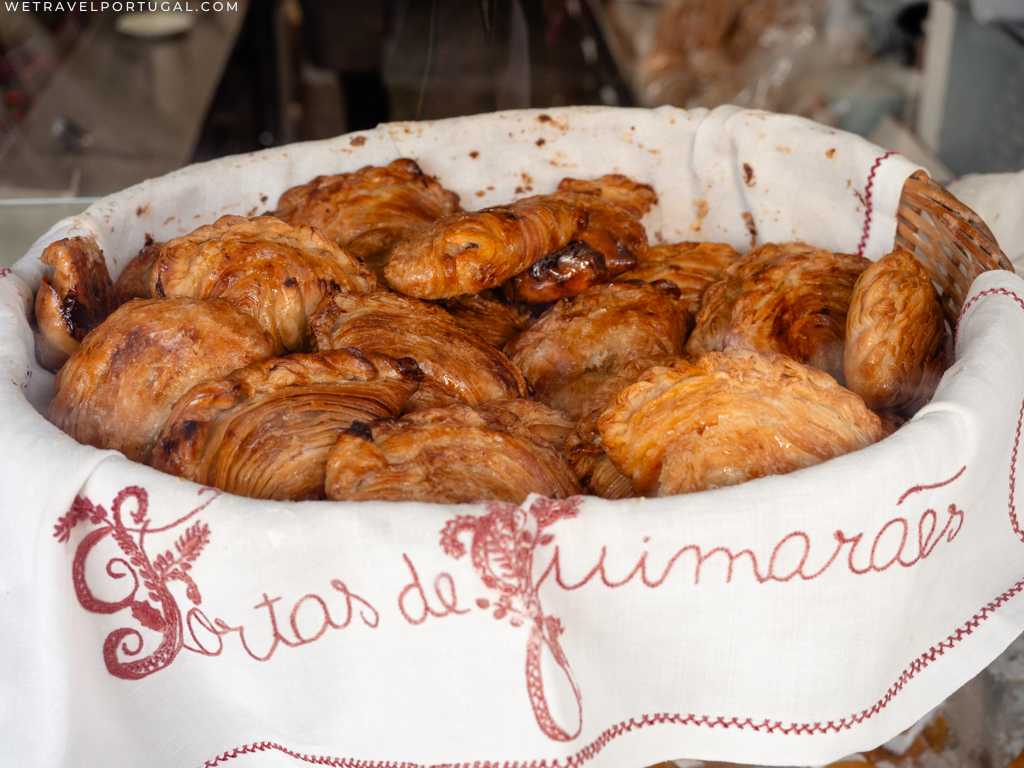
Torta de Guimarães are small half moon like pastries, that look like they might have a croissant like texture, but in reality, they’re crunchy. They’re a crispy, crunchy pastry filled with a sweet egg mixture of sugar, cinnamon and almond. The traditional recipe also makes use of pork drippings in the dough, and they are delicious! To try traditional ones, head to Pastelaria Clarinha in Largo do Toural.
They originate from a nearby convent, and are a type of doce conventual, traditional monastery sweets made with sugar and egg yolks, a byproduct of using egg whites to starch clothing.
The second local delicacy is Toucinho do Céu de Guimarães, again another doce conventual and attributed to the same nuns. It’s curiously translated as bacon from heaven due to the very traditional use of ground bacon or lard in the recipe. Toucinho do Céu is a dessert that exists across Portugal, but the Guimarães version adds chila (squash) to the almond mixture. Additionally, whereas the more widely known variant is served as a whole tart and sliced, Toucinho do Céu de Guimarães are rolled into balls and coated in caster sugar. Yet another must try local pastry!

For drinking, make sure you try Vinho Verde. Vinho Verde is a light, fresh, and slightly sparkling wine from the Minho region. It’s a DOC (Denominação de Origem Controlada) which means it can only be produced in the Minho wine region with strict quality standards. Although it is widely available across Portugal, it’s unbeatable on a warm afternoon in one of Guimarães’ squares!
How long should you spend in Guimarães
Guimarães is a popular day trip, and while yes it can be completed in a day, to really experience the city we recommend at least one full day and if possible, an overnight stay. This will allow you to fully get to know the city and take time to enjoy an evening here. Of course you can’t possibly see all of its museums or cultural curiosities, but its enough time to see the city and Monte da Penha.
Should you Stay in Guimarães?
Although yes, Guimarães can be quickly completed as a day trip. To really get to know these types of cities we often recommend staying at least a night if you can! This will allow you to explore the streets once the typical day trippers have left. The plazas buzz in the evenings and there’s some fantastic restaurants where you can sample local food and drink.
Somewhere to Stay in Guimarães?
As a small city, Guimarães has a wide range of accommodation options catering to almost every budget. You’ll find backpacker hostels, boutique hotels, luxury options and even a pousada in a historic convent. Here’s our favourite hotels in Guimarães.
Hotel da Oliveira is a recently restored boutique hotel that’s right in the heart of the historic centre in Largo de Oliviera. It places you in walking distance of nearly all the attractions, and on the doorstep of many bars and restaurants. However, it is in the commercial centre on the busiest square so this might not be for everyone.
Eurostars Santa Luzia. If you’re looking for a touch of luxury, and a spa with an indoor pool, then Eurostars Santa Luzia is a great option for you. It’s a recently opened hotel that’s 500m from the city centre, and 1km from the castle and palace. It’s located in a quiet residential area and offers free parking.
For a luxurious stay, and dose of history, then take a look at Pousada Mosteiro de Guimarães. It’s a 5-star hotel within the 12th century former monastery. It offers the full facilities of a five-star hotel in very luxury surroundings.
At the budget end of the scale Ibis Guimaraes Centro, it’s low cost reliable option that’s located within walking distance of the city centre with plenty of parking around. For people looking for an easy and low cost overnight stay it’s a great option. For the full list of available hotels in Guimarães take a look here.
How to Get to Guimarães
Guimarães is in the north of Portugal, around 40km northeast of Porto, or around 35km north of Lisbon. Nearly all public transport connections will take you through Porto. If you drive, you’ll also go around the outskirts of Porto.
Driving to Guimarães – If you have a rental car or your own vehicle, then driving directly to Guimarães is a simple option. Guimarães is around a 45-minute drive from Porto, or around 3 and a half hours from Lisbon. There are some fantastic places to stop on the way as well, so if you can plan multiple stops over a day, it’s a great way to see more of the country too.
Don’t have a rental car booked yet? Then our guide covers everything you should know about renting one in Portugal!
Public Transport in Guimarães – Trains and Buses
Guimarães is served by a regular Urban train service from Porto, which departs from São Bento and Campanhã, Braga is the final stop on the Urban railway line. The journey will take around an hour and 20 minutes. A single ticket from Porto to Braga costs €3.25 for adult, and a return cost €6.50. For the full timetables and for tickets, book directly on the official website (Comboios de Portugal).
Guimarães also has a regional bus station, with multiple connections to the local and wider area. Rede Expressos, also known as Renex, operate regional services, as well as the low-cost long-distance operator Flixbus. Services from Lisbon to Guimarães are available but they typically take around 4 and a half hours, taking up a significant chunk of your day!
Guimarães or Braga?
Guimarães or Braga is a popular question, they’re both charming northern cities boasting history, heritage, culture, great scenery and great food! They’re just 25km apart, and adding to their twin status is the fact they both have mountainside sanctuaries that overlook the town – Santuário da Penha in Guimarães, and Bom Jesus do Monte in Braga. They have their differences, and they have their similarities. In our opinion, Guimarães feels a little bit more like a small town, whereas Braga feels like a city. Both should be visited though!

Should you Visit Guimarães?
Guimarães is one of our favourite Northern cities in Portugal, combining history, heritage, and culture, in small town that oozes charm. Its restaurant and bar scenes are vibrant and there’s some local dishes to discover. Throw in Monte da Penha and it feels like you can combine a city break with some great hiking in the mountains of Portugal! If you can spend longer than a day, Guimarães is a fantastic base to explore the Northern region of Portugal from as well!

Thank you for such an interesting introduction to the cities around Porto. We will arrive in Porto from the Uk later this week and can’t wait to start exploring!
So glad it’s helpful. Enjoy your trip, it’s a beautiful area to explore!