

Lisbon is one of Portugal’s top destinations, and while there is loads to see and do in the city, I always recommend taking at least one day trip if you’re here for more than a few days! Lisbon is also pretty central, and well connected to the rest of Portugal so it makes a great base to explore from!
Escaping Lisbon’s urban setting is also easier than you might think, and you don’t need a car. There’s multiple places within easy reach of Lisbon by using public transport. So, here’s my favourite car-free day trips to make from Lisbon.
Why trust me? I’ve now been based in Lisbon for over two years, and I don’t own a car. I’ve taken all of these day trips myself, in fact I’ve explored most of the country without using a car!
Why Plan a Car-free day trip?
Not everyone wants to rent a car on a vacation, especially considering all the additional costs, credit car requirements, and even adjusting how to drive a new car in an unfamiliar road system. Lisbon makes it very easy to plan day trips to great destinations without using a car. So a car is not needed to get the most out of your holiday.

The 15 Best Car-free Day Trips From Lisbon
Here’s my 15 favourite car-free day trips from Lisbon. I’ve limited this list to around 1 and half to 2 hours of travel each way. Which if you leave early in the morning will give you a chance to explore and be back in Lisbon for dinner! Of course, overnight stays are possible – and encouraged. Many of these locations are popular day trips, so getting to explore them outside of the usual day trip hours adds an additional layer to them.
Sintra – Palaces and a UNESCO World Heritage Landscape
First on the list is the much hyped Sintra! It is just a short 20 minutes from Lisbon by train. Compared to Lisbon’s city landscape you’ll find lush, forested hills dotted with all manner of palaces, mansions, and even a historic castle. From its hill tops you’ll have amazing views of the coastline and all the way back to Lisbon.
That said it is one of the most popular day trips from Lisbon, and it can be a hectic experience. You need to plan your day carefully to make the most of it. Each one of Sintra’s sites is unique and well worth the effort. From the stunning Pena Palace and gardens, to the ornate Monserrate Palace. There’s actually much more than a day-trip here. Which is also my biggest piece of advice, for a good day trip, it’s best to pick one or two places and fully explore them, instead of trying to see everything in one go!
How to Get to Sintra by Public Transport:
The simplest and easiest way to get to Sintra is the train directly from Lisbon. A single trip from Lisbon will be €2.30, or it’s €4.60 for a return ticket. If you have a local Viva Viagem card topped up you can simply use that and not purchase a ticket at all. Just remember to ‘touch’ in and out again at the train station. Trains depart from, Lisboa Oriente, Entrecampos, and Rossio. So no matter where you are in Lisbon, access is simple!

Cascais – Escape to a Chic Seaside Resort
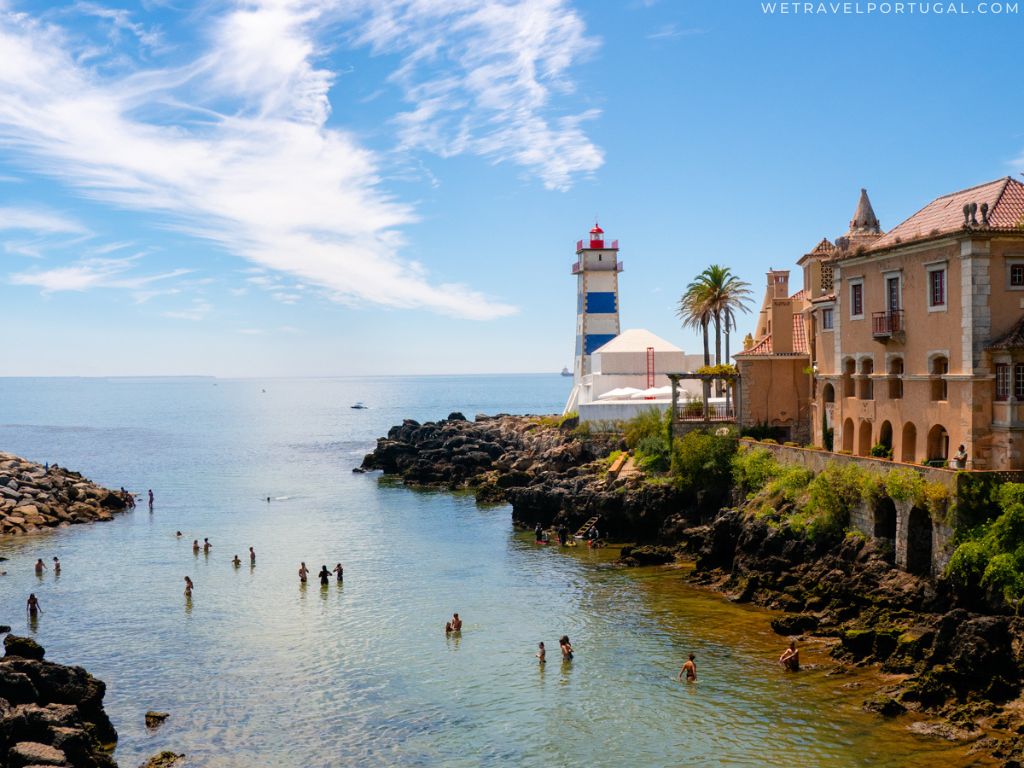
Next on this list, and often combined with Sintra is the coastal city of Cascais. It’s long been home to Lisbon’s elites that wanted to escape the city and spend time on the beautiful Atlantic coast. Within Cascais are fantastic beaches, historical sites, and coastal elegance.
Active adventurers can rent bikes and take a trip along the coastline, with its wide open bike lanes, and visit stunning sites like Boca do Inferno Praia do Guincho. Back in the city, you’ll find seafood restaurants, beach bars, and an urban beach vibe that’s missing from Lisbon. It can be a whole day trip, or combined with nearby sites like Sintra.
How to Get to Cascais Using Public Transport
Cascais is super simple to get to by using public transport, and even close enough that using a ridesharing app is possible too if you’d like the flexibility. Trains depart regularly from Cais da Sodre on the Linha de Cascais line. Tickets cost €2.40 each way, and there are departures almost every 20 minutes throughout the day!
Tomar – The Knights Templar and Portugal’s Past
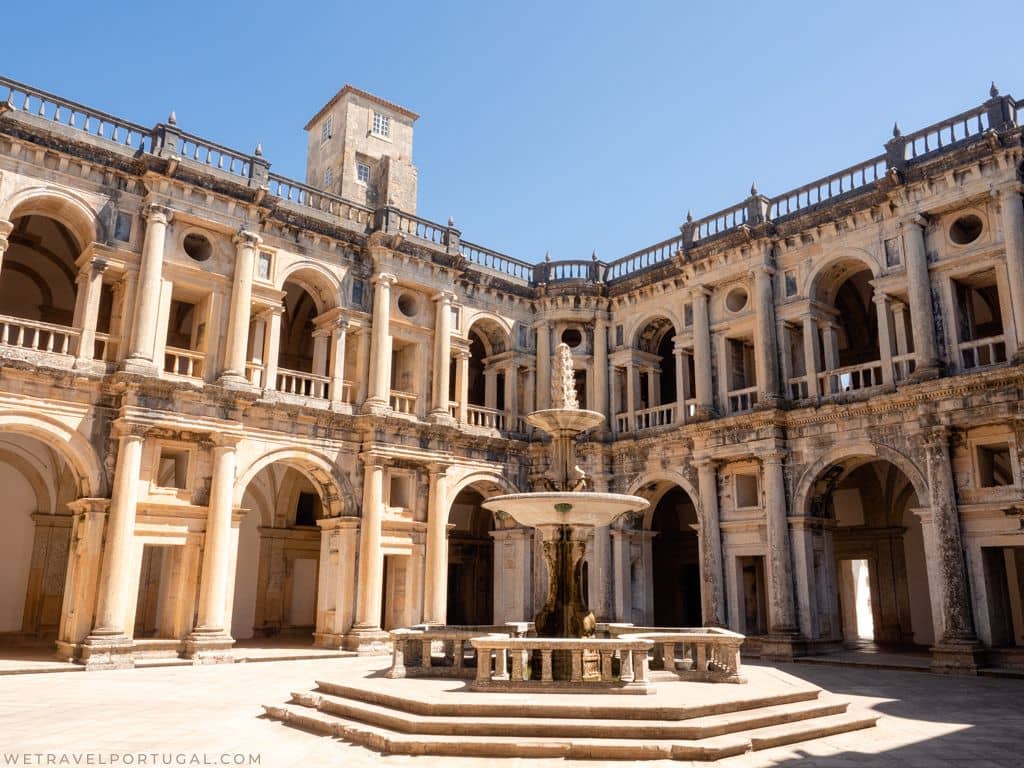
Tomar is a lovely riverside town just two hours north of Lisbon. It’s a town that blends Portugal’s history with some incredible sites, while never feeling too hectic. Tomar’s most famous site is the incredible UNESCO World Heritage Convent of Christ. Elsewhere is a medieval castle, and some unique parts of Portugal’s Jewish history.
It’s not a town just for historians though, it’s a lively place that offers culture, events and great local food. It even has its own dessert – Fatias de Tomar.
How To Get To Tomar Without a Car
There is a regular train service from Lisbon to Tomar operated by the national operator Comboios de Portugal. With multiple departures each day the journey takes around 2 hours. The train costs €10.20 each way from Santa Apolónia, and €9.90 from Lisboa Oriente.
Mafra – The Biggest Palace in Portugal
Continuing into Portugal’s UNESCO sites, Mafra is next on our list. It’s strangely underated compared to any of the palaces in nearby Sintra. Palácio de Mafra is by far the largest and most extravagant palace in Portugal. It is an architectural and historical marvel, that boasts over 1,200 rooms many filled with stunning details, artwork, and craftsmanship. To fully explore the palace and its grounds it is recommended to spend at least two hours exploring, but you can easily spend longer.
Mafra can easily be combined with nearby Ericeira, using the same bus lines before making your way back to Lisbon. So you can experience some incredible history and architecture, before exploring a traditional seaside town.
How to Get to Mafra by Public Transport?
Mafra is served by regular bus from Lisbon and back again. There’s a range of services but one of the simplest is the bus number 2740 from Campo Grande, to Ericeira with regular departures from 9am on most days of the week. The bus heads all the way to Ericeira, but makes a stop in Mafra. Additionally, the bus lines 2742 and 2758 head directly to Mafra. Full time tables are available on the Carris Metropolitana website.

Nazaré – Surf, Sand, and Sea
Recently, Nazaré has gained world wide attention for its record breaking waves, and the surfers that chase them. Before that, Nazaré was a traditional seaside town. You’ll find preserved fisherman’s houses, a fishing museum, and lots of unique local culture. As well as the more modern fortress turned surfing museum. Nazaré is place that successfully blends all of this making it a top day trip to experience the Portuguese seaside.
During the summer, the expansive beach is great for a day on the beach, while during the cooler months, there’s much to see and do. Don’t get too caught up in trying to catch the mega waves though. These take unique and often stormy conditions to form, so they’re not often predicted more than a week in advance!
How to Get to Nazaré Using Public Transport
There are multiple buses that depart Lisbon to Nazaré from several operators. Rede Expressos and FlixBus services depart from Oriente Bus Station. Rodoviária do Oeste’s service departs from Campo Grande’s Bus Terminal. So you can find a convenient bus from almost anywhere in Lisbon.

Évora – UNESCO World Heritage City
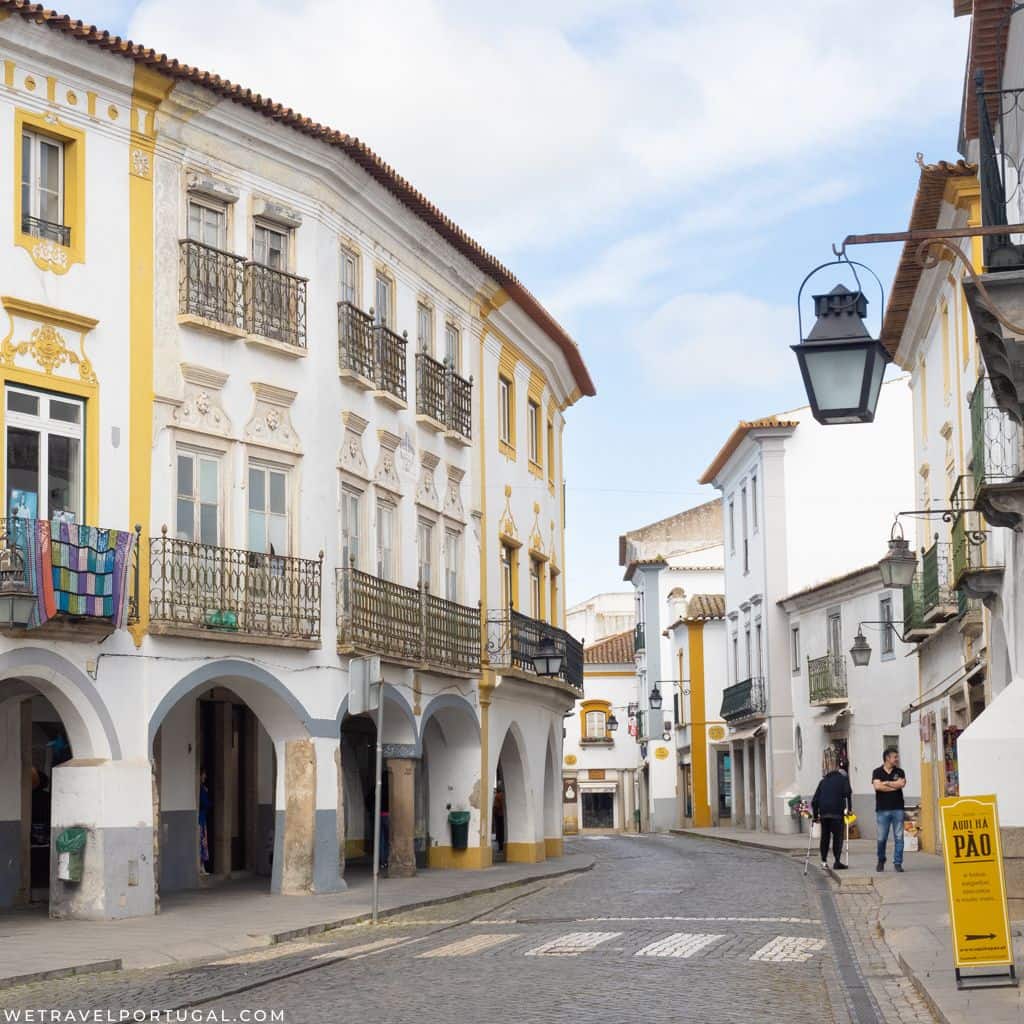
Évora is the capital of the Alentejo region, a city that is now recognised as a UNESCO world heritage city. It effortlessly blends the traditional Alentejo lifestyle, with unique historical sights, and culture. Évora is somewhat of a hub for the incredible Alentejo wine region, so you’ll find wine bars celebrating local producers too, or you can try to head out of the town to visit a vineyard itself. In the city, you’ll find a historic cathedral, roman ruins, museums, and Portugal’s most famous bone chapel. More than enough to fill a whole day trip!
How To get to Évora By Bus or Train
You can get to Évora by both train and bus. Trains depart Lisboa Oriente, before making stops at Entrecampos and Sete Rios, so the trains are convenient from much of Lisbon.
Alternatively, buses operated by Rede Expressos and FlixBus depart both Oriente’s bus station and the bus station at Sete Rios. The bus takes around 1 hour and 20 minutes, and the train takes around 1 and half hours, so both are convenient for day trippers.
Óbidos – The Prettiest Walled Village in Portugal
Óbidos is often referred to as ”prettiest walled village” in Portugal and it’s easy to see why. This is a beautiful village that oozes Portuguese charm with some neat local traditions and gastronomy.
That said, this is one of the most popular day trips from Lisbon, probably second only to Sintra and during peak months the entire village can feel a bit over touristy. If you can, we always recommend trying to beat the day trippers (yes, you even if you are one) but if you can arrive before the coaches, or after they leave – Óbidos gets a lot more charming!
How To Get to Óbidos Using Public Transport
Directly from Lisbon is an express bus operated by Rodatejo, which depart from a bus stop in Campo Grande. If you’re staying in Lisbon, you can reach Campo Grande on the metro by using either the green (Verde) or yellow (Amarela) metro lines from anywhere in the city.
A single bus ticket costs €8, and you need to by two separate single tickets as no return tickets are available. On week days there are hourly departures from 7am. On weekends and on public holidays, departures are approximately every two hours starting from 7.30am. The route is called the Rápida Verde and you can find the full timetable on the Rodatejo website.

Alcobaça – A Unesco Monastery and Town Full of Legends
Alcobaça is famed for it’s UNESCO World Heritage monastery, an extravagant 12th century monastic complex. It’s is also the birth place of some of Portugal’s most romantic and tragic legends. Inside the gran monastery are the tombs of Pedro and Inês – who are often referred to as the Romeo and Juliet of Portugal.
Elsewhere in the town, you’ll find some unique history, more legends, and my favourite wine museum in all of Portugal. Alcobaça makes for a perfect day trip from Lisbon, and its possible to get there and do it all without a car.
How to Get to Alcabaça by Public Transport?
Flixbus and Renex offer daily services from Lisbon to Alcobaça and the journey only takes 1 hour and 40 minutes. Additionally, buses depart Alcobaça in the later afternoon and evening which makes this a great day trip option on the bus. There is a small train station called Valado – Nazaré – Alcobaca, however it is 7km from the town and requires a taxi or a local bus. So we always recommend taking the coaches from Lisbon!

Queluz – The Portuguese Versailles
Just 15 kilometers from Lisbon is Queluz, a charming and simple day trip. It’s the perfect destination for history and architecture enthusiasts. It’s most famous for the opulent Palácio Nacional de Queluz, which is often called the “Portuguese Versailles”.
Nowadays, the area surrounding Queluz is a bit of a Lisbon surburb but it offers easy access to Sintra and some of Lisbon’s biggest shopping areas like the Colombo Mall. In the same area you’ll find Benfica’s stadium and museum so there’s lots of places to explore after you’ve visited the palace.
How to get to Queluz by public transport?
As it’s so close to the city there’s several different options depending on where you’re based in Lisbon. The simplest is to take the train line to Queluz – Belas train station. There are departures almost every 10 minutes throughout the day from Entrecampos, Lisboa Oriente, Rossio and even Roma-Areeiro so it’s a simple journey.
Coimbra – Lisbon’s Historic University City
Coimbra is one of Portugal’s oldest cities, well known for its prestigious university. As one of the oldest universities in the world there are multiple sights to explore, including the secretive Joanina Library. The library is considered one of the most beautiful in the world. There’s lots more to Coimbra than academic buildings, with a cathedral, churches, and even some of Portugal’s best preserved Roman ruins.
Despite the historic surroundings, the city has a young, vibrant feel, buoyed by its large student population. So there’s good bars, restaurants, and local beer to drink!
How to get to Coimbra by public transport?
The fastest trains to Coimbra depart Oriente and take just 1 hour and 36 minutes, giving you plenty of time to explore Coimbra and return to Lisbon in the same day. Flixbus and Renex also make return journeys but the bus takes around 2 and a half hours each way!

Ericeira – Seaside Chic and Surfers Paradise
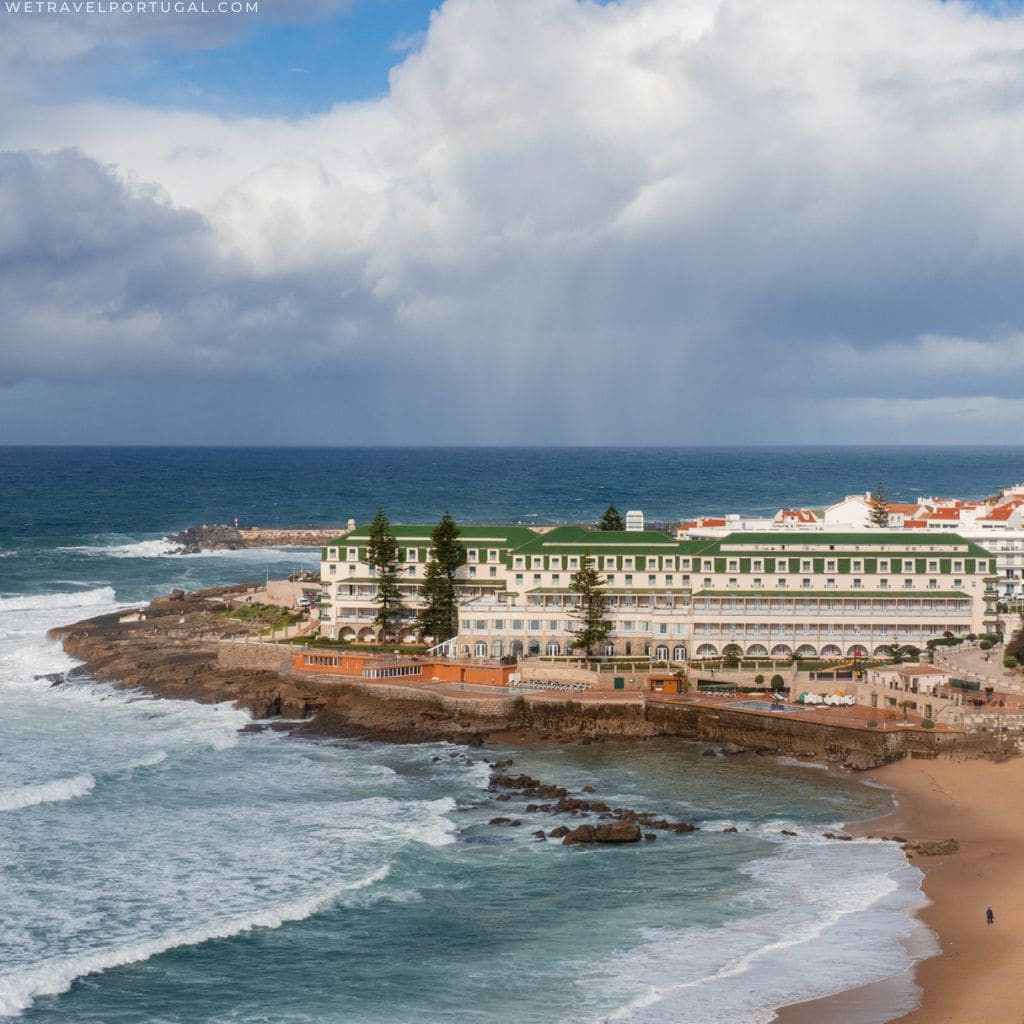
Ericeira was a traditional seaside town that’s now famed as Europe’s only surf reserve. It’s a great town for surf enthusiasts, but even non-surfers will love its scenic cliffs, golden beaches, and charming old town.
Stroll the cobbled streets, enjoy fresh seafood at a seaside restaurant, watch the waves at Ribeira d’Ilhas, or when its warm hit the beach yourself. With its laid-back vibe and breathtaking landscapes, Ericeira is a must-visit for those that want to experience the Atlantic coastline.
How to Get to Ericeira by Public Transport
Buses run every hour from Campo Grande and take between 45 minutes and 1 hour and 30 minutes. A few of the buses also go through nearby Mafra, so you can combine the seaside with one of Portugal’s most stunning palaces!
Fátima – The Catholic Centre of Portugal
Fátima is widely regarded as the catholic centre of Portugal and is an area of immense significance to the Catholic church. To share a little bit of background, the town is named after a legendary Arab princess. This princess converted to Christianity and is said to have lived in a nearby village area sometime during the 8th century.
However, Fátima would get worldwide religious attention for stories of apparitions of the Virgin Mary that were witnessed by three children in 1917. Since that day it has become a religious focal point, with a myriad of churches, chapels, and statues dedicate to the miracles. However, we don’t typically recommend Fátima to people who don’t have an interest in Catholicism as most other visitors are underwhelmed.
How to get to Fátima by public transport from Lisbon?
Fátima is served by its own bus station Terminal Rodoviário de Fátima and all major operators in Lisbon offer buses to and from it. You’ll find daily departures from Renex, Flixbus as well as local services.

Almada – Lisbon’s Twin Riverside City
The closest day trip to make this list, is one that is surprisingly not often mentioned. Despite offering one of the most famous views of the city, Almada is not technically Lisbon. For those that live on the south side of the River Tagus, they are proudly from the south margin and Almada, a city that is separate to Lisbon.
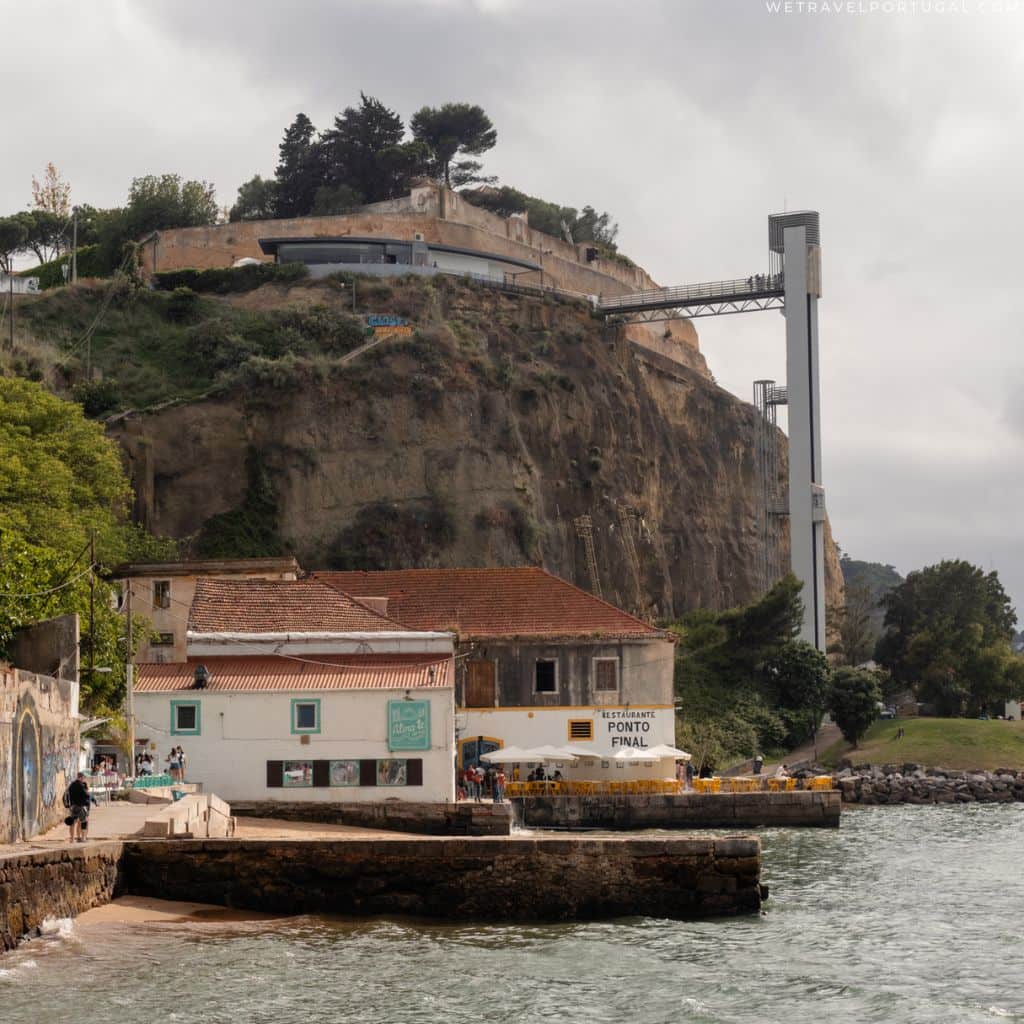
So technicalities aside, what’s there to see and do in Almada, and can you make an entire day trip of it? Absolutely! Its most famous site and viewpoint is the towering statue of Christ at Santuário de Cristo Rei. There’s unique history in the old fortress of Castelo de Almada, and the dry docked submarine and 19th Century navy frigate. The dock area is filled to the brim with restaurants showcasing their fresh fish that they can grill in front of you. Although, the now insta famous restaurant Ponto Final get’s most of the attention. The waterfront area of Cacilhas feels like a very different small town compared to the big city nearby!
How to get to Almada by public transport from Lisbon?
The ferries, part of Lisbon’s metro system depart almost every half hour from the dock at Cais do Sodré. Cacillhas is your destination and you’ll need to be mindful which ferry you board or you may end up a lot further away than Almada. The trip takes around 15 minutes and is surprisingly charming for a commuter ferry, pick a window seat to feel the breeze and be on the look out for dolphins.
Faro – A Taste of the Algarve
At the start of this article, I said I’d limit day trips to around one and half to two hours of travel each way. At 2 hours and 20 minutes Faro is just beyond that limit. However, if you’re an organised traveler, you can squeeze in a return trip to Faro and be back in Lisbon the same day. Why do a day trip to Faro?
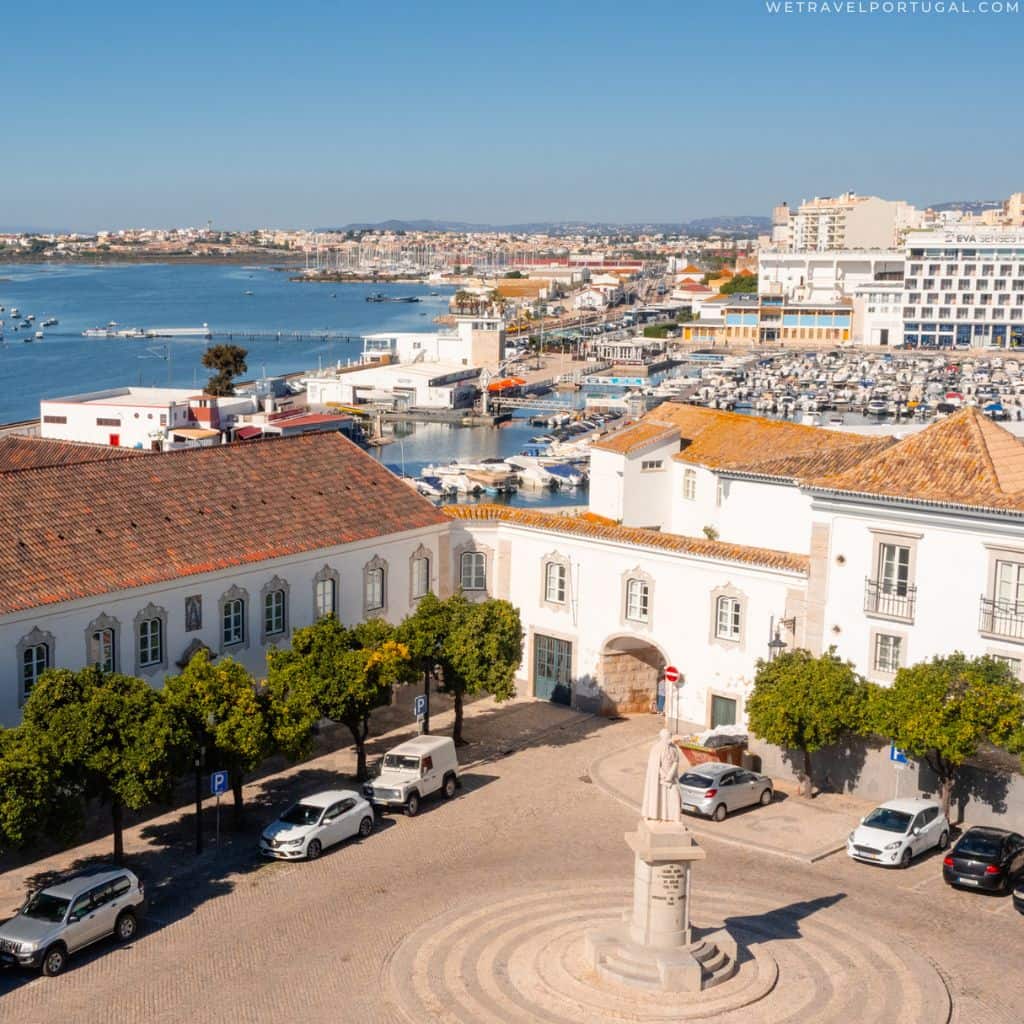
Well if you’re trip is based around Lisbon, Faro is the perfect place to get a taste of the Algarve. Faro is the capital of the Algarve, a historic city with a deep connection to the region. It’s a great place to get a starter experience, the city is on the waterfront of the stunning lagoon – the Ria Formosa. So you can take in the sights and sounds of the compact city, before exploring one of Portugal’s natural wonders.
How to get to Faro by public transport from Lisbon?
Flixbus and Renex ply the route between Lisbon and Faro, but at 3 and a half hours the bus is on the long side. The Alfa Pendula train service takes just 2 and a half hours and arrives in the central train station. Which means you can arrive in Faro before 11am and have a good day of exploring!
How Do You Choose a Day Trip from Lisbon?
The hardest question of all, once you’ve decided to allocate a day in your holiday to travelling away from Lisbon, how do you choose which place. History? Architecture? Food and wine? We often recommend going with something that contrasts Lisbon. Discover the coastline, explore Portugal’s historic castles and palaces without all the crowds.
Which is your favourite day trip to make from Lisbon? Any you’d like to see added to this list?
