
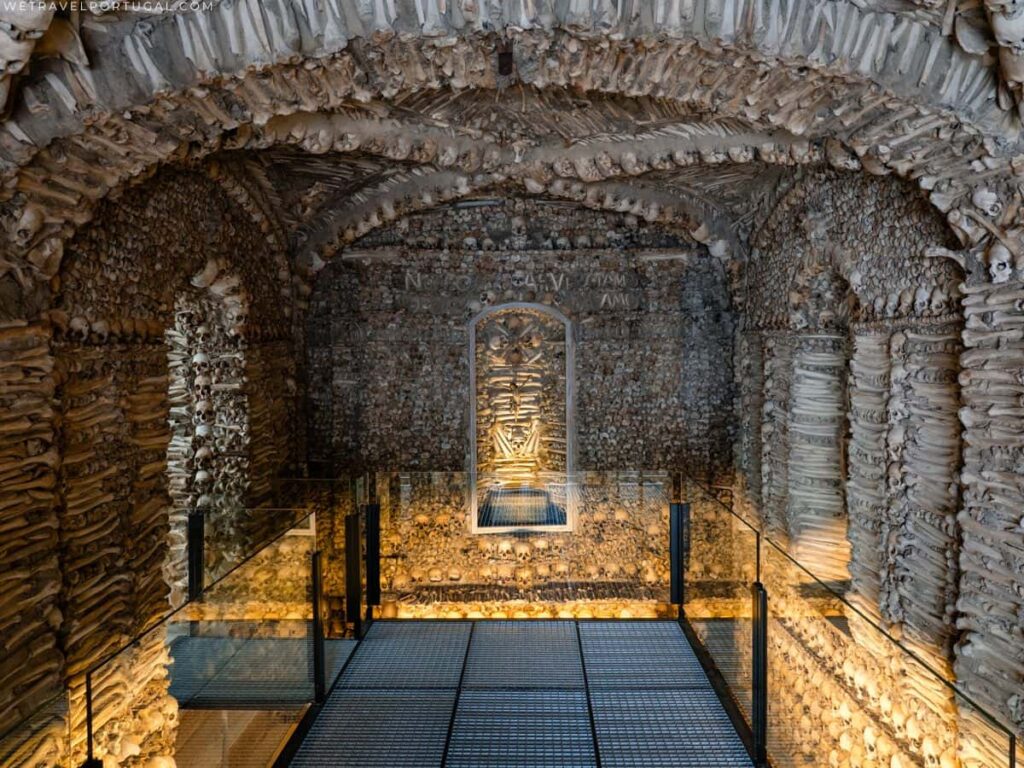
A surprising and unique aspect of Portugal’s religious architecture is the existence of bone chapels or ossuaries. These collections of hundreds and even thousands of bones can be found across Portugal, and there’s three within the Alentejo region to find. Today we’re visiting the Bone Chapel of Campo Maior. It’s a bit more off the main tourist route in the Alentejo and nowhere near as famous as the Capela dos Ossos in Évora.
What is a bone chapel?
Bone chapels (Capela dos Ossos in Portuguese) appear in several towns across Portugal, and they tend to have similar origin stories. They are typically ossuaries, a place to store skeletal remains. Although an ossuary can take many forms, in Portugal there are several chapels made entirely of bones.
The bone chapels have mostly been found in towns that have suffered from overcrowding cemeteries. Typically, people have been laid to rest in a cemetery, and then after a period of time the remains are removed from the cemetery and placed together in a chapel. In most places, this appears to have happened in one go, a large clearing of a singular cemetery to make more room, or to allow expansion of a church or monastic site.

Capela dos Ossos de Campo Maior – The Bone Chapel of Campo Maior
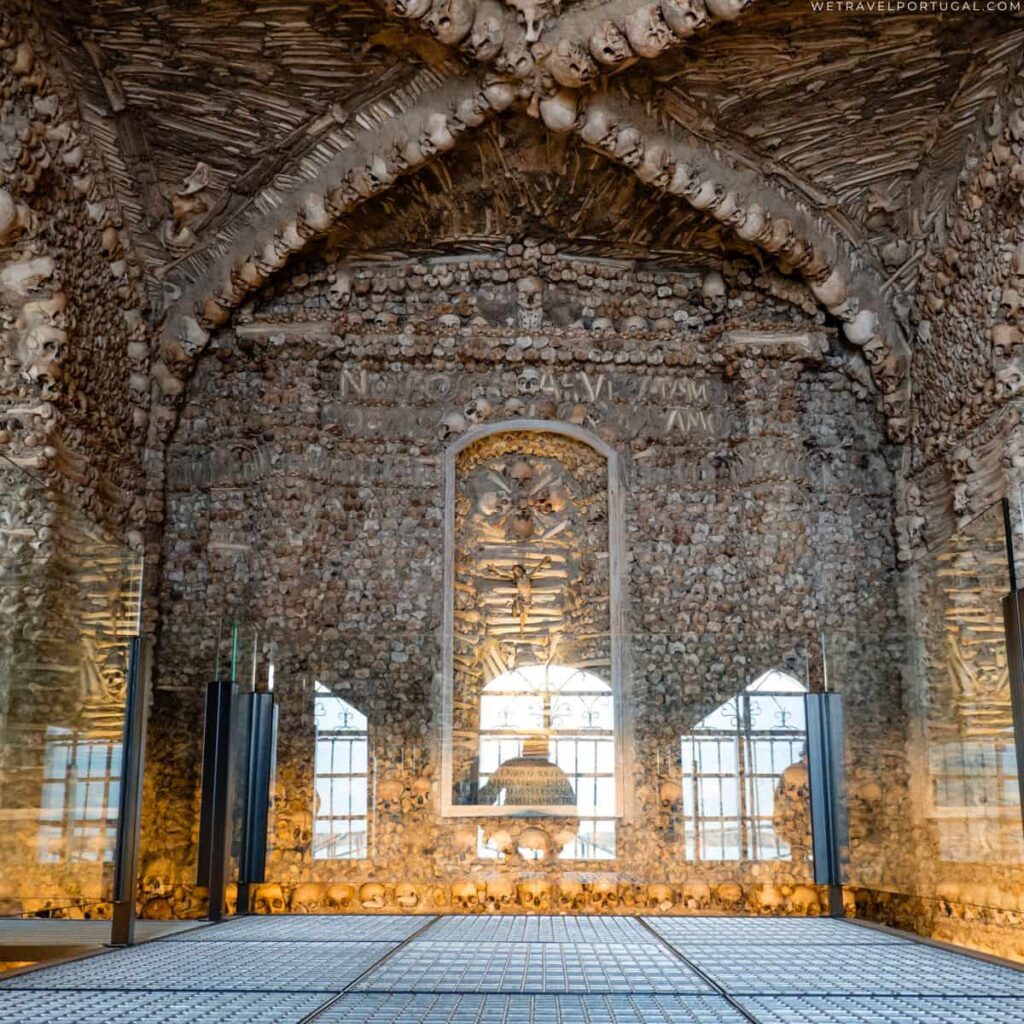
In the small town of Campo Maior, just 10km from the Spanish border you’ll find a great example of a Portuguese bone chapel. Its full name is Capela dos Ossos de Campo Maior. The chapel itself is the second largest in Portugal, measuring around 5m by 3m.
You’ll find it just a short walk from the doorstep of the Church of Nossa Senhora da Expectação, not far from the centre of Campo Maior. It is an 18th-century chapel that is believed to have been constructed in 1766.
The Legends of Capela dos Ossos de Campo Maior
The exact founding of the chapel, and the original construction is still unknown. Popular myth attributes it to one of the the deadliest accidents in Portugal’s military history at the nearby Castle of Campo Maior. Where a lightning strike ignited the gunpowder magazine causing an explosion that destroyed half the town and killed 316 people.
The legend states that in the aftermath of the accident the cemetery was overflowing. The monks utilised the small chapel to store the dead.
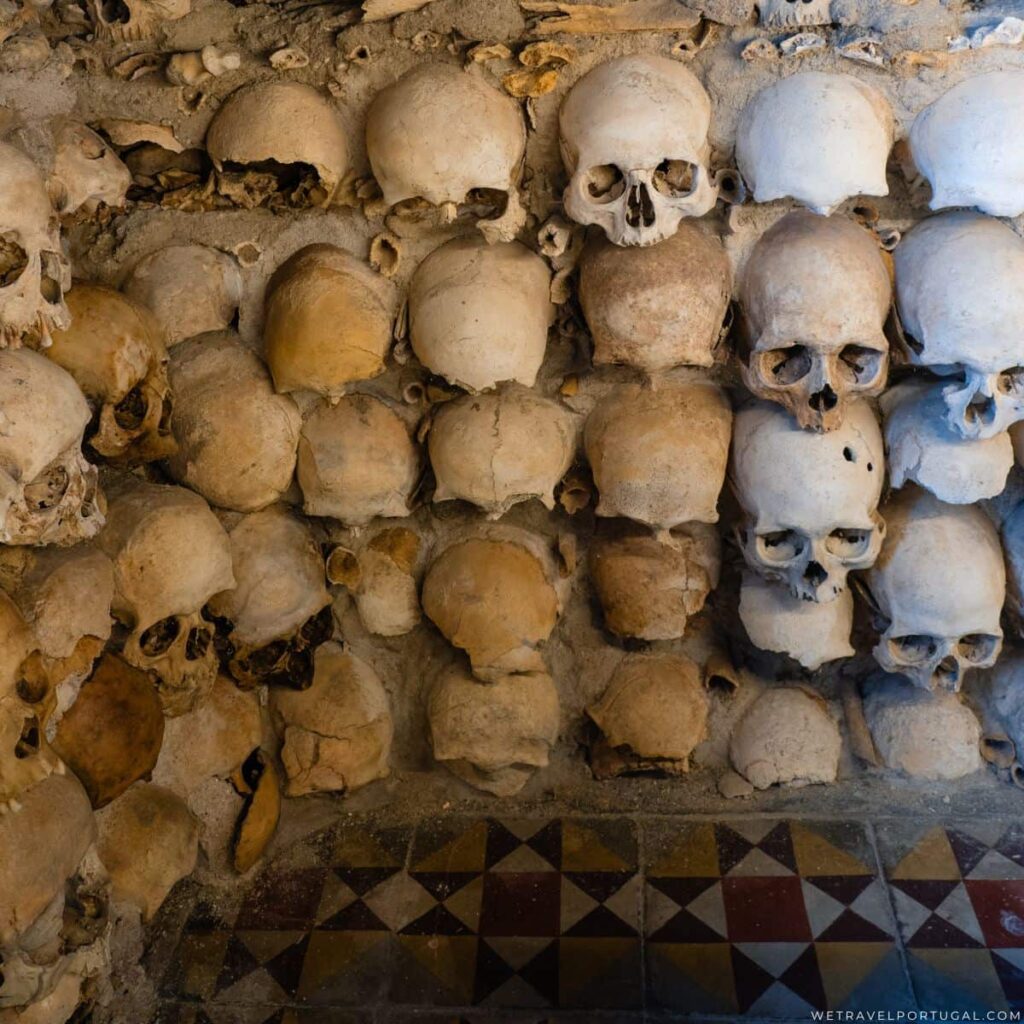
However, an anthropological study conducted in 2021 found that none of the remains showed any signs of violent impact or explosion damage. Indicating that these were not the remains of people from the deadly accident. Additionally, many of the skeletal remains are predicted to be much older than the 18th century.
Should you Visit the Bone Chapel in Campo Maior?
The bone chapel in Campo Maior draws obvious comparisons to the much larger and much more famous Capela dos Ossos in Évora. However, Campo Maior’s is a much quieter, more peaceful experience. There’s no day trippers and you’ll often have the chapel and its museum completely to yourself. This gives you the time to observe and contemplate the remains here.
Visiting the Bone Chapel of Campo Maior is a unique and much quieter experience than Évora. It’s much less famous, and there’s also a restriction on how many people can enter the chapel at a time. There’s a small but unique museum attached to the chapel detailing the restoration efforts and displaying artifacts.
The Details
Location: Largo Dr. Regala, 7370-050 Campo Maior
Opening Hours: 1AM–1PM, 2PM–5 PM, Closed on Mondays
Entry Fee: Free
