
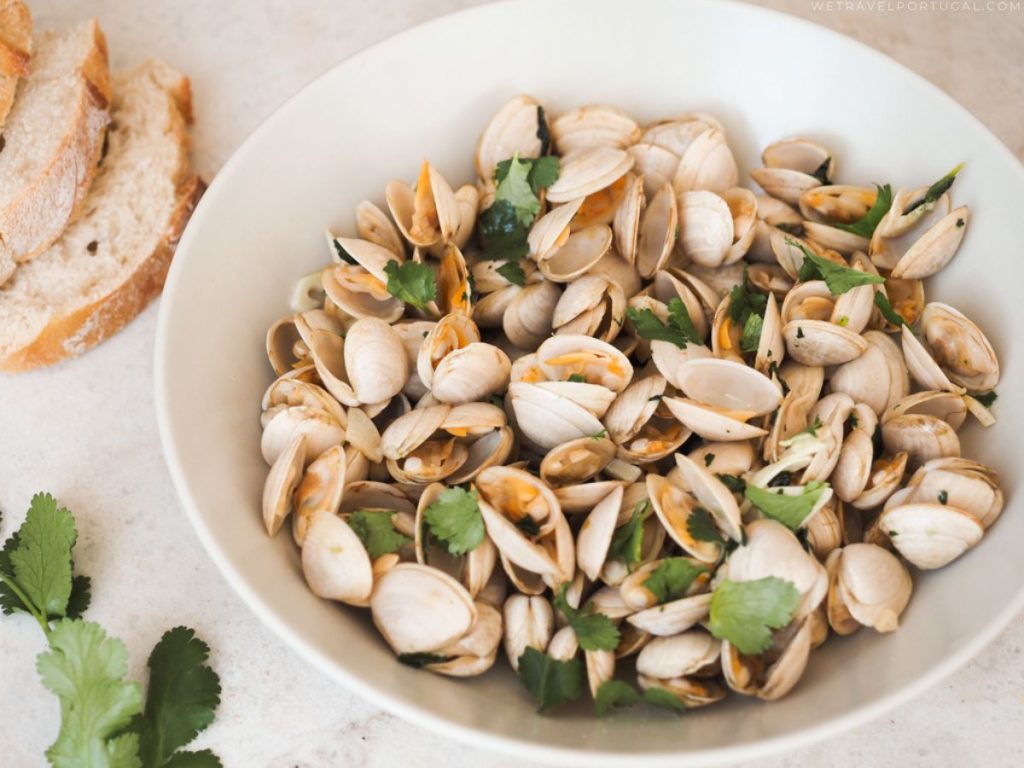
Ameijoas à Bulhão Pato is a deliciously simple dish made of fresh steamed clams, in a dressing of garlic, olive oil, coriander, lemon, and white wine. You’ll find them served across Portugal, but especially in tascas on the coast!
The Origins of Ameijoas à Bulhão Pato
For most visitors, the first thing we might think of when we see or hear the words Bulhão Pato is probably a delicious dish of clams. However, to the locals and fans of Portuguese literature, it’s actually the last name of a famous poet – Raimundo António de Bulhão Pato.

António de Bulhão Pato’s Clams?
So how did a 19th century poet become better known for clams, than his writing? Well, the local legend suggests a chef rewarded him for a mention in his book, by naming the dish after him. The chef’s name has since been lost, so there’s no way to confirm this. Alternatively, it’s also been suggested that the clams received their name, from being frequently served by Bulhão Pato at his parties to other notable members of the avant-garde community of writers, artists and cultural figures of Costa da Caparica when he settled in the late 19th century.
Anyway, to the dish itself. It’s a deliciously simple affair of fresh steamed clams, and a dressing of garlic, olive oil, coriander, lemon, and white wine. A combination that is favoured across Portuguese cuisine. The white wine is optional and, depending who you ask, you’ll be told whether it’s necessary or not. We like to include it, and its always a good excuse to top your glass up while cooking.
The Seven Wonders of Portuguese Gastronomy
In 2011, Ameijoas à Bulhão Pato was also finalist in Portugal’s Sete Maravilhas da Gastronomia. Yes, the 7 wonders of Portuguese Gastronomy. It’s a famous, and well-known dish you’ll find offered in most seafood restaurants. Unfortunately, the dish would go on to lose to the culinary greats of the Pastel de Belem, Caldo Verde, and the Portuguese classic of grilled sardines.
Read More: The Seven Wonders of Portuguese Gastronomy
Bulhão Pato Clams Recipe:
For this recipe, we used Amêijoa Branca (White Clams). There are lots of alternatives available, so pick which looks best or freshest at your local market of choice!
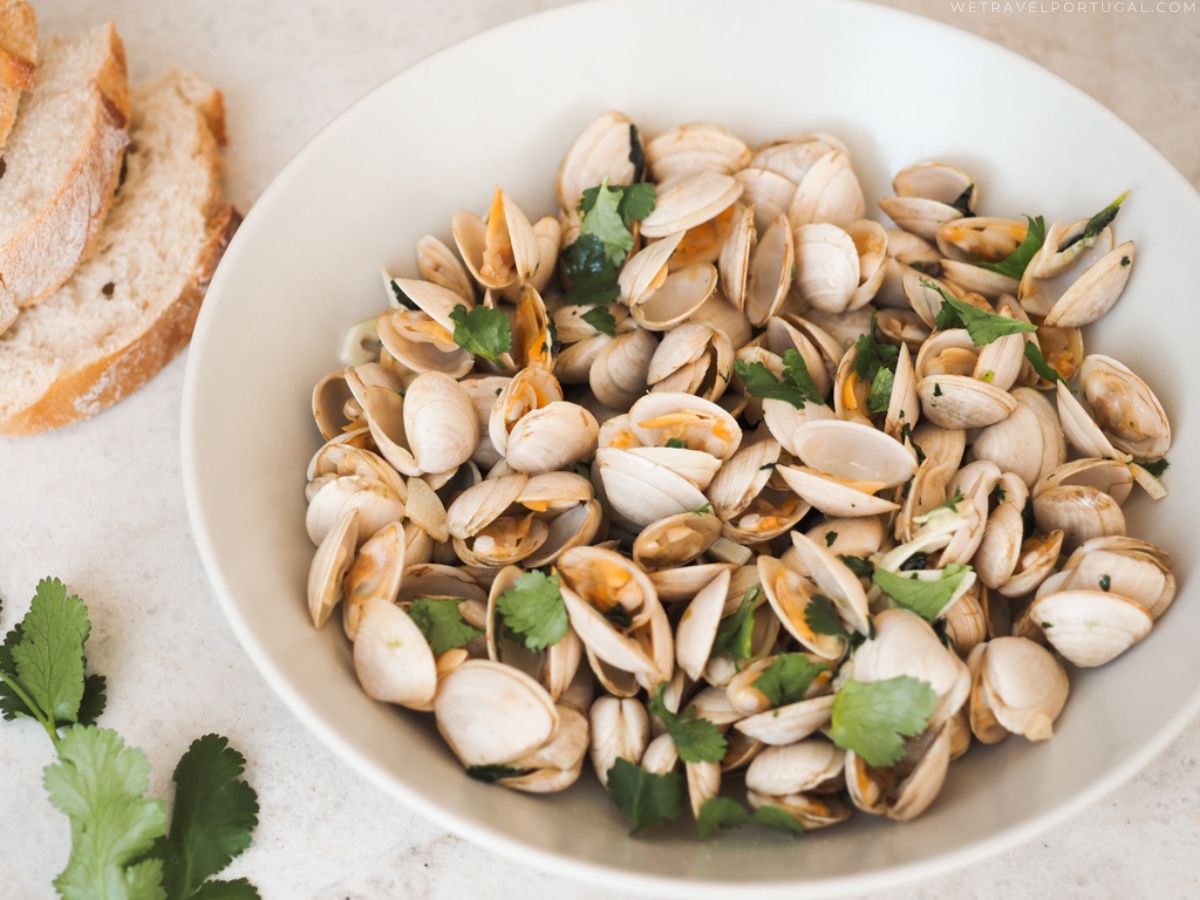
Portuguese Clams -Ameijoas à Bulhão Pato
2
servings10
minutes10
minutes350
kcalAmeijoas à Bulhão Pato is a deliciously simple recipe of steamed clams, and a dressing of garlic, olive oil, coriander, lemon, and white wine.
Ingredients
500 g Fresh Clams
2 Garlic Cloves
3 tbsp Olive Oil
1/2 Lemon – Juiced
Salt
Black Pepper
White Wine
Fresh Cilantro
Fresh Bread
Directions
- Rinse and wash the clams well. Discarding any opened or broken shells you find. Place them in a food container, then cover them with saltwater or even better – seawater. Let them soak for 2 hours.
- Remove the clams from the water, rinse them thoroughly. If necessary, scrub them using a clean kitchen brush to remove any dirt or impurities.
- Thinly slice the garlic. Place a frying pan (one which has a lid) over low to medium heat. Once hot, add the olive oil. Cook the garlic for around 2 minutes until fragrant.
- Add in the clams, and a splash of white wine. Cover with the lid, let them cook for around 3 minutes, until the shells open.
- Season with lemon, salt, black pepper, and fresh cilantro. Serve it with a good crusty bread.

Let us know what you think in the comments!
More Delicious Seafood Recipes from Portugal
- Portuguese Pork and Clams – Carne de Porco à Alentejana
- Arroz de Marisco – Portuguese Seafood Rice
- Rissóis de Camarão – Portuguese Shrimp Rissoles
- Gambas ao Alhinho – Portuguese Fried Garlic Prawns
Follow Us!

