
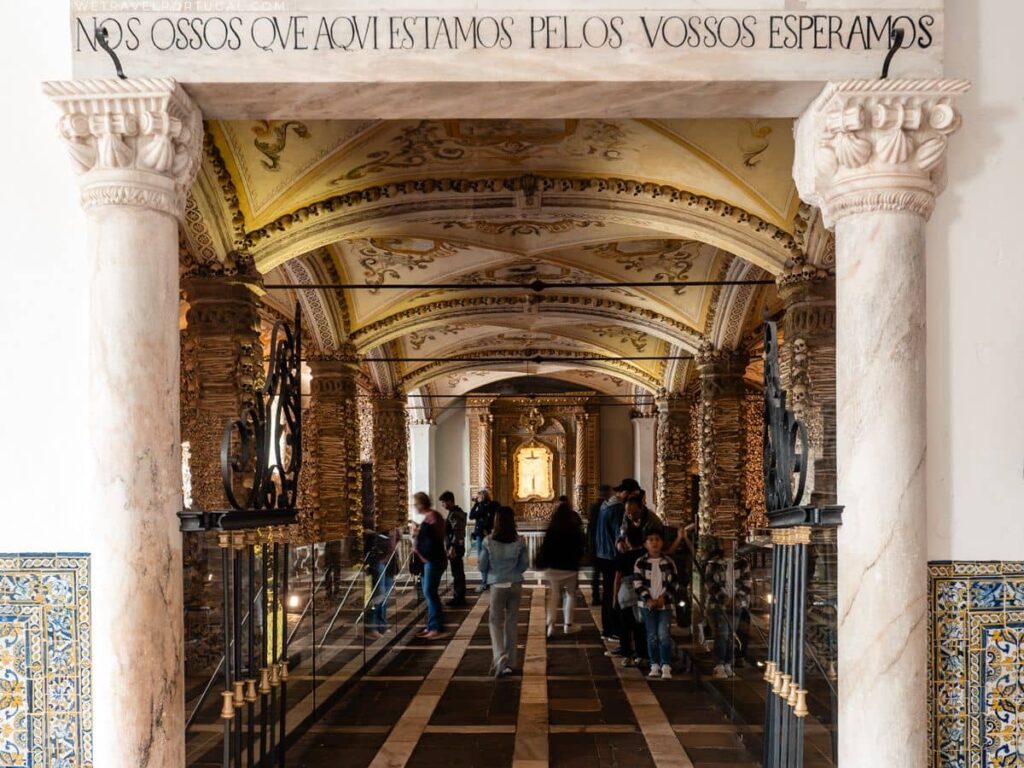
The Alentejo region of Portugal is known for its beautiful landscapes, historic towns, and stunning architecture. It also holds some of Portugal’s most intriguing and eerie attractions – bone chapels.
Capela dos Ossos as they are called in Portuguese, are bone chapels that are lined with hundreds and in some cases thousands of human skulls and bones. They are a clear reminder of mortality – memento mori and are a fascinating part of Portugal’s religious architecture. In this guide, I’ll give you the details on three bone chapels in the Alentejo that you can visit today!
What are Bone Chapels and Why were they Built?
These chapels were built between the 16th and 18th centuries, a period when overcrowded cemeteries forced monks and church leaders to find new ways to store human remains. Instead of discarding the bones, they were carefully arranged inside chapels, creating spaces for meditation and spiritual reflection. Ossuaries, and Bone Chapels were not uncommon throughout human history, but not many are left today.
The Franciscan order played a key role in the construction of these sites, emphasizing the message that life is fleeting and that spiritual concerns should take precedence over material wealth.
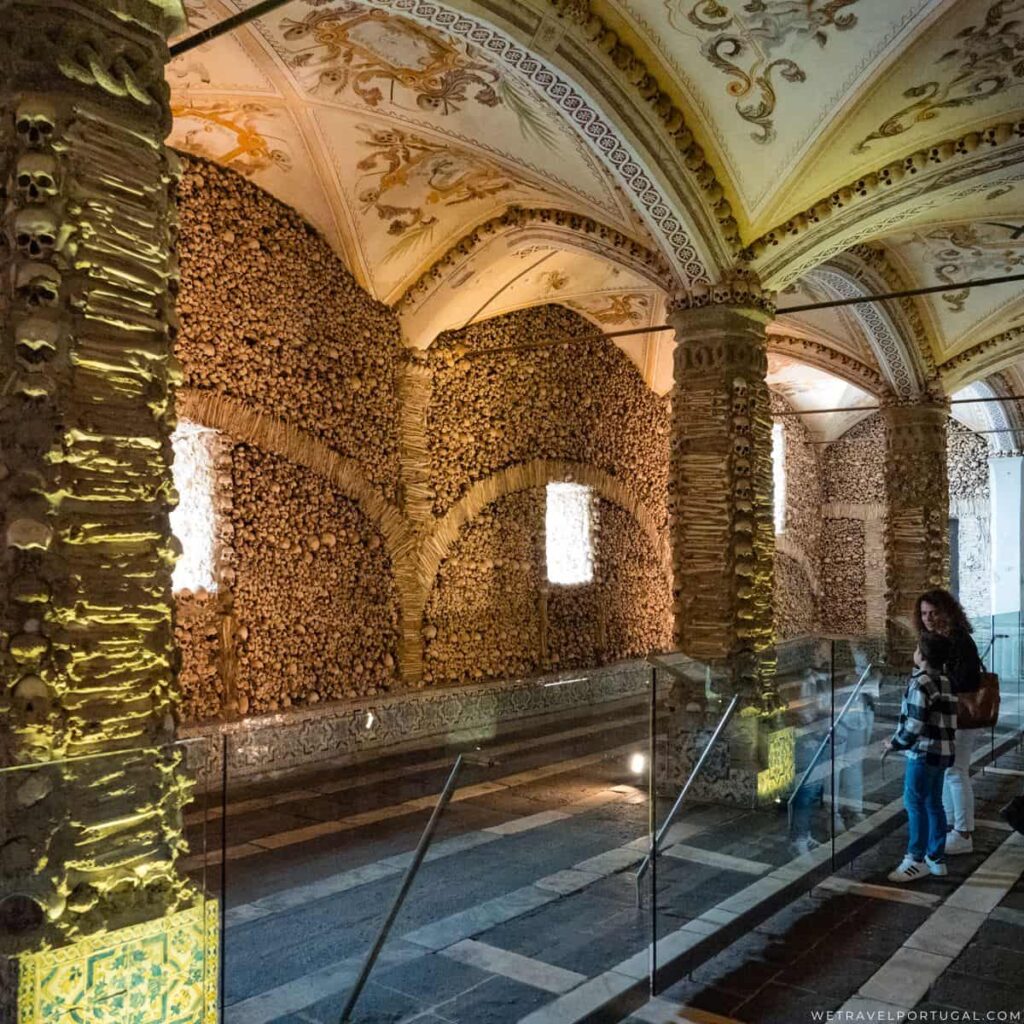
1. The Chapel of Bones, Évora (Capela dos Ossos)
Location: Praça 1 de Maio, 7000-650 Évora
The Capela dos Ossos in Évora is the biggest and most famous bone chapel in Portugal. The chapel was built in the late 17th century by Franciscan monks inside the Church of São Francisco. The chapel’s walls and ceilings are covered with the bones of more than 5,000 people, carefully arranged into patterns.
During the 17th century, Évora experienced cemetery overcrowding, and rather than rebury the bones, the monks decided to use them as a teaching tool. Inspired by similar chapels in Italy and Spain, they constructed a space that would remind visitors of life’s impermanence and the need for spiritual reflection.
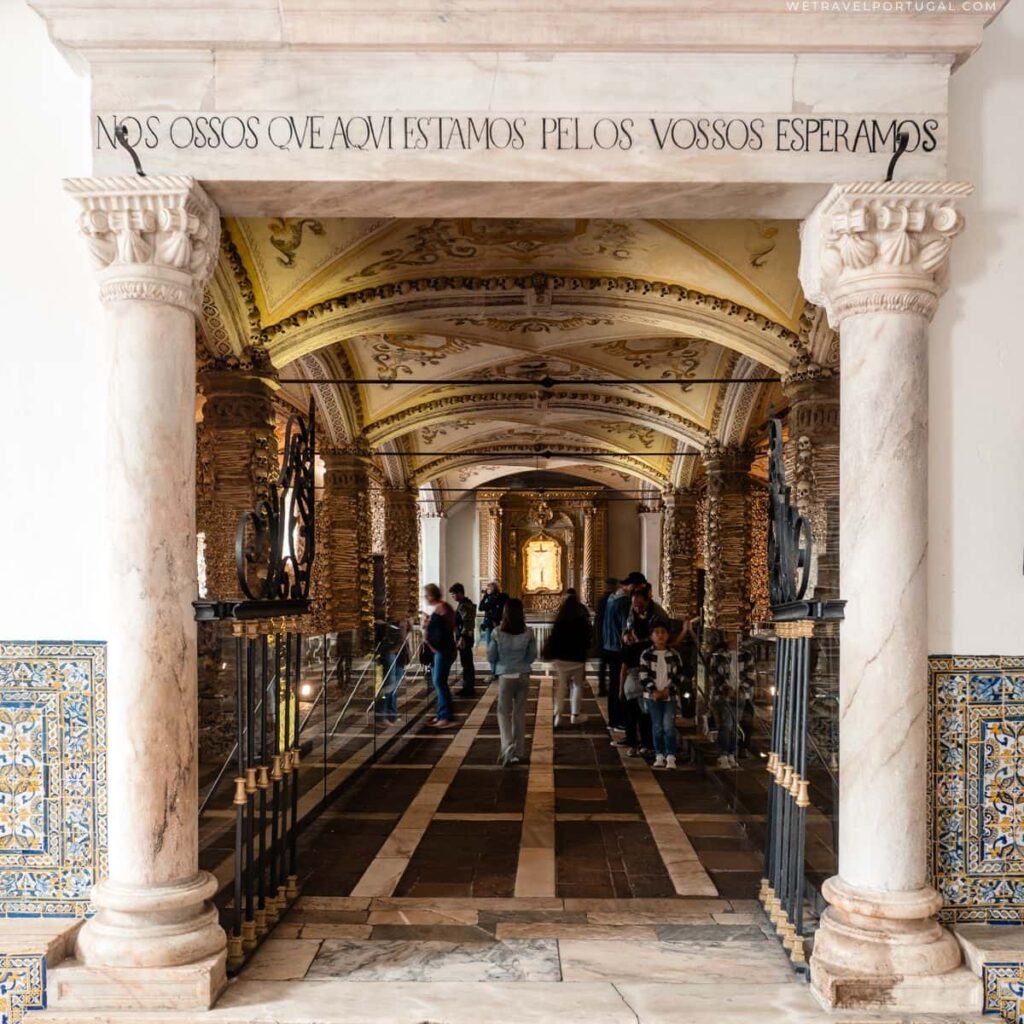
Above the entrance, a Latin inscription states:
Nós ossos que aqui estamos pelos vossos esperamos –
We bones that are here await yours
Of the three bone chapels I’m mentioning in this guide, Évora is the most famous, and the most touristy. It’s one of the biggest attractions in the city, and throughout the day, a steady stream of day trippers visit. It’s worth visiting, just don’t expect to have the chapel to yourself!
Opening Hours: 9AM – 6:30PM
Entry Fee: €5 (includes access to the São Francisco Church and museum).
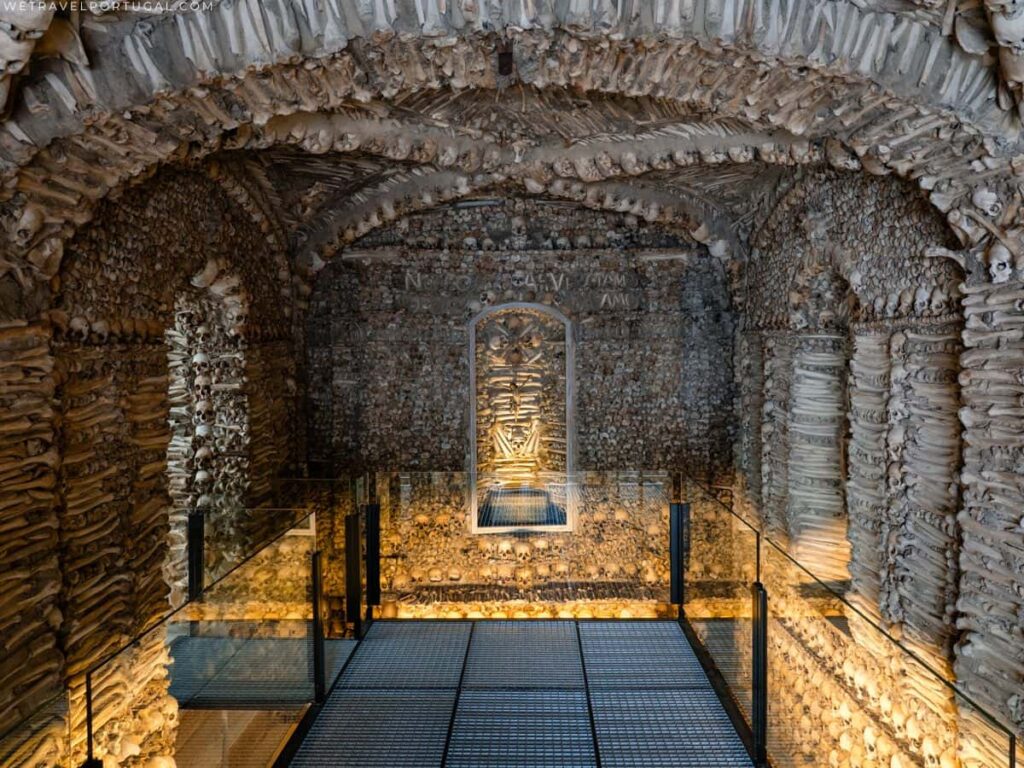
2. The Bone Chapel of Campo Maior (Capela dos Ossos de Campo Maior)
Location: Largo Dr. Regala, 7370-050 Campo Maior

Hidden next door to the Church of Nossa Senhora da Expectação, this 18th-century chapel is surrounded by legends. Originally, it was thought to have been constructed in 1766 to store the remains of one of the deadliest accidents in Portugal’s military history.
A lightning strike ignited the gunpowder magazine at the nearby castle causing an explosion that destroyed half the town and killed 316 people. The legends detail that during the intense period of tending the wounded and sorting the dead, the cemetery was overflowing. The monks utilised the small chapel to store the dead.
However, according to an anthropological study conducted in 2021, none of the remains showed signs of violent impact or explosion damage. Indicating that these were not the remains of people from the deadly accident. Additionally, many of the skeletal remains are predicted to be much older than the 18th century.
Visiting the Bone Chapel of Campo Maior is a unique and much quieter experience than Évora. It’s much less famous, and there’s also a restriction on how many people can entre the chapel at a time. There’s a small but unique museum attached to the chapel detailing the restoration efforts and displaying artifacts.
Opening Hours: 1AM–1PM, 2PM–5 PM, Closed on Mondays
Entry Fee: Free
3. The Bone Chapel of Monforte (Capela dos Ossos de Monforte)
Location: Largo da Matriz, 7450-146 Monforte
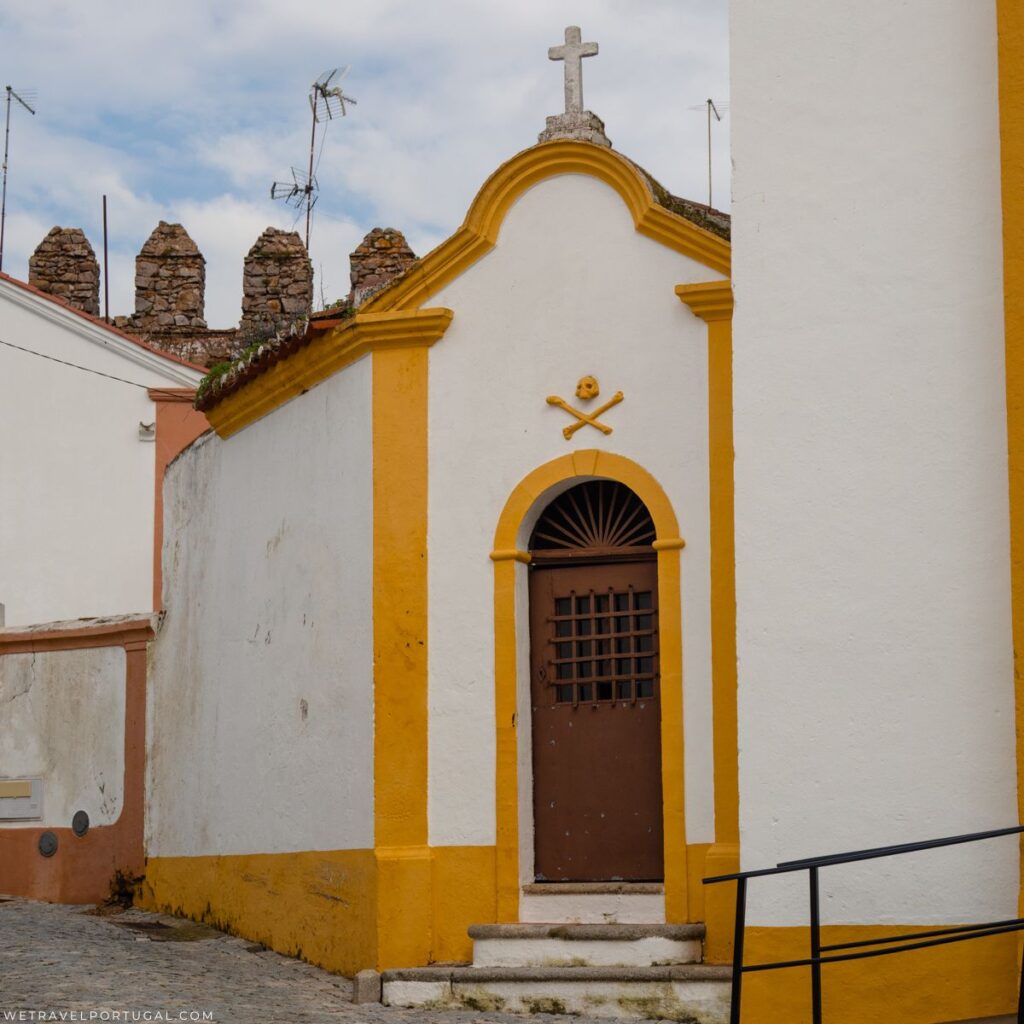
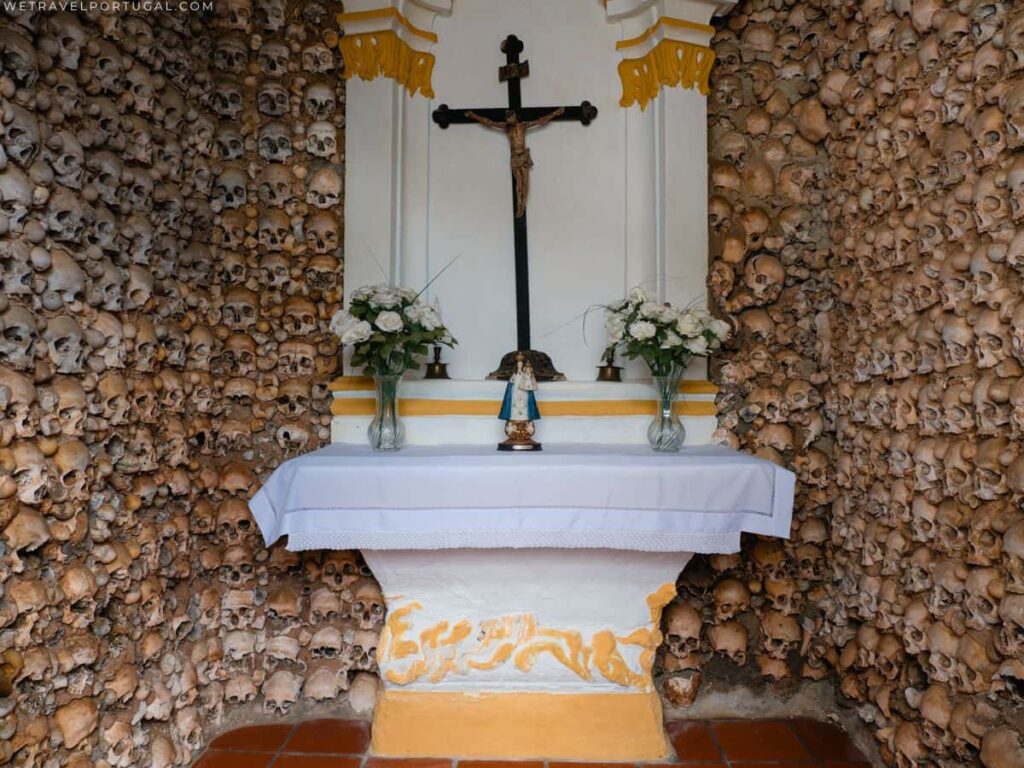
Now for the smallest bone chapel in the Alentejo – Capela dos Ossos de Monforte. Compared to Évora, and Campo Maior, Monforte is tiny. It covers just several square meters and is attached to Igreja Matriz de Monforte. There really isn’t much room in this chapel at all, allowing you a quick look at the walls which are stacked to the brim with skulls.
Not much is really known about this chapel, it was built some time during the 18th century and has been quietly maintained ever since. Visitors are not usually allowed inside but can peer through a small opening on the door. There’s also a small opening to place donations and offerings to the church.
Opening Hours: None
Entry Fee: Free
Should You Visit a Bone Chapel in the Alentejo?
These are fascinating and unique parts of Portugal’s past, we’ve stopped at them many times. They offer a unique experience, whether its a look into historical funerary practice, religious architecture, or even a place to contemplate your own mortality.
Which bone chapel will you be visiting?
