
Lisbon’s urban charm is incredible, but for many visitors and locals, the draw of Atlantic coast beaches just a short trip away is irresistible. Even more so during the warmer months, which in Portugal usually extend from late April to October.
One of the great things about Lisbon, is the easy access to the coastline and a wide range of beaches in the local area. Many of these are even accessible by public transport! If you’re looking for beach clubs, wild and windswept getaways, or beaches to don a wetsuit and surf, Lisbon has it and many are viable as day trips from the city. So, here’s my favourite beach day trips from Lisbon.
Best Lisbon Beach days for:
Best for Families – Cascais or Praia das Maçãs
Best for Surfers – Praia do Guincho or Praia de Carcavelos
Best for Explorers and Hikers – Praia da Ursa and Praia da Adraga
Best for Urban Chic – Cascais or Caparica
Best for Public Transport – Cascais or Carcavelos
Putting the Best Beach Day Trips on the Map
Cascais – Lisbon’s Picture Perfect Seaside Resort
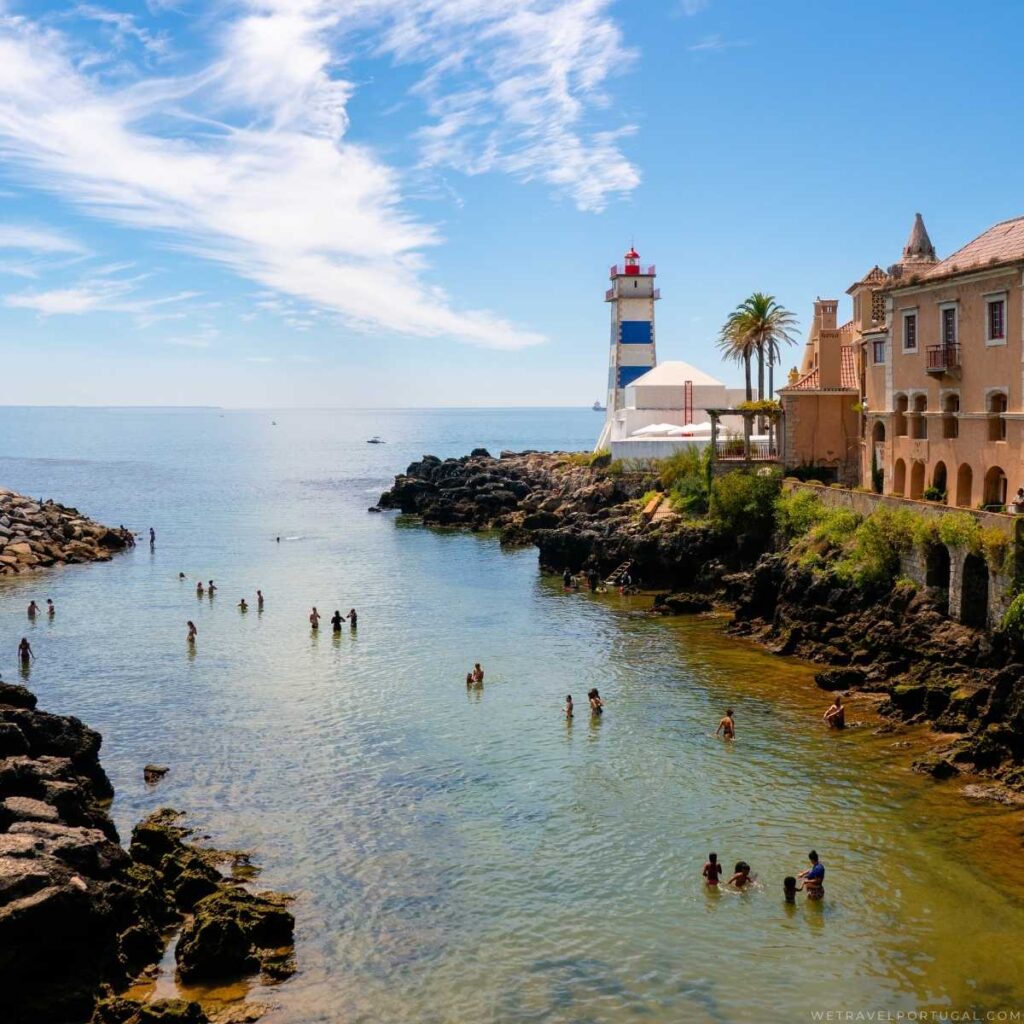
Cascais is a resort town on a direct trainline from Lisbon – and compared to Lisbon it’s a pretty small town with just 60,000 people living there. This coastline is affectionately known as the Portuguese Riviera and historically this was the summer retreat of Lisbon’s elite. Along the coast you’ll find more than a few historic palaces and grand villas, all situated on or with stunning views of the coast.
The Beaches of Cascais
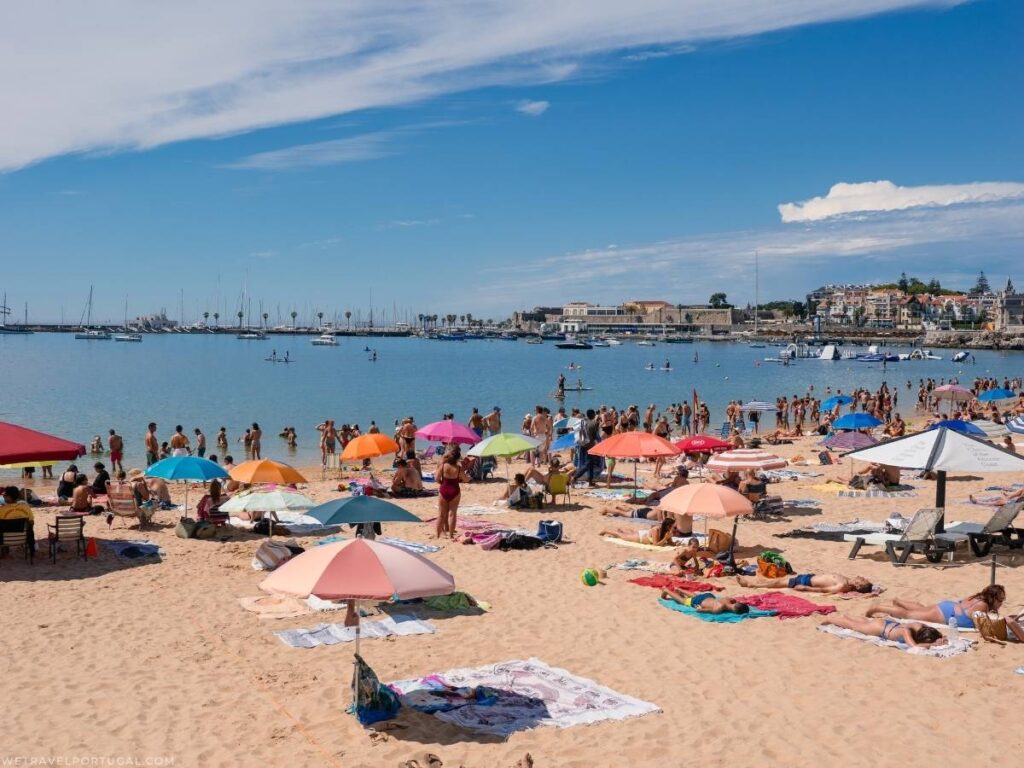
The biggest beaches in Cascais are Praia da Duquesa and Praia da Conceição (really, they’re the same beach). This is Cascais’ best beach: golden sands, calm protected waters, and every typical beach activity you can think of. Think inflatables to hire, paddle boarding, jet skis, and banana boats. There’s multiple concessioned areas and several bars directly facing the beach. However, being the best, also means the most popular and in the height of summer this place can feel packed. Getting their early is advised.
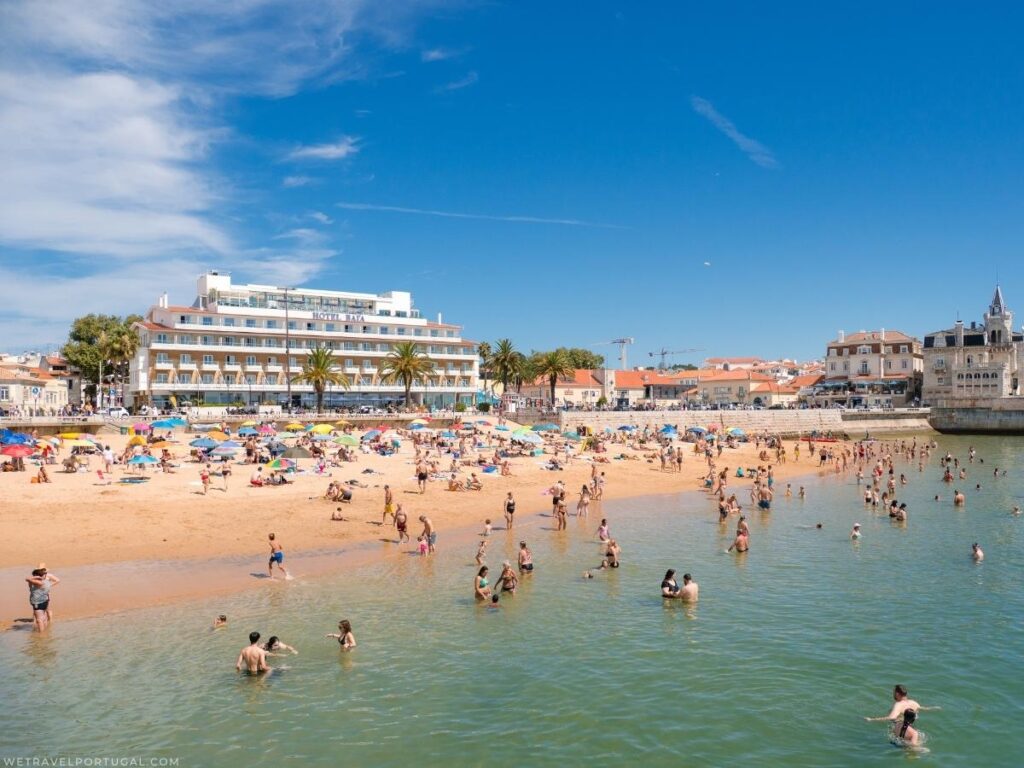
Smaller and directly in the town you also have Praia da Ribeira. It doesn’t have the same level of activities, or concessions, but you’re right in the town should you want an ice cream. A short walk out of town you’ll find Piscina Oceânica Alberto Romano, a sea pool. Cascais really is your complete seaside resort!
How to Get to Cascais?
The regional trainline departs from Lisbon to Cascais from Cais do Sodré almost every 20 minutes. In Lisbon you can catch the train from Cais do Sodré, Santos, or Alcântara – Mar. Alternatively, its around a 30 minute car ride. Ubers and Bolts are available and depending on time of day it can cost around €20-30 for a one way trip!
Praia de Carcavelos
This is the biggest beach within the Portuguese Riviera, and overwatched by a historic fortress. Compared to Cascais, Carcavelos is overshadowed and not as many international visitors know about it. To get there from Lisbon, Carcavelos has a stop on the Lisbon Cascais line, and the train station is just 900m from the beach.
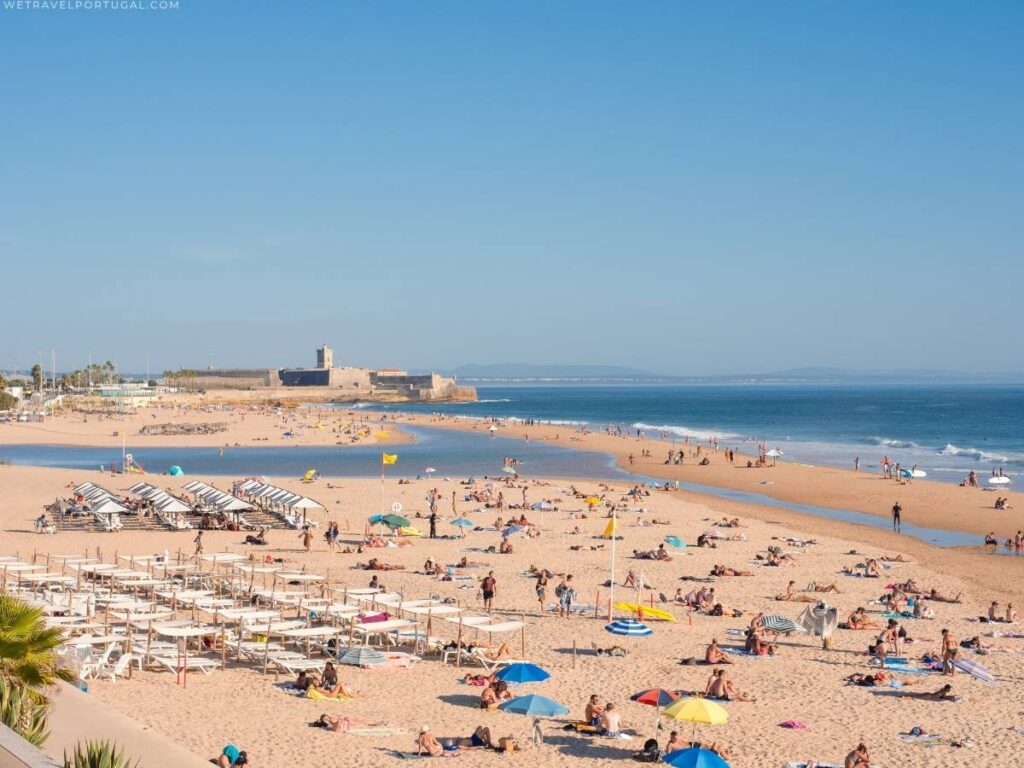
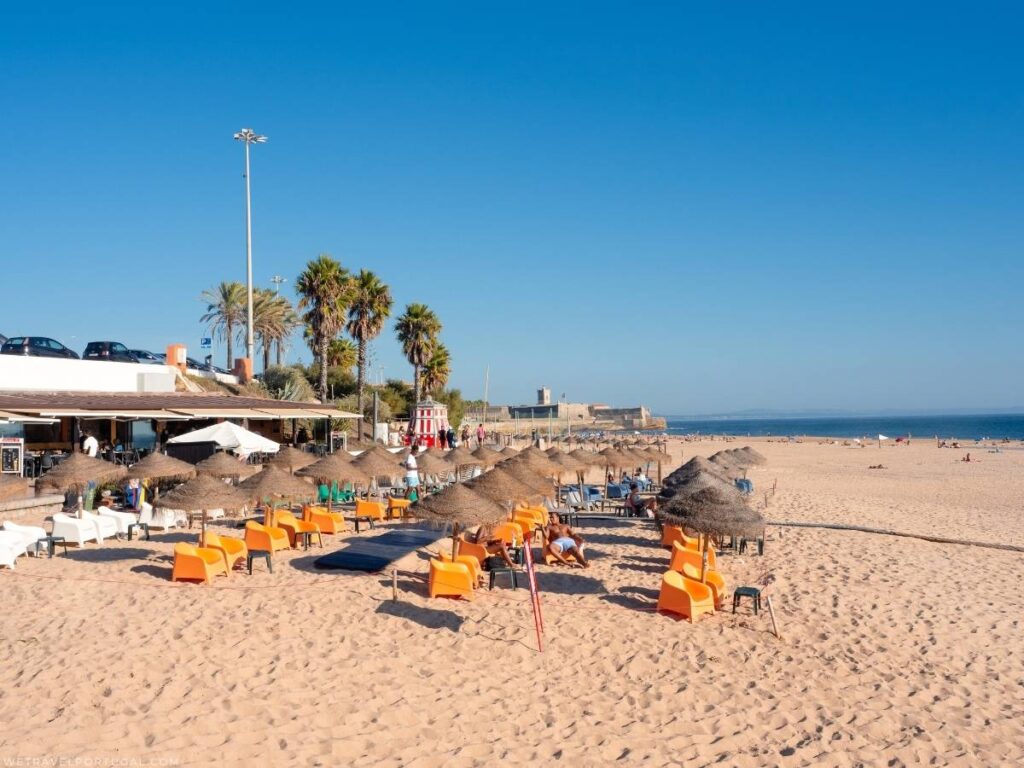
Praia de Carcavelos is the first Atlantic beach along the train line and also happens to be the biggest. It also happens to be one of the region’s most reliable surf spots; consistent Atlantic swells draw beginners and seasoned surfers alike, with several schools operating year-round. So, if you’re looking for a surf school from Lisbon, this is a great option.
During those warmer months, the large stretch of beach caters to more than just surfers – beach bars, volleyball games, lots of families, and with its space there still feels room to breathe. Generally, I prefer Carcavelos over Cascais unless I’m planning on visiting the town of Cascais at the same time as the beach!
How to get to Carcavelos?
The regional trainline departs from Lisbon to Cascais from Cais do Sodré almost every 20 minutes. Carcavelos has its own station on the line. Alternatively, its around a 30 minute car ride. Ubers and Bolts are available and depending on time of day it can cost around €20-30 for a one way trip!
Praia do Guincho — Windswept & Wild
Heading west along the coast from Cascais, you’ll get to see some amazing coastline, Boca do Inferno is a mandatory stop. If you keep heading around the coastline you’ll soon meet a collection of beaches. From smallest to largest they are Praia da Arriba, Praia da Cresmina and Praia do Guincho.
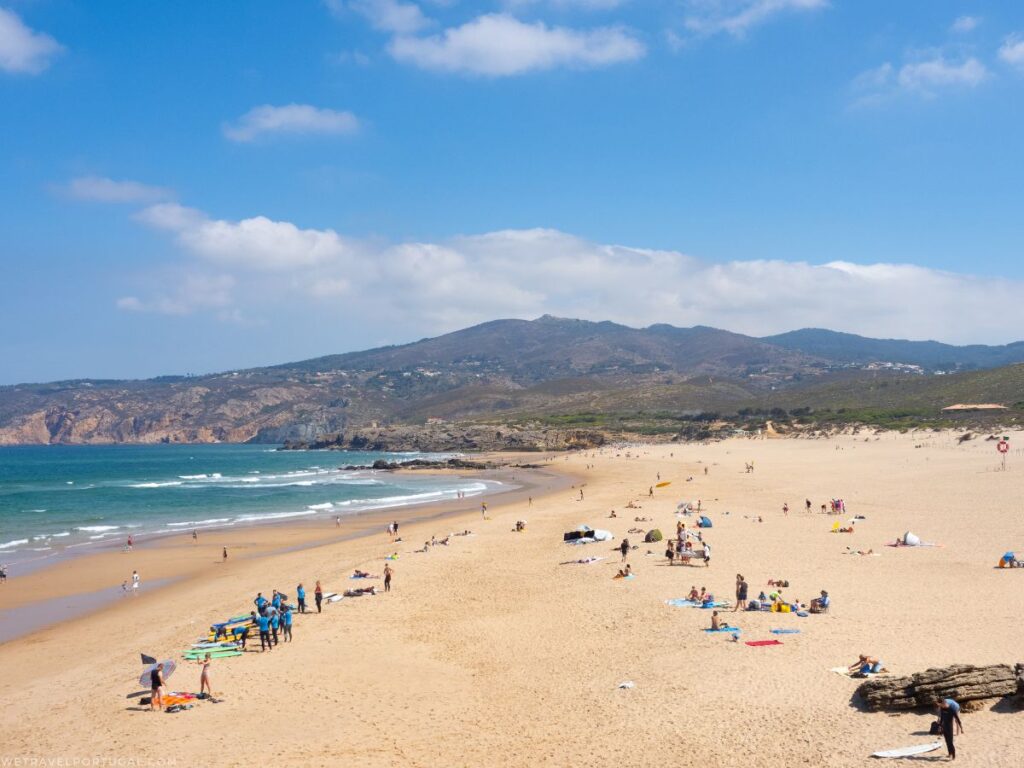
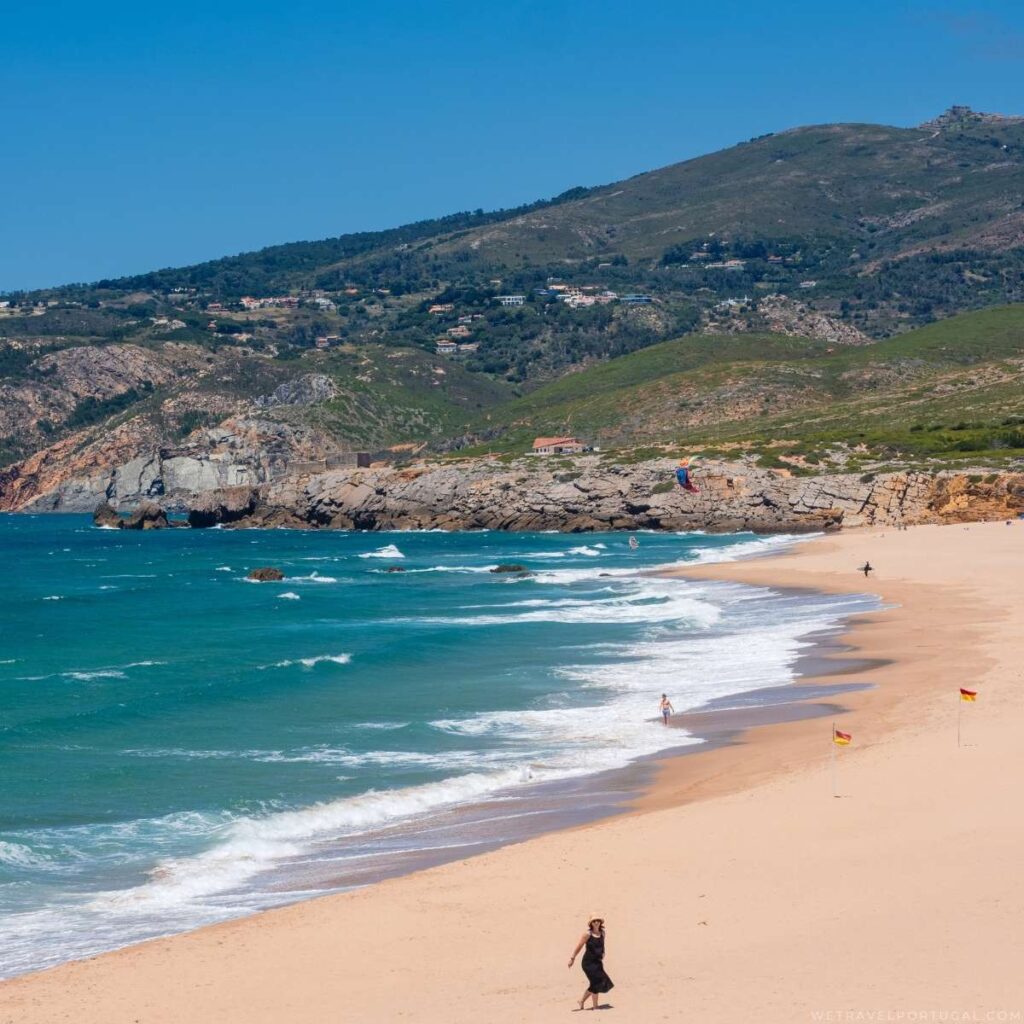
Praia do Guincho is the beach for you if you want a wild expansive beach with plenty of your own space. It’s an expansive beach that’s fully exposed to the Atlantic Ocean, both the powerful waves and the constant winds. You’ll find surf schools, surfers, and kite surfers, as well as areas dedicated to swimming.
How to get to Praia do Guincho
To get to Praia do Guincho from Lisbon by public transport is actually quite simple. You can take the regional train from Cais do Sodré to central Cascais (it departs almost every 20 minutes). From Cascais you can hop on bus M43. Alternatively, you can Uber/Bolt, it’s around a 35-minute drive, and will cost between €20-30.
The Sintra Coastline – For the Adventurers (Praia da Ursa, Praia do Magoito)
Continuing north from Praia do Guincho, will first lead you to Cabo da Roca – the most westerly point of Portugal and continental Europe. This area is a day trip in of itself, but nearby you’ll find the beaches of Praia da Ursa, and Praia da Adraga.
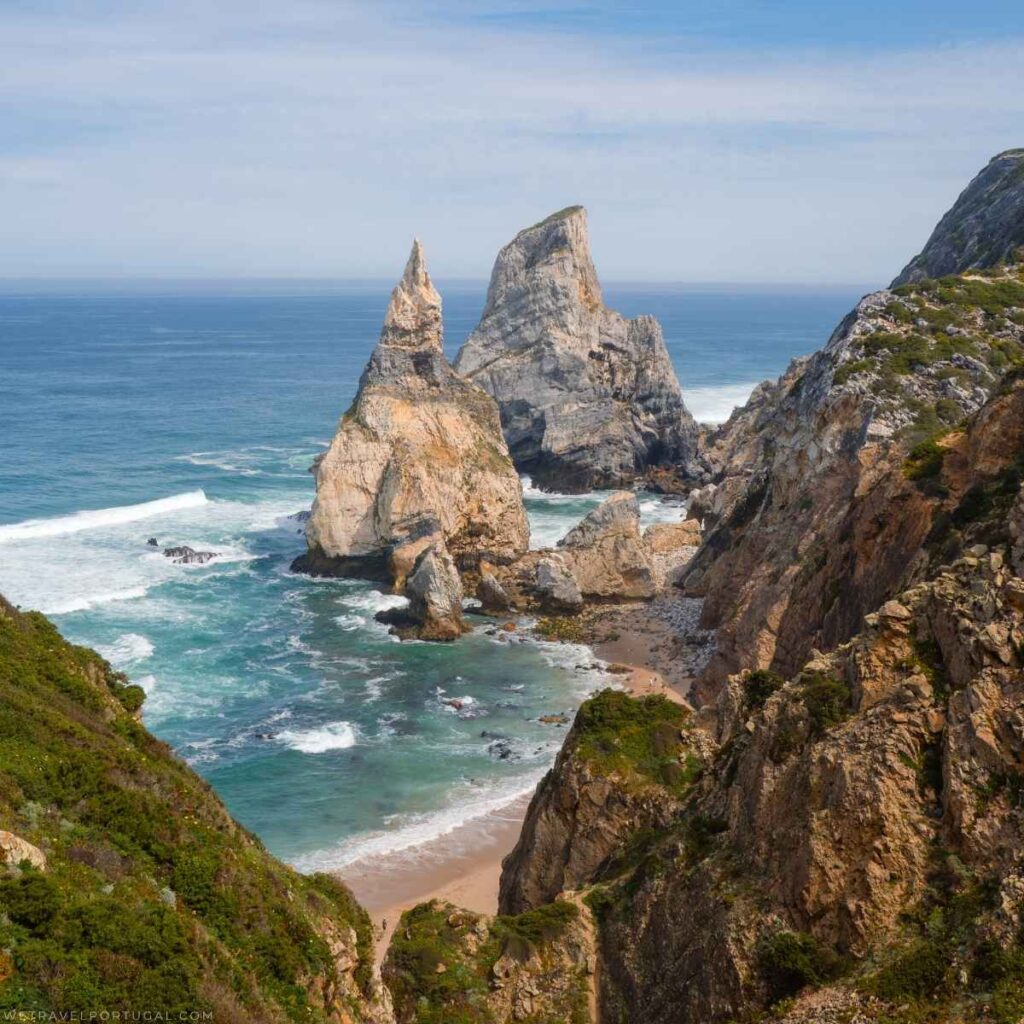
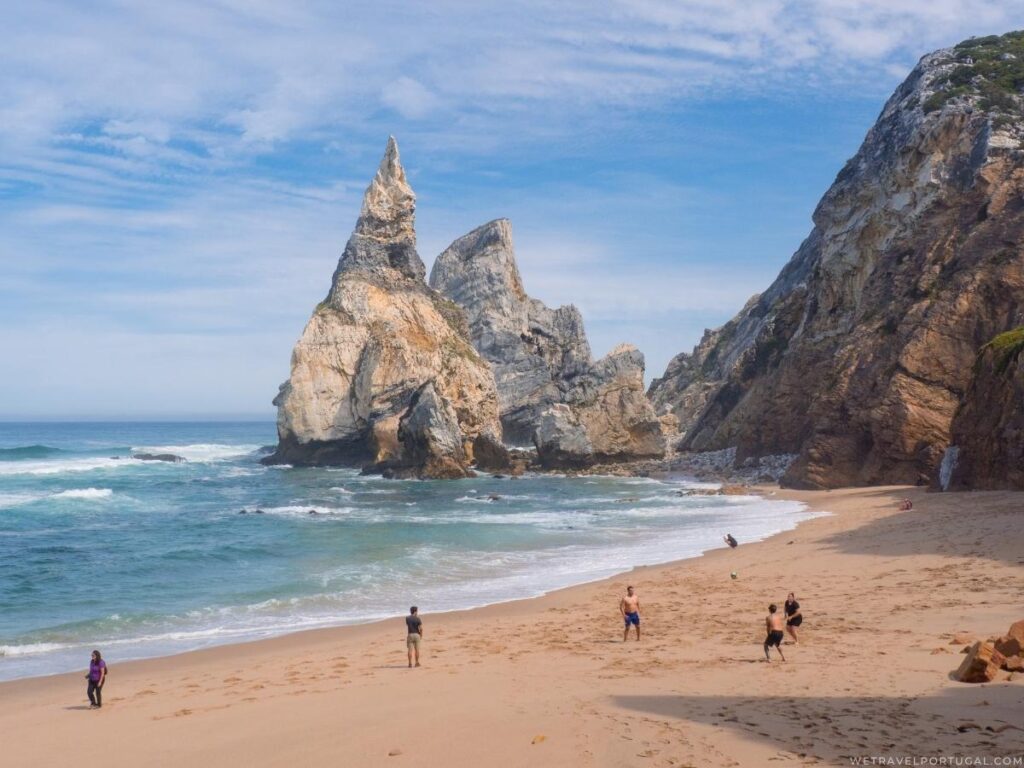
These are Lisbon’s most adventurous beaches to get to. Public transport is limited so to get to these beaches, you’ll need a rental car, or private driver. Praia da Ursa is the more wild of the two beaches and involves some hiking to get there. First you’ll need to navigate a steep cliff path towards the beach. Once you’re there, you’ll find no lifeguards, or services of any kind, so you’ll have to come prepared. However it is easily the most stunning beach of the regions, the cliffs and sea stacks are like nothing else in the area.
Praia do Magoito
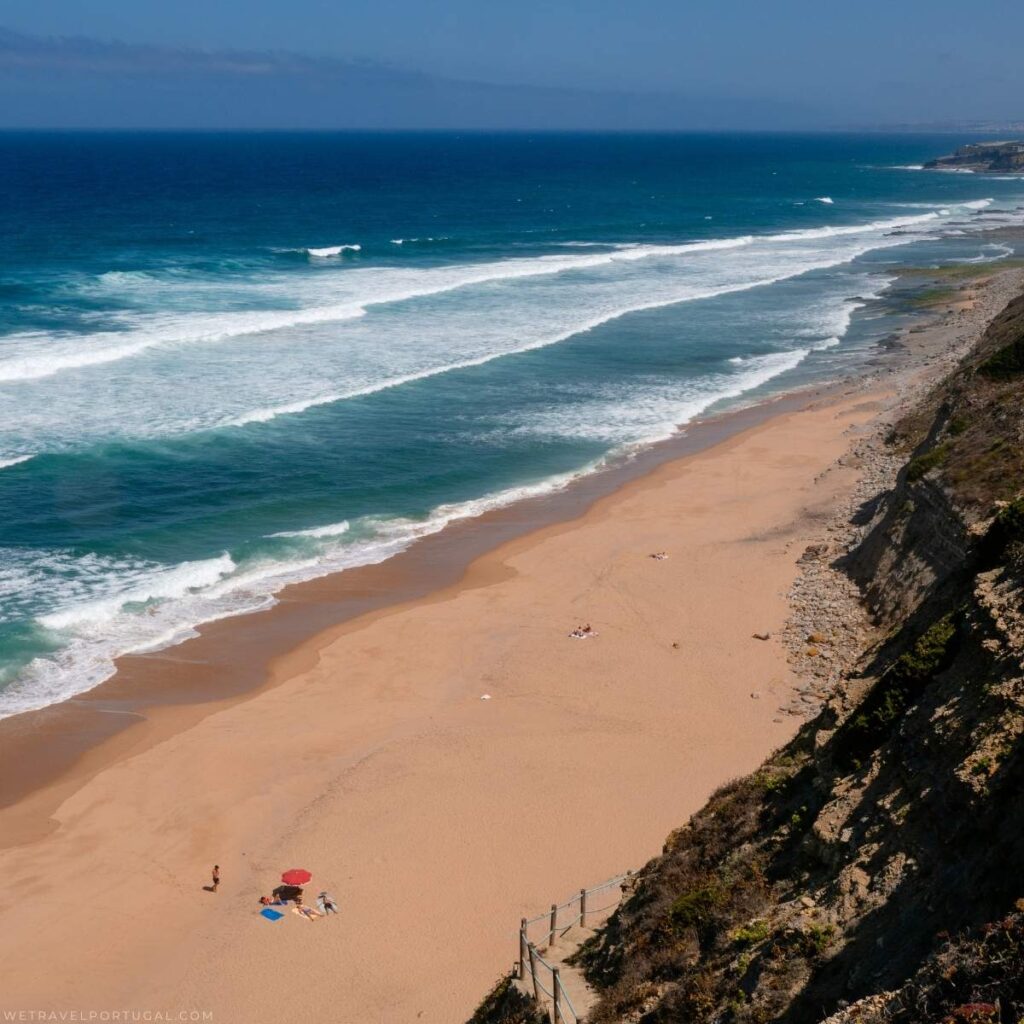
Further north is Praia do Magoito, it’s around 50 minutes from Lisbon and 30 minutes from Praia da Ursa. The beach here is much bigger, but the cliff views are just as dramatic. There’s more of a cliff path, but it’s just as steep. Again, there’s no facilities here so this is quite a wild beach that not that many people visit. Even at the height of summer, it’s rarely that busy! Another great beach for adventurers looking for wild beaches!
Praia das Maçãs – For the Families
While Praia da Ursa and Praia do Magoito are the wilder beaches, there’s at least two beaches in this area that are full scale resorts. Praia das Maçãs and its neighbour Praia Grande. The amazing thing about Praia da Maçãs is that it is actually connected by tram to Sintra – giving anyone in Sintra great access to the coastline to this amazing beach.
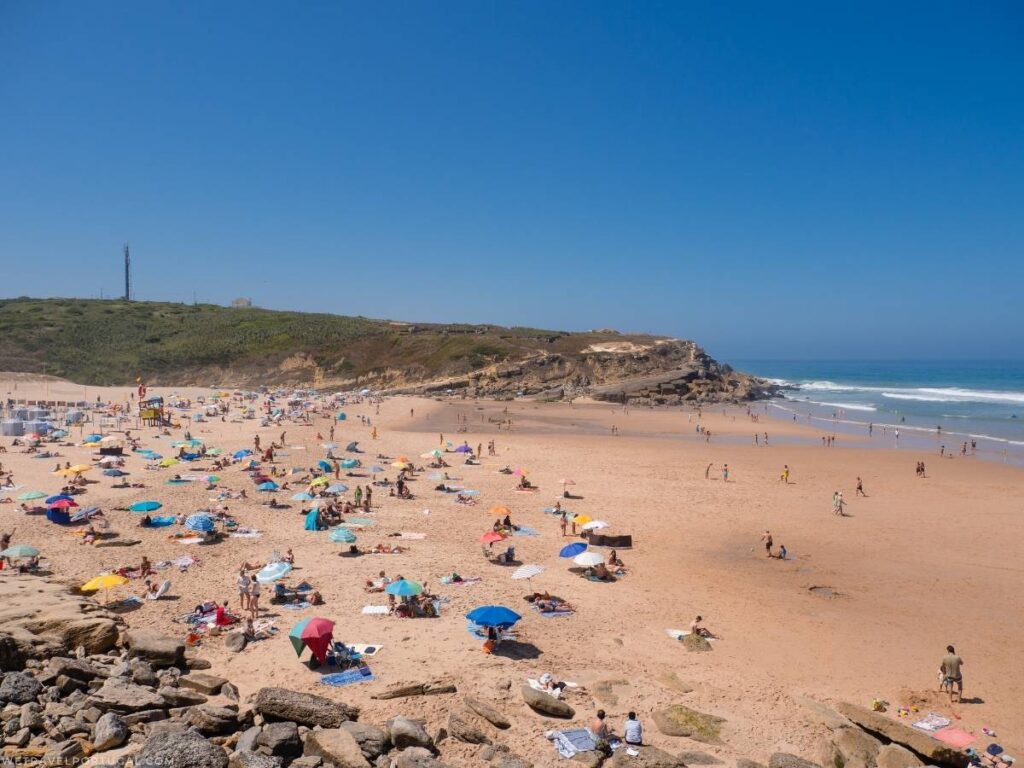
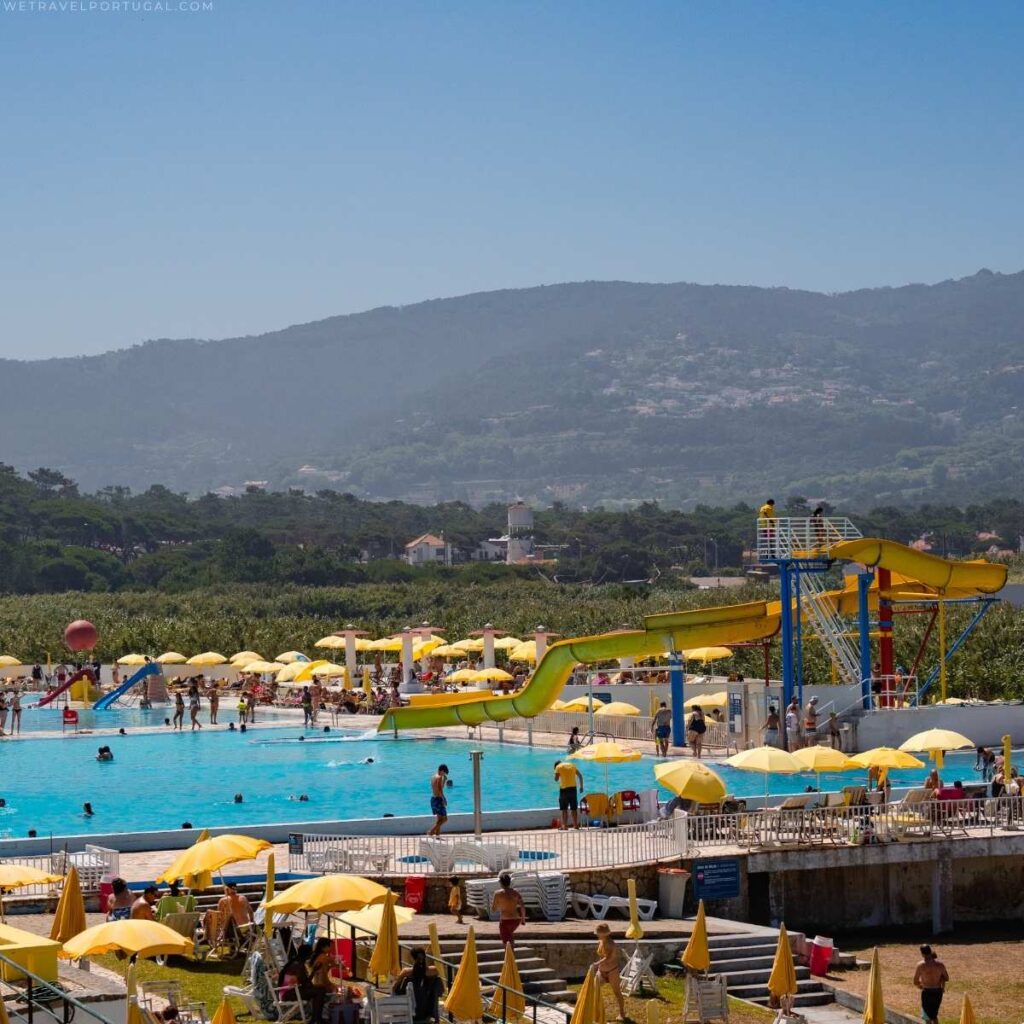
Not only is Praia das Maçãs a large beach, there’s also a large swimming pool and water slide. So on any days where the water conditions are not great for swimming, there’s still somewhere safe to be in the water. A great place for the whole family!
There’s also a small resort town here, multiple bars, cafés, restaurants, and even a famous local bakery. It’s a great place if you’re looking to visit and stay on the beach for full day!
How to get to Praia das Maçãs?
If you’re planning on using public transport, first you’ll need to head to Sintra, which is very simple from Lisbon. From Sintra you’ll need to hop on the Eléctrico (Tram) which covers the 11km to the coastline in around 45 minutes. Alternatively, you can drive directly to Praia das Maçãs.
Costa da Caparica – The Longest Beaches in Portugal
Heading in the opposite direction and south across the Tagus River from Lisbon you’ll find Costa da Caparica. Costa da Caparica’s coastline is the largest contiguous beach in Portugal stretching for 30km! Costa da Caparica offers a beach for everyone, you’ll find beach clubs and bars, seafood restaurants and snack bars, or just 30km of beach to walk along.
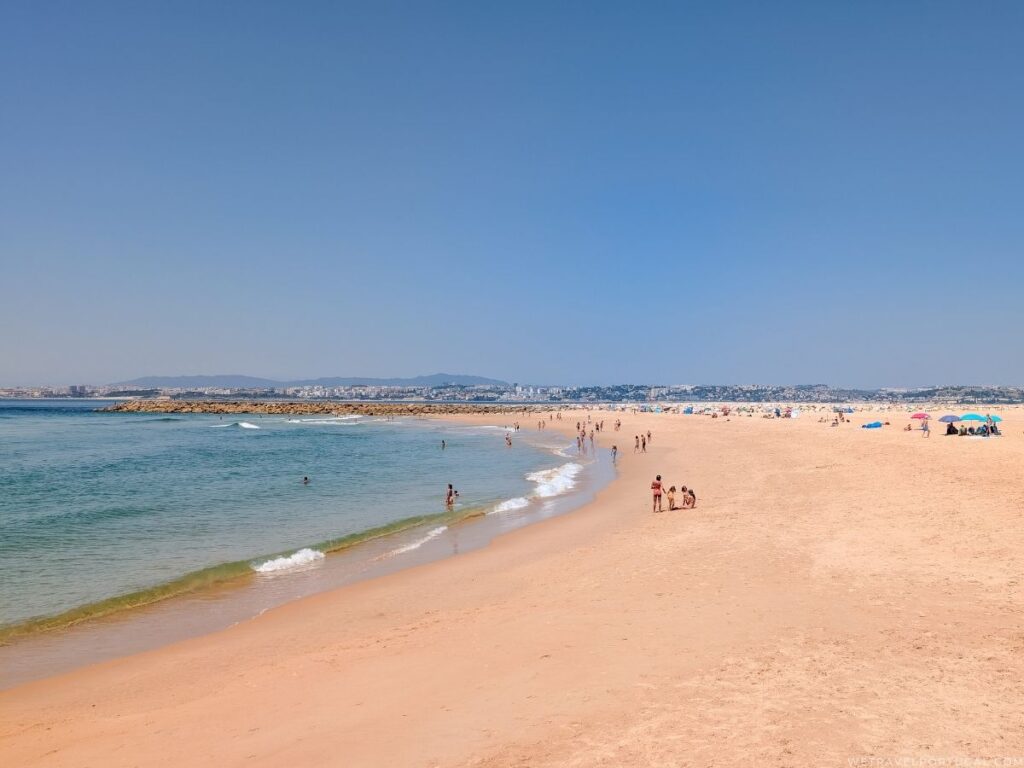
The downside – during the summer, and especially on weekends the bridge crossing can take hours. It often feels like half of Lisbon is heading to the beach, and queuing to cross the bridge. Both getting there, and getting back again, can be exhausting if you’re driving. By public transport – you can take the ferry to Trafaria and seek local transport from there. On busy days though, this can get hectic fast.
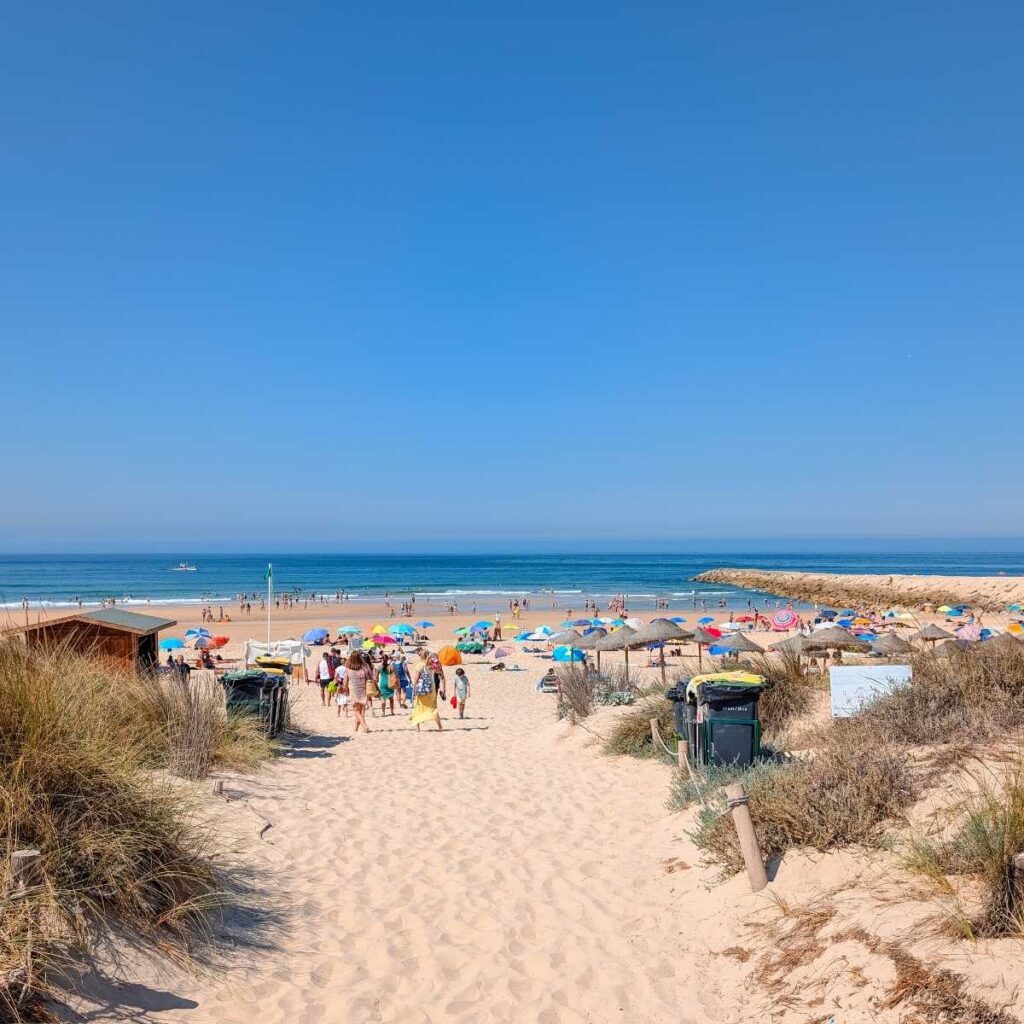
How to Get to Costa da Caparica
There are a few different options to get from Lisbon to Costa da Caparica. The first are the municipal buses – the 3710 departs from Lisboa Areeiro. The 3708 departs from Cais do Sodré, and the 3709 departs from Marquês de Pombal. All three buses terminate at Terminal da Costa da Caparica which is 500m from the beaches.
Alternatively, you can catch the ferry from Belém to Porto Brandão and Trafaria. Trafaria is 3km away from the nearest Atlantic Costa da Caparica beaches, so you’ll still need to seek further local transport.
Parque Natural da Arrábida – Arrábida Natural Park
Parque Natural da Arrábida is a natural park, around 50km south of Lisbon. The southern coastline offers several incredible beaches that are quite unlike any of the beaches mentioned above. Imagine cliff covered forests, rolling directly onto white sand beaches. The coastline is dotted with fortresses, and tiny fishing villages, a place that really rewards travelers that like to explore. The downside, to get to the best beaches here, requires self-transport, and hiking.
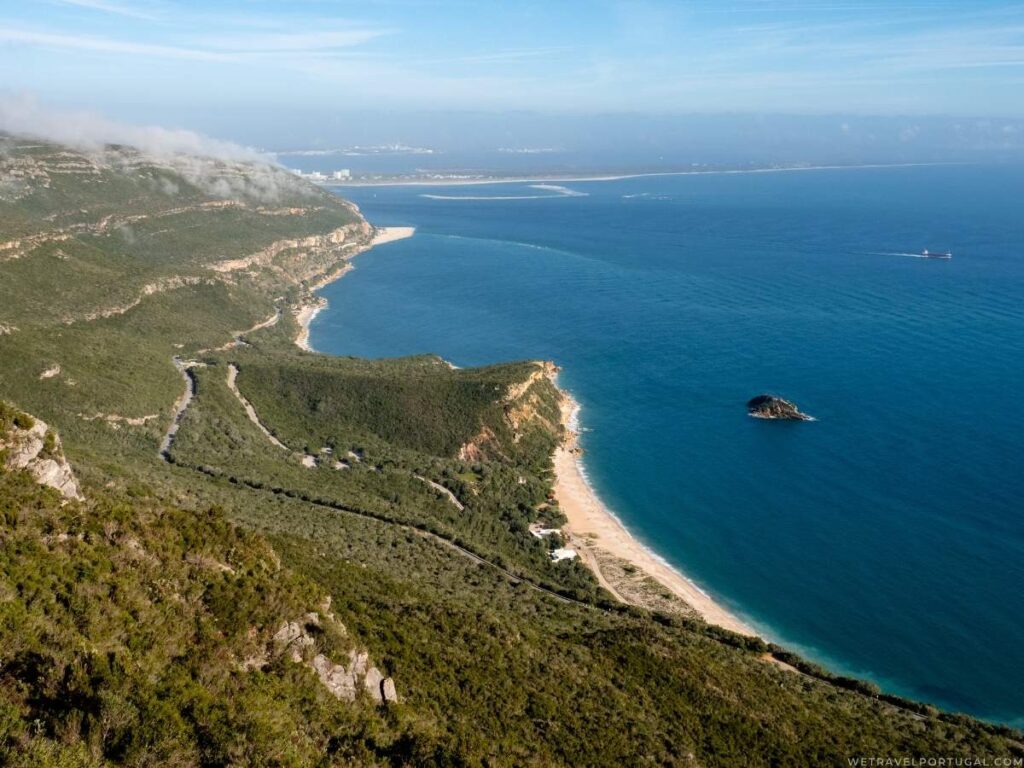
The most famous, and most idyllic beaches here are Praia do Ribeiro do Cavalo which requires some hiking to get. Further along the coast is Praia do Portinho da Arrábida, a beach next to a tiny fishing village. This one you can drive to though!
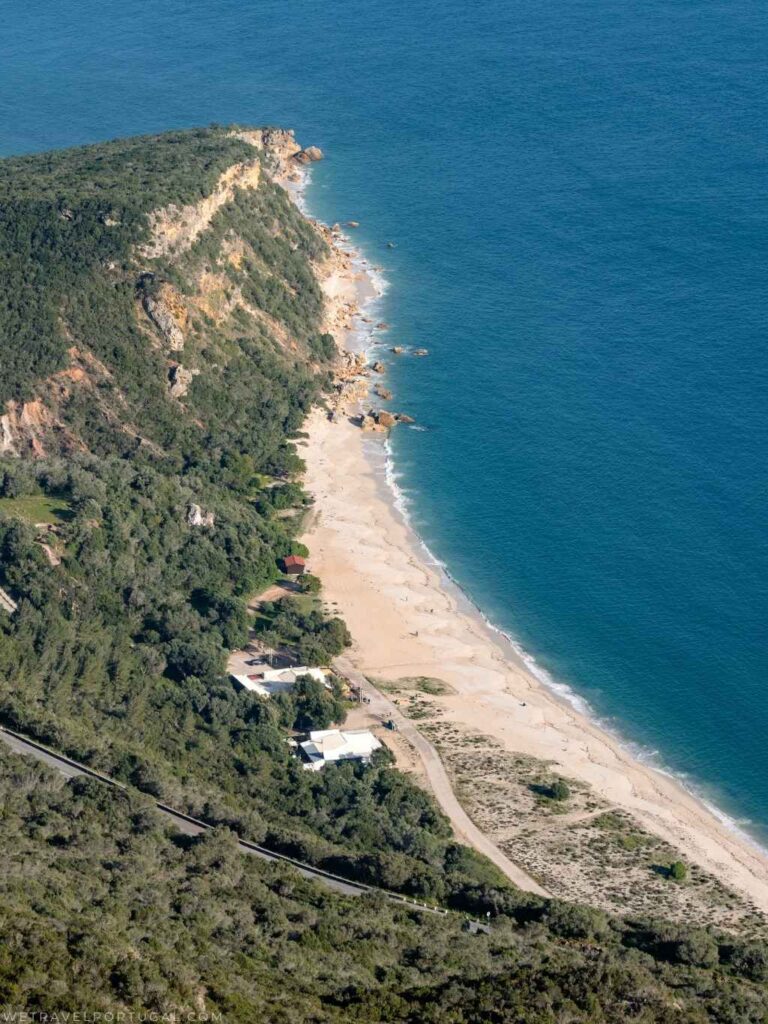
How to get to Arrábida?
Arrábida is a beautiful place, but public transport in the area is very limited. To explore all of the beaches you will need your own car.
Sesimbra – A Traditional Seaside Town
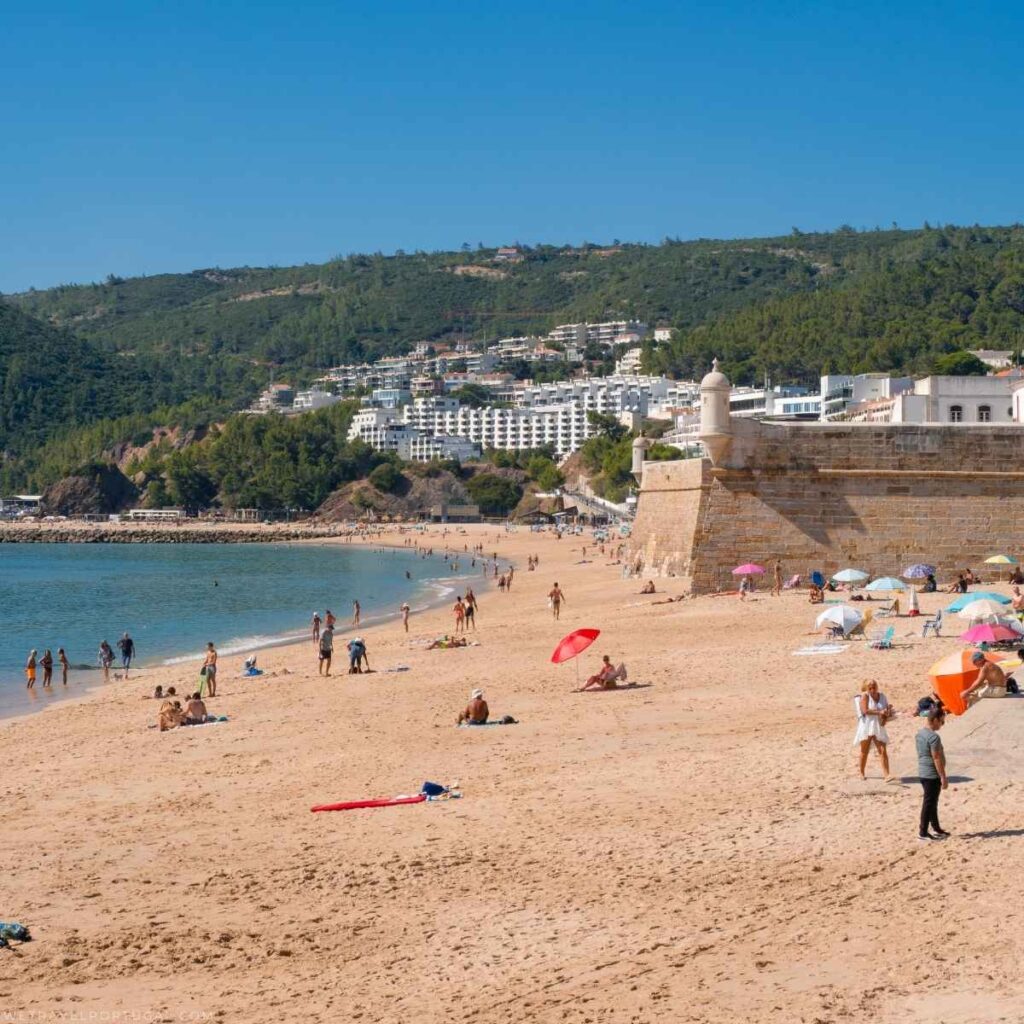
The largest town in Arrábida is Sesimbra. Sesimbra is a small town situated on the largest bay in the region, surrounded by hills, the beach and town is sheltered from the Atlantic winds and is a popular seaside resort town. It’s a more typical seaside town, and its palm tree lined promenade has a wide range of seafront cafes and seafood restaurants.
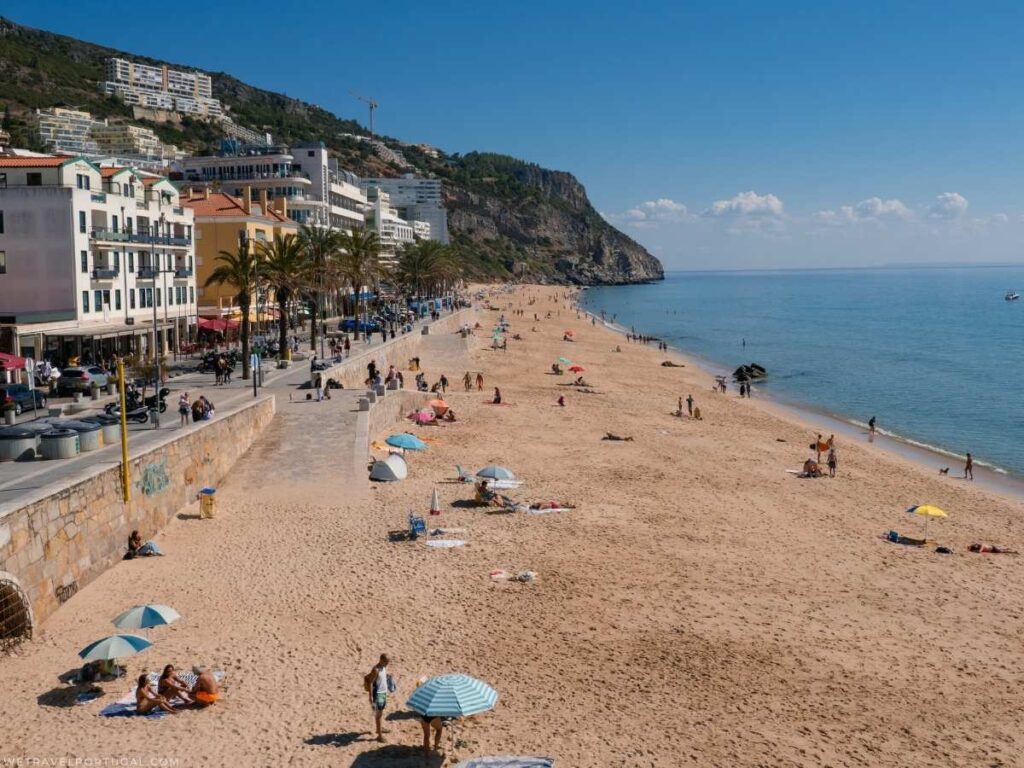
The sheltered bay, and calm atmosphere means this is popular for families and young children. The town, even in the height of summer never really feels too hectic, and the beach is large enough that it never gets too packed.
The beach is commonly known as Praia de Sesimbra, and officially split into two – Praia do Ouro and Praia da Califórnia. They are all sections of the very same incredible beach.
How to Get to Sesimbra?
Sesimbra is just 40km from Lisbon, or around 50 minutes driving. Similar to Caparica, you do need to be mindful of crossing the bridge in the mornings and evenings during the summer. Public transport direct to Sesimbra is available – but it’s limited. You can take bus 3721 from Sete Rios (or any of the other stops in Lisbon) to Sesimbra. The bus departs almost hourly from 7am to 11pm.
Ericeira – Surfers Retreat and International Hub
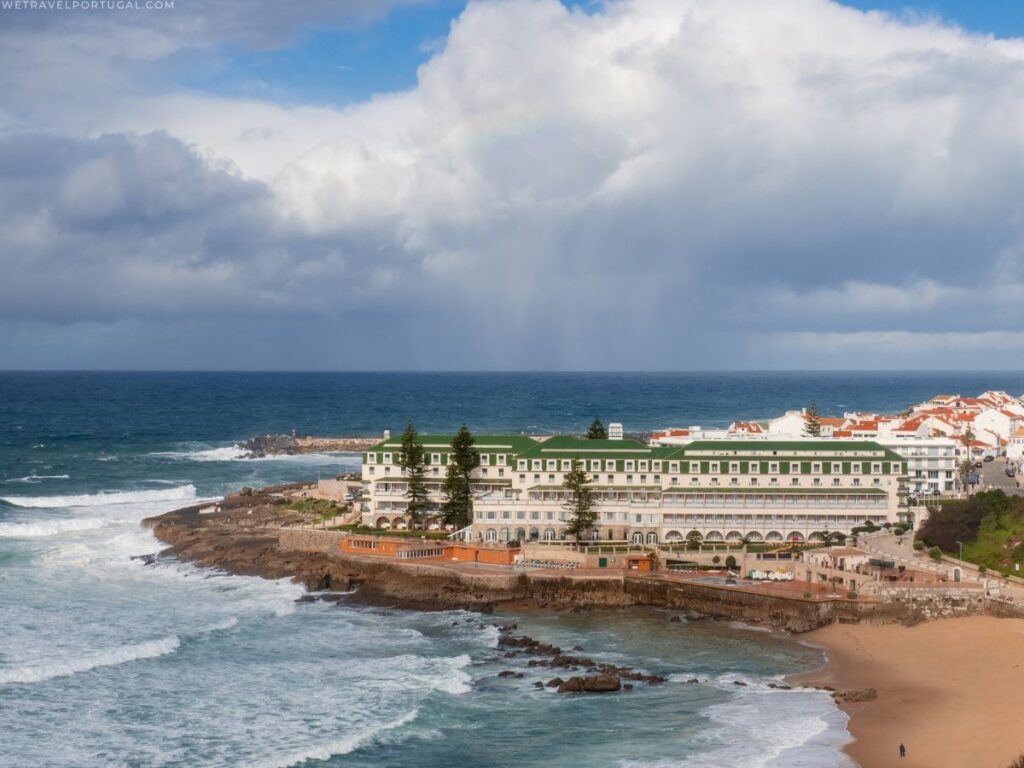
A 45-minute drive from Lisbon is the hottest seaside town of the moment – Ericeira. Well hottest for a mix of digital nomads, surfers, and ‘expats’. In recent years, Ericeira has transformed from a seaside village into a international hub.
Surf shops, Australian inspired coffee shops, wine bars, sourdough bakeries, and vegan cafés. You’ll still find some of more typical Portuguese seaside resort items – marisqueiras and tasquinhas, but the vibe in Ericeira is of a recently gentrified hub. If that’s what you’re looking for in a seaside retreat, then Ericeira a great option and a very popular spot!
The Beaches of Ericeira
Ericeira has four beaches accessible from the town – Praia da Baleia, Praia dos Pescadores, Praia do Norte, and Praia de São Sebastião. The best for typical beach goers will be – Praia da Baleia, Praia dos Pescadores.
Praia dos Pescadores is the smaller beach, and is sheltered by the harbour. This means it can be the calmer of the two when it comes to Atlantic conditions, being sheltered from the waves and some of the wind. However, as the smallest beach, and closest to the town it can fill up quickly. Praia da Baleia is much bigger, and much more open but less sheltered.
Praia do Norte, and Praia de São Sebastião are known for their wildness, strong waves, and are popular with experienced surfers. Obviously, the beaches can be used for lounging and sunbathing, but swimmers should take a lot of care or head to the other beaches.
How to Get to Ericeira?
Ericeira is 48km from Lisbon, and around a 45 minute drive. If you’re looking for public transport, there are municipal buses that depart almost hourly from Lisbon the 2801, 2803, and the 2751. All municipal buses depart from Campo Grande bus station in Lisbon.
Which is your favourite beach day trip from Lisbon
With a beach for almost every type of person covered – what beach will you be heading to on your next trip to Lisbon?
